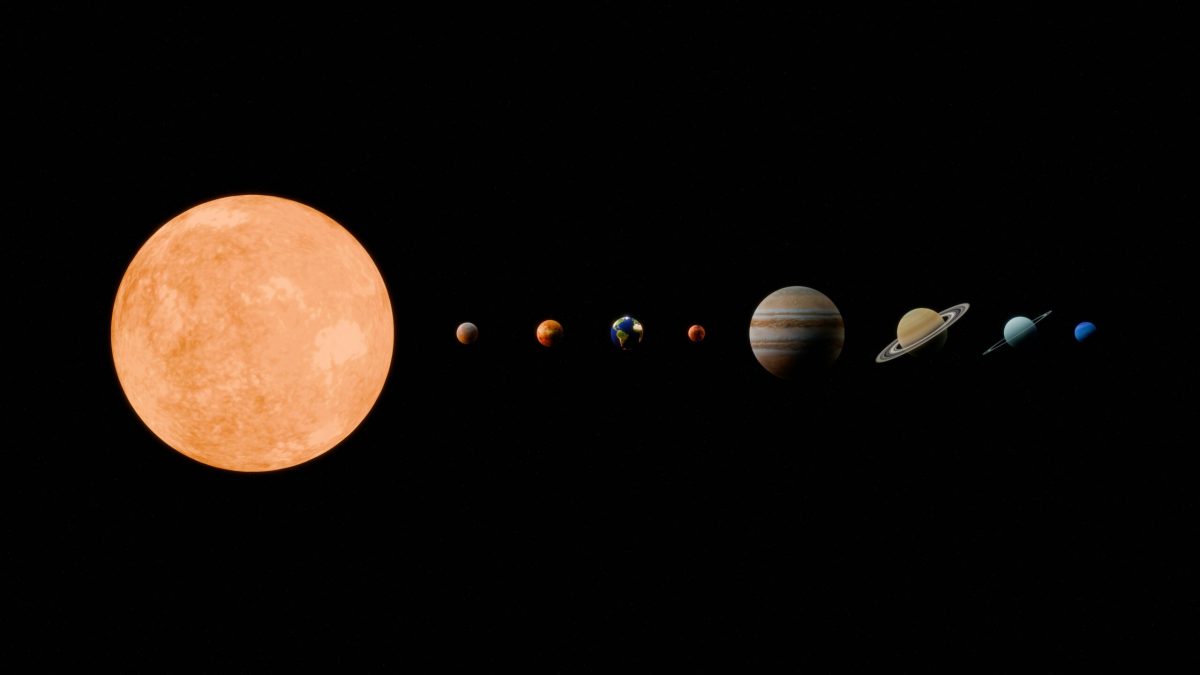
On the evening of February 28, 2026, something extraordinary will happen above the western horizon. Six planets - Mercury, Venus, Jupiter, Saturn, Uranus, and Neptune - will cluster together in what astronomers call a planetary parade. It's the kind of night sky event that makes you stop scrolling your phone and actually look up.
From your perspective on Earth, these worlds won't form a perfect straight line in space. But from down here, they'll appear to gather along the ecliptic (the path the Sun and Moon trace across our sky), creating the illusion of a coordinated celestial procession. The optical illusion happens because of orbital geometry. It's not gravity pushing them together, but rather our vantage point making them seem clustered on the same side of the Sun.

When and where to look
Your best viewing window opens roughly 30 to 60 minutes after sunset. Head outside with a clear western horizon and minimal light pollution. If you're in North America or Europe, the alignment appears tightest on February 28 itself, though observers in London or Berlin might catch equally impressive views a day or two before or after.
The planets won't all be at the same height in the sky. Mercury and Venus will hover just above the western horizon, making them tricky to spot depending on local haze and city lights. Jupiter will climb higher, easier to find. The distinction matters if you're planning an evening around this event.
What you can actually see without a telescope
Venus and Jupiter will be the showstoppers. Both shine brilliantly enough to catch your eye without any optical aid, even with moderate light pollution. Saturn and Mercury should also be visible to the naked eye under decent skies, though Mercury's position low on the horizon makes it the hardest of this group to track down.
Uranus and Neptune are another story entirely. These ice giants are dim enough that you'll need binoculars or a modest telescope to spot them. Uranus sits higher in the sky near the constellation Taurus, but Neptune lurks near Saturn close to the horizon, disappearing into twilight glare unless you bring optical gear.
Your viewing checklist
- Scout your western horizon beforehand to identify an unobstructed view
- Bring binoculars or a small telescope if you want to see Uranus and Neptune
- Arrive 30 to 60 minutes after sunset, when the sky is dark enough but planets are still visible
- Check your local weather forecast the days leading up to February 28
- Download a stargazing app to help locate each planet as it appears
Light pollution is your enemy here. If you live in or near a city, consider driving out to a darker location. Rural areas, parks away from street lights, and coastal spots with clear western views all work well. Even a 20-minute drive can transform your experience from seeing three planets to seeing five or six.
A moment of perspective
This planetary parade won't trigger earthquakes or change Earth's orbit. It's purely visual - a trick of perspective from our particular position in space. That said, there's something profound about witnessing an event that humans have watched for millennia. Ancient astronomers noted planetary gatherings and recorded them with awe. We have the advantage of knowing exactly when and where to look.
Plan this as a proper outing. Bring a friend, pack a blanket, maybe some coffee. Give yourself time to find each planet one by one. These rare alignments don't last forever and they don't happen often. February 28, 2026 is worth the effort.