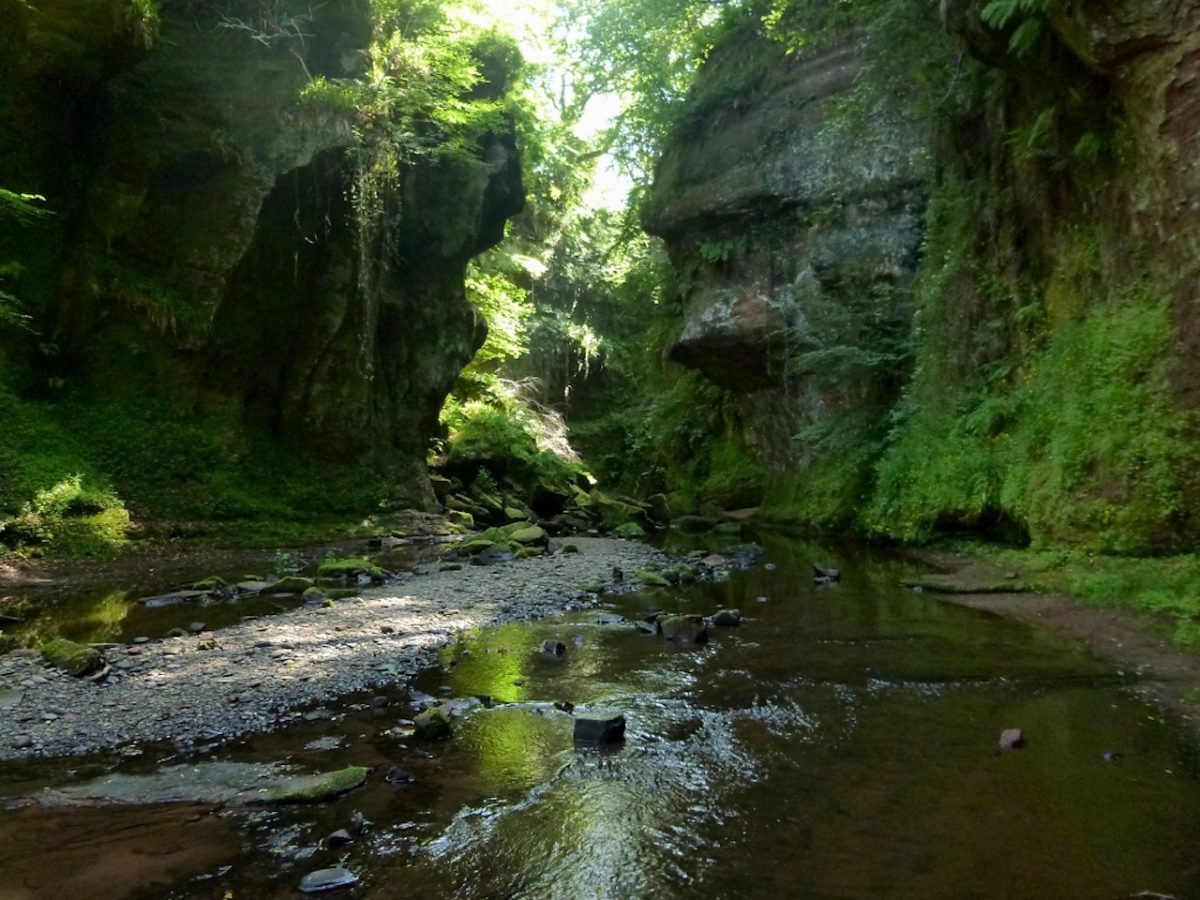
Finnich Glen, a 23-acre pocket of raw Scottish wilderness near Loch Lomond, is now on the market. The site's most famous feature is a stunning 24-metre-deep sandstone gorge carved by meltwater between 10,000 and 12,000 years ago, complete with a circular rock formation called The Devil's Pulpit and a staircase etched into the cliff face known as The Devil's Steps. Around half an hour north of Glasgow by car, the location has become impossible to ignore for anyone who watches television. It's the misty, mysterious spring from Outlander and a location in Guy Ritchie's King Arthur: Legend of the Sword.
The sale comes with approved planning permission for a visitor centre, café, event space, and 150-car parking area. These additions would transform what is currently a rugged, unmanaged attraction into a proper tourist destination. Local authorities believe the development could solve years of mounting problems at the site.
From hidden gem to visitor hotspot
Right now, Finnich Glen attracts roughly 70,000 visitors each year, many of whom arrive without warning or infrastructure to support them. The new owners envision tripling that number to over 300,000 annually if the approved plans move forward. That's a 328% increase in foot traffic, transforming a place that has mostly operated on word-of-mouth and social media buzz into something with genuine commercial ambitions.
The current owners, a family that has held the farmland since the 1940s, are now searching for someone with "the vision and enthusiasm" to develop it. They're passing the torch to a new steward, someone willing to invest in infrastructure and management. Mark Lavery, director of retail and leisure at Christie and Co, the firm handling the sale, sees real opportunity here. "The development possibilities are genuinely exciting," he says, pointing to its status as both a historically significant site and an already-proven draw for tourists.
Scotland's tourism landscape continues to evolve. Edinburgh has introduced taxes on overnight visitors to manage overcrowding, while Scotland explores better transportation connections to the rest of Europe. Finnich Glen's potential transformation reflects a broader conversation about how destinations balance accessibility with sustainability.
The dark side of unmanaged tourism
Here's where the story gets complicated. The gorge has earned a reputation for danger that no amount of marketing can hide. The staircases are eroded, the current is strong, and drowning remains a real risk. In summer 2025, a 21-year-old university student died after getting into difficulty in the deep water alongside friends. Mountain rescue teams have repeatedly warned the public against descending into the gorge. Emergency access is severely limited, which compounds the danger.
Beyond safety, the site has faced a perception problem. Tripadvisor reviews have been brutal, with some visitors comparing it to a "glorified toilet." Roadside parking has become chaotic. Littering is widespread. Local residents have grown frustrated. The promise of proper facilities, better parking, and management oversight is partly what makes this sale attractive to authorities.
Can infrastructure fix the culture?
The big question is whether building amenities will actually improve the experience or simply enable more damage. Visitor centres and cafes don't automatically solve the behavioural problems that come with unmanaged crowds. They can help, certainly, but only if the new owners commit to genuine site management and safety enforcement alongside the commercial opportunities.
Stirling Council believes the sale and development could address some of these issues. A proper visitor centre would allow for education about the site's geology and history. A managed car park would reduce the dangerous roadside parking. Staff presence might discourage littering. But these are possibilities, not guarantees.
The sale represents a crossroads for rural Scottish tourism. Finnich Glen could become a model for how to responsibly develop a natural attraction, or it could become a cautionary tale about how commercial interests can overwhelm a fragile place. For now, the land is available to purchase on a freehold basis, waiting for a buyer with both ambition and accountability. The next chapter of this remarkable gorge is about to be written.