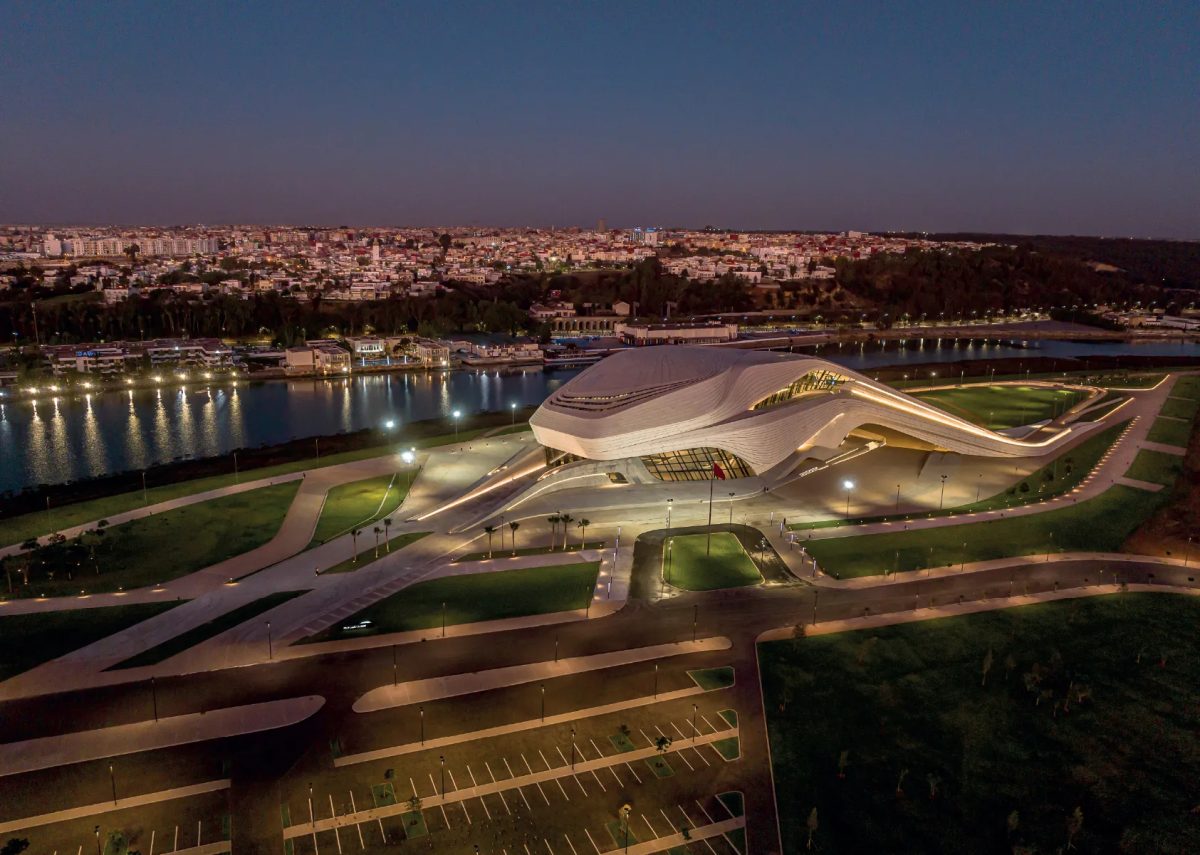
Rabat has a new landmark that looks like it arrived from another galaxy. The Théâtre Royal de Rabat, designed by Zaha Hadid Architects, is Africa's first completed project by the late architect's firm. It sits on the Bouregreg River, the waterway that separates Rabat from Salé, and it's already turning heads with its sweeping, interplanetary silhouette.
Hadid herself described the design in 2010 as a way to "transport the audience to an imaginary space and time." That vision is now real. Under one massive, arcing roof, the theatre packs three distinct performance spaces, each with its own personality. The main Auditorium is a cavernous, rock-like hall with 1,821 seats arranged in cascading tiers. Its faceted walls borrow from traditional Islamic muqarnas technique, but they're not just decorative. As Dezeen notes, they double as acoustic treatment, developed with acousticians at Arup. The result is a space that feels both ancient and futuristic, like a sci-fi parliament chamber.
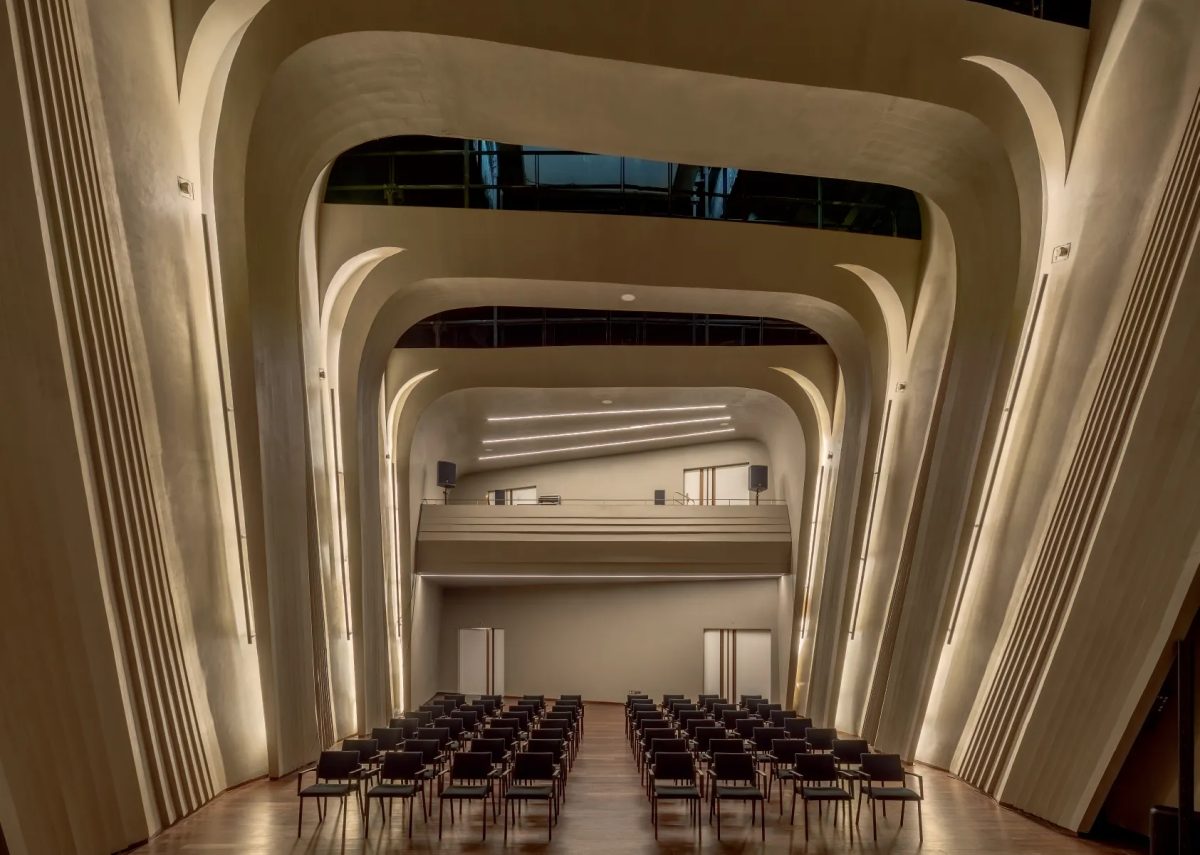
Hadid called the experience of entering such a space "uplifting," almost like a "secular" place of worship. That sense of awe carries through to the second venue, the Studio Theatre. This flexible space can transform itself for up to 250 spectators, with retractable seating and a proscenium arch that can appear or disappear. It's designed for workshops, experimental pieces, and rehearsals, so no two visits will feel the same.
Connecting these two worlds is the "canyon," a triple-height atrium with sinuous staircases and landings that seem to defy gravity. A restaurant at the top offers views over the river, and the foyer is meant to encourage curiosity and dialogue before and after shows. Outside, an Amphitheatre with a 7,000-spectator capacity hosts gigs, festivals, and outdoor events under the night sky.
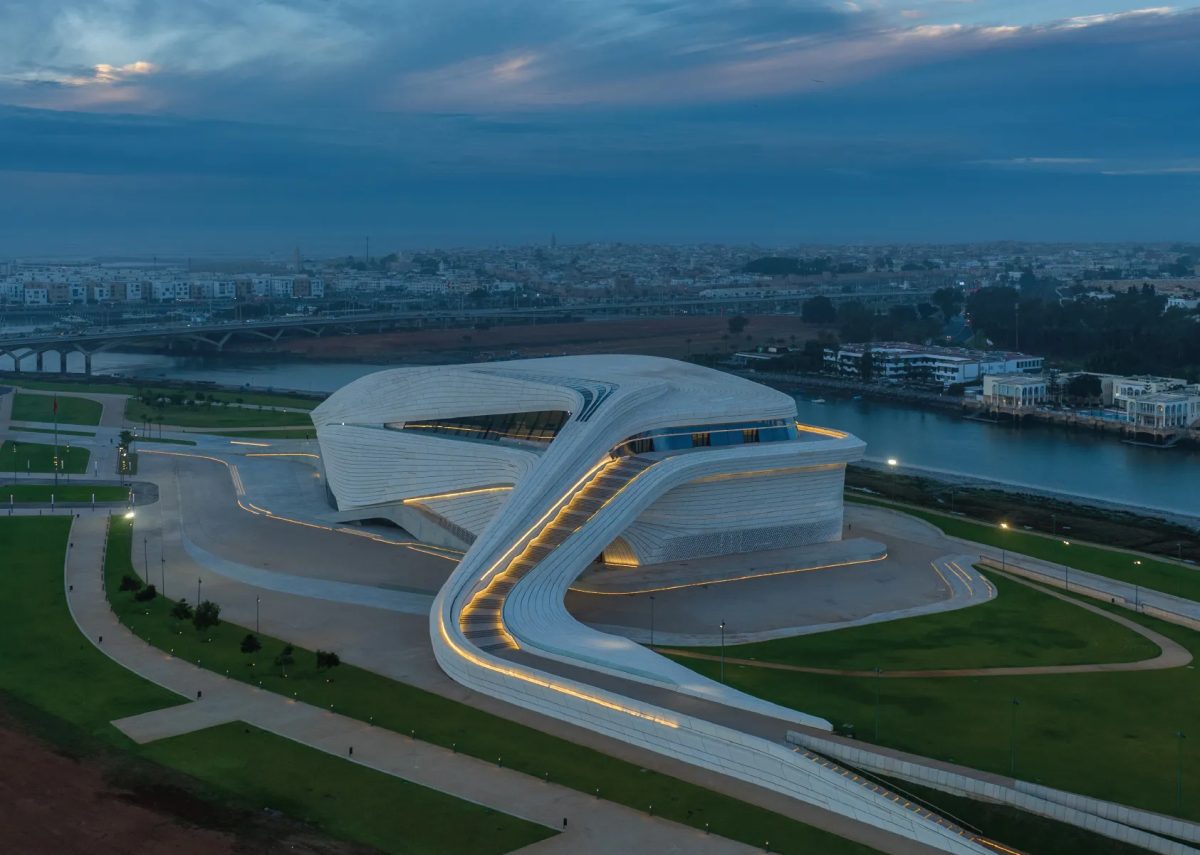
The building is also a model of sustainability. It heats and cools itself using air-source heat pumps, ground-source cooling, and radiant heating, plus natural ventilation. A circular rainwater and reuse system handles bathroom needs and landscape maintenance. For a structure so fluid, it's fitting that it treads lightly on the earth.
Visitors can take a piece of the experience home from the boutique shop, which sells performance-inspired books, objects, and souvenirs. It's a small reminder of a place that feels like a portal to another dimension.
The theatre opens ahead of the FIFA Men's World Cup 2030, part of King Mohammed VI's vision to position Rabat as a cultural beacon. The strategy is already paying off: Lonely Planet named the Moroccan capital among its 50 best places for 2027. For travelers, this is a chance to see a Zaha Hadid masterpiece in a city that's quietly becoming a cultural heavyweight. If you're planning a trip, consider pairing it with Europe's new tourism strategy to see how the continent is evolving. And if you're looking for more architectural wonders, Ghent's reopened design museum offers a different kind of innovation.
Rabat's new theatre is more than a building. It's a statement that Morocco is ready to host the world's spotlight. The Théâtre Royal de Rabat is now open, and it's already a must-see for design lovers and culture seekers alike. Africa's first Zaha Hadid project is a reason to book a flight. Three venues under one roof mean there's always something new to discover.