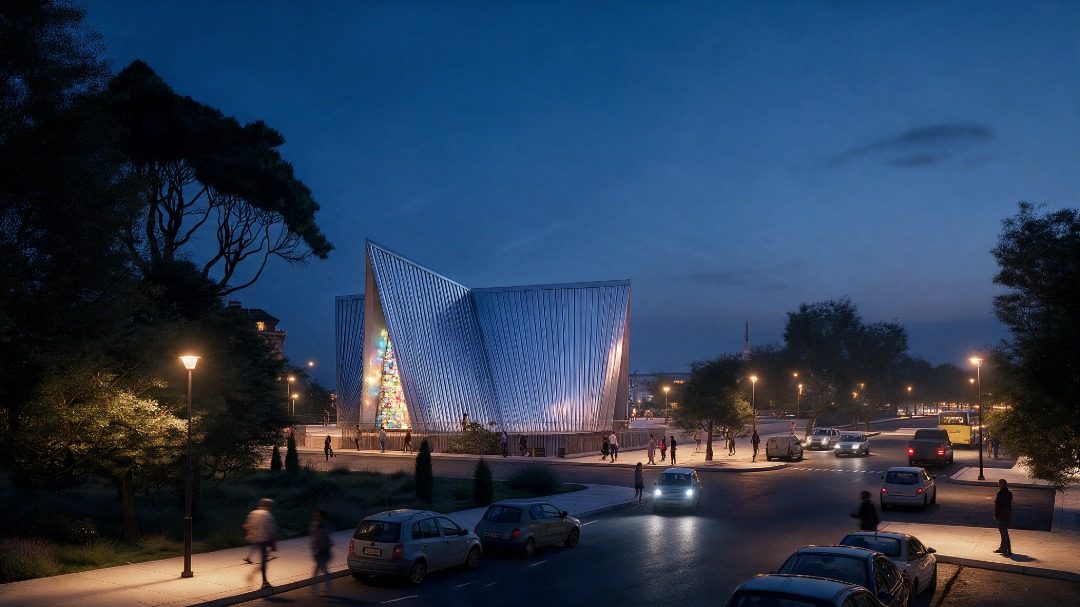
Rome is getting a new church that looks like a desert caravan, and it might be the most community-driven religious building in recent memory. Designed by Pritzker Prize winner Shigeru Ban, the San Vincenzo de' Paoli Church and Parish Complex in Ostia, Rome's coastal district, won a competition to give a fragmented neighborhood a place to gather, worship, and simply be together.
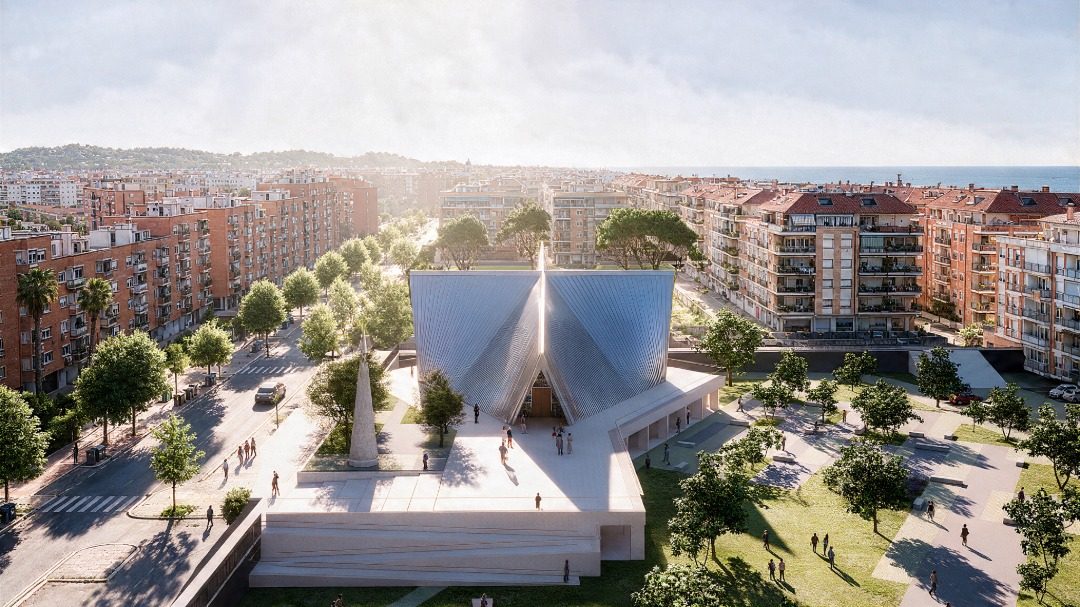
The design is unmistakable. A tent-like timber structure rises from a raised public piazza, its roof forming a cross when seen from above. But this is no ordinary cross. Ban calls it the "Latent Cross," a subtle nod to early Christianity before the cross became a dominant architectural symbol. From ground level, you might not even notice it. That's the point. The cross is there, but it doesn't shout.
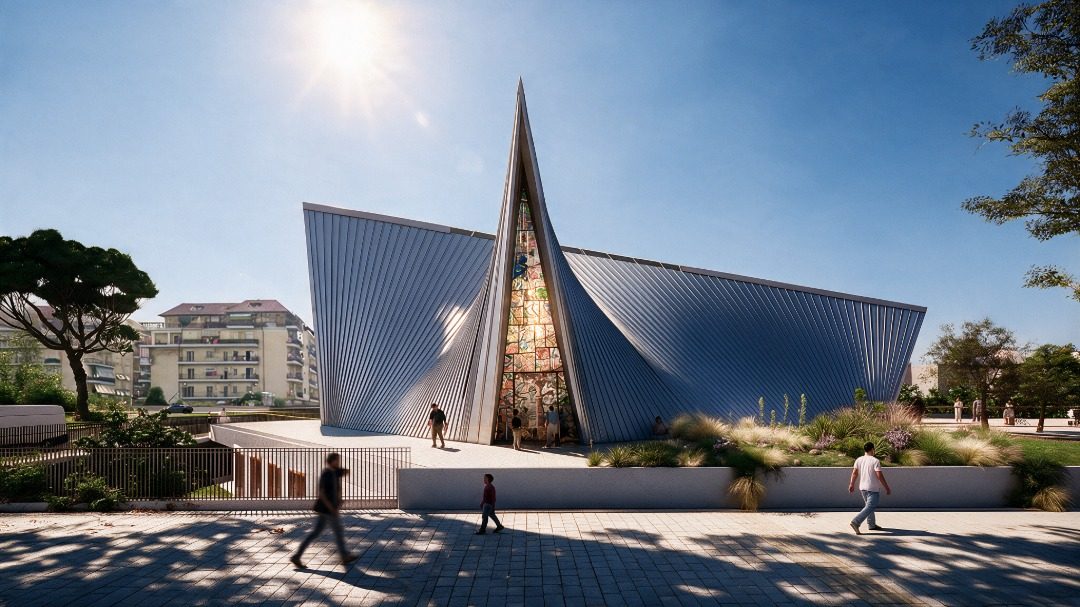
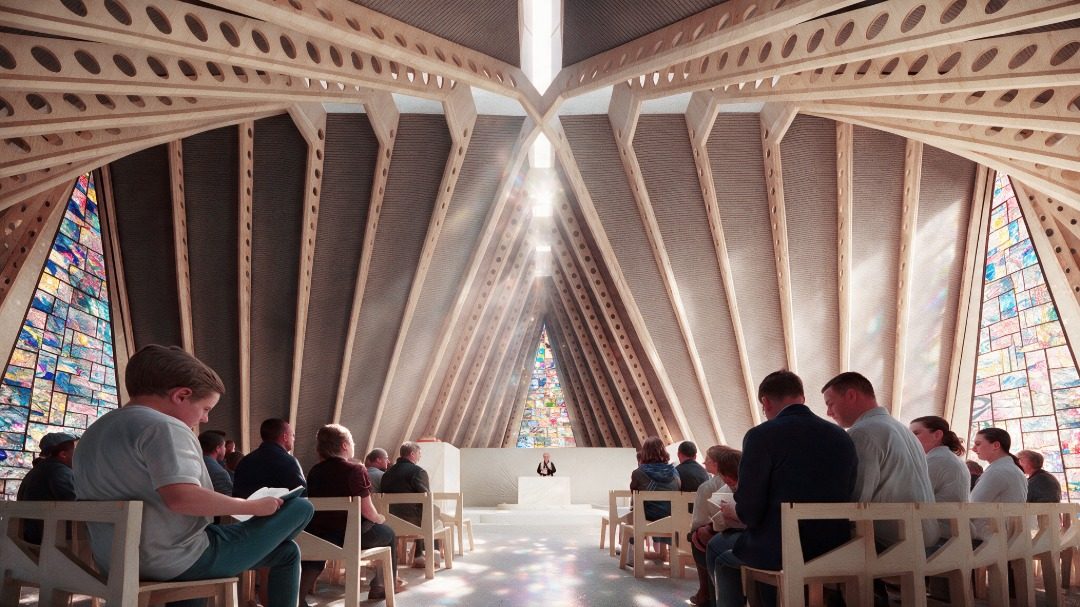
Inside, the diamond-shaped sanctuary is flooded with natural light through four triangular stained-glass windows that stretch from floor to roof peak, facing the four cardinal directions. And here's the twist: the stained glass won't be designed by a famous artist. Instead, the architects plan to recreate the graffiti that local young people have sprayed on the fences around the construction site. It's a bold move that turns the voices of the neighborhood into a permanent part of the church's identity.
Ban's vision goes beyond aesthetics. The area of Ostia Ponente is marked by large social housing blocks, economic struggles, and what the architect describes as a "fragmented urban fabric." His hope is that the tent-shaped structure, with its simple and welcoming form, will help stitch that fabric back together. "Through this project, we hope architecture can help create a new sense of belonging in the neighborhood," he said.
The church is part of the New Churches Programme, an initiative by the Diocese of Rome and the Italian Episcopal Conference. It's a response to a pressing need: many parish communities in Rome's outskirts have been holding services in garages, makeshift rooms, and cramped apartments for years. The program aims to build four new churches and extend an existing parish complex, giving these communities a permanent home.
Underneath the church, the design includes parish facilities, community spaces, and the priest's residence. The surrounding landscaped park will feature recreational and sports facilities, designed to draw people in even if they're not there for a service. It's an invitation to the whole neighborhood, not just the faithful.
Ban is no stranger to architecture with a social mission. His Cardboard Cathedral in Christchurch, New Zealand, built from 98 cardboard tubes, became a symbol of resilience after the 2011 earthquake. That project, like this one, shows how design can heal and unite. For travelers, this church might become a new landmark in Ostia, a place to see architecture that's both striking and deeply human. And if you're planning a trip to Rome, it's worth keeping an eye on this project, which is set to rise in the coming years.
For those who love architecture with a purpose, this is a story to follow. And if you're thinking about broader shifts in travel, check out how tourism's new playbook puts communities first. Or, if you're dreaming of Italy, consider that Italy is speeding into Germany with trains that skip the plane altogether. And for a celestial event, August 2027 brings the century's longest eclipse, and these spots are already on the map.