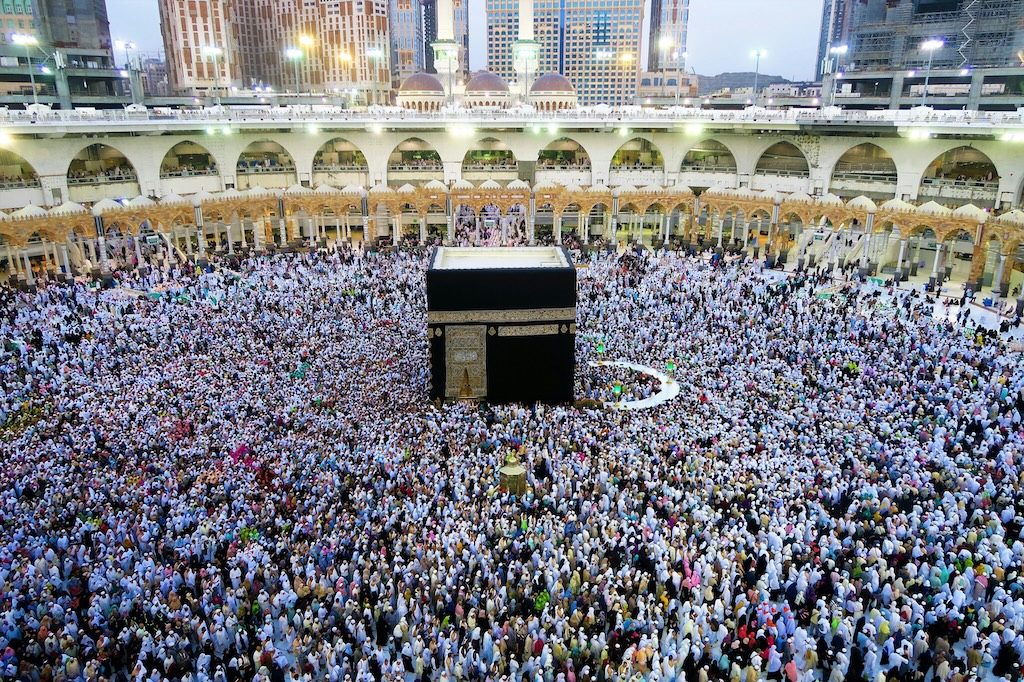
Every year, more than 1.5 million pilgrims from around the world converge on Mecca for Hajj, one of Islam's five pillars and a once-in-a-lifetime obligation for Muslims who are physically and financially able. Yet until now, none of them could fly directly into the holy city. Most touched down at King Abdulaziz International Airport in Jeddah, over 100 kilometers away, then faced a grinding journey by coach, private transfer, or train to reach their destination.
The geography and weather around Mecca have made direct flights seem impossible. Mountain thermals create turbulence, visibility problems plague the airspace, and the surrounding terrain simply wasn't considered suitable for an airport. But Saudi Arabia's leadership has decided the status quo no longer cuts it.
Enter Makkah International Airport, a project that officials say will reshape how millions of travelers experience the pilgrimage. According to Saleh Al-Rasheed, CEO of the Royal Commission for Makkah City and the Holy Sites, feasibility studies and initial designs are complete. Investment plans have been approved, and work will move forward with private sector partners to find the right development model. "Work will proceed with the private sector to develop the most suitable model for this investment," Al-Rasheed told Harvard Business Review Arabia.
The airport isn't arriving in a vacuum. Mecca's ground transport infrastructure has already evolved dramatically. A fleet of 400 electric buses launched in 2022 has carried over 185 million passengers, though serious congestion during peak Hajj periods remains a persistent problem. The modernization trend across major transportation hubs shows what's possible when cities commit real resources to solving movement challenges.
The airport will arrive alongside another major shift: the "Mecca Metro" project. Like the airport, this rapid transit system has completed feasibility studies and initial designs, with authorities now reviewing the plans before moving to implementation phases. Together, these projects aim to decongest the city during the intense weeks of Hajj, when pilgrims arrive in waves that strain every resource available.
Saudi Arabia is also experimenting with futuristic mobility solutions. In 2025, the kingdom tested electric vertical take-off and landing craft (eVTOLs) for emergency and medical transport, with pilotless air taxis planned for rollout this year. These autonomous electric vehicles could handle urgent situations or provide faster connections for those who can afford them.
One careful note: Al-Rasheed emphasized that developing the Mecca airport won't cannibalize investment in regional hubs like Jeddah, which have received significant funding and expansion in recent years. The goal is additive, not competitive, ensuring that existing infrastructure continues to thrive while the new airport absorbs direct traffic destined for Mecca.
For millions of pilgrims, this represents a genuine transformation. Cutting out the 100-kilometer overland crossing means arriving refreshed rather than exhausted, spending less time in transit and more time in spiritual focus. It also opens the pilgrimage to people for whom the grueling journey was once prohibitive.
The timeline remains unclear, but the momentum is real. Saudi Arabia is clearly betting that solving Mecca's logistics puzzle will set a new standard for how pilgrimage destinations handle extraordinary crowds. When millions of people descend on a single location for a shared spiritual experience, the quality of that arrival matters more than most travelers realize.