There's something quietly encouraging happening in European tourism right now. While sustainability rarely dominates travel headlines anymore, long-haul visitors from Australia, Brazil, Canada, China, Japan, and the United States are slowly embracing more thoughtful ways to explore the continent. It's not a revolution, but it's real movement in the right direction.
The European Travel Commission recently partnered with Kairos Future to survey 3,000 travelers from these markets about their sustainable travel habits. Rather than measuring intentions alone, researchers tracked four specific behaviors: choosing to travel during quieter months, venturing beyond famous tourist hotspots, connecting with local communities, and making greener transport choices. Compared to 2024 baseline measurements, all four behaviors showed measurable growth through 2025.
Green transport is winning the practical battle
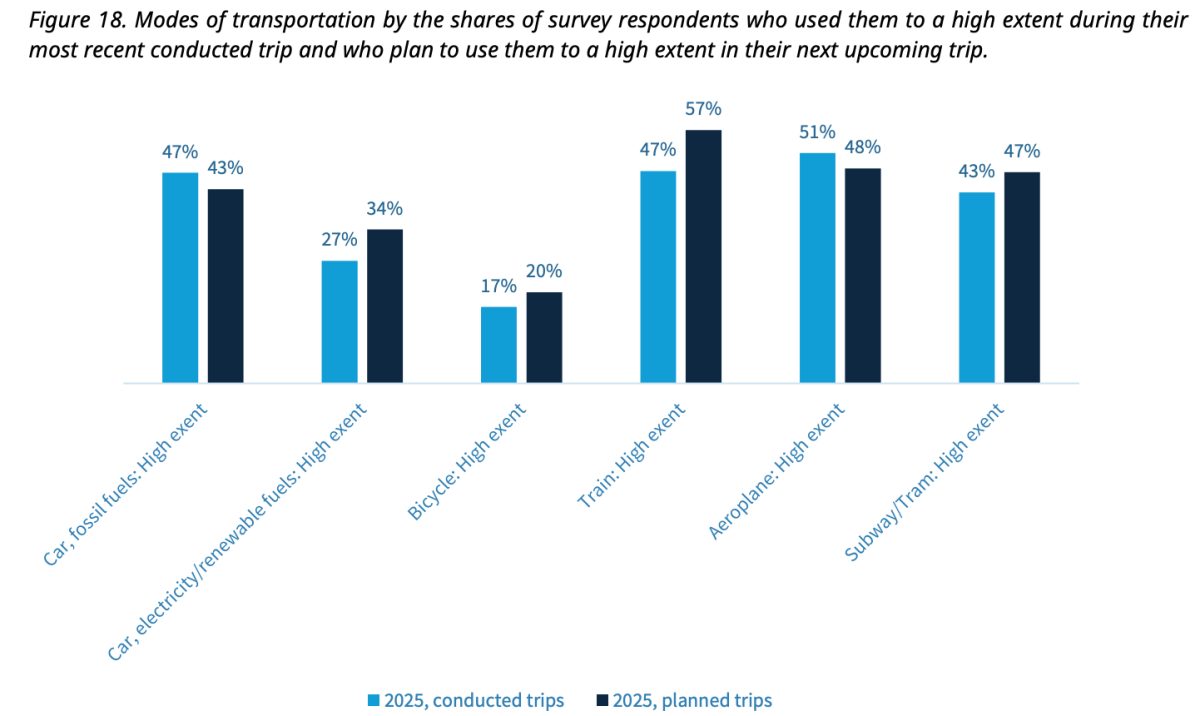
The strongest gains appeared in how travelers move around Europe once they arrive. Green mobility options jumped from 13 percent of journeys in 2024 to 18 percent in 2025, while fossil fuel-dependent transport dipped from 35 percent to 30 percent. Trains, buses, bicycles, and electric vehicles are no longer niche choices for the environmentally obsessed. They're becoming mainstream options for ordinary visitors.
This shift matters because it's achievable. Unlike asking someone to skip their dream trip entirely, offering convenient train routes or accessible bike-sharing programs actually works. Travelers respond well to small, practical tweaks rather than sweeping lifestyle changes.
Local experiences are replacing passport stamps
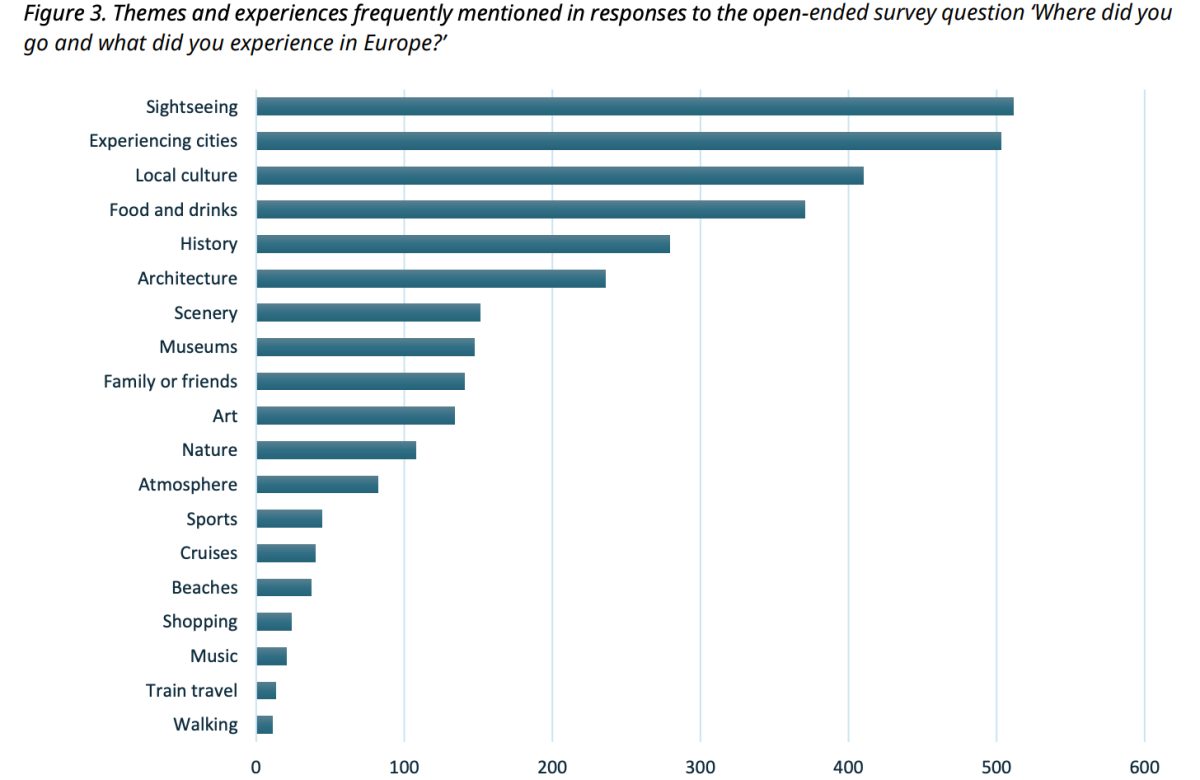
Long-haul visitors also showed stronger interest in exploring beyond the typical tourist circuits. Destinations off the main routes saw a notable uptick in visitor interest, with the off-the-beaten-track index climbing to 106. At the same time, engagement with local communities increased to 105, driven by travelers choosing family-run guesthouses, supporting neighborhood restaurants, and participating in regional traditions rather than hunting for Instagram checkmarks.
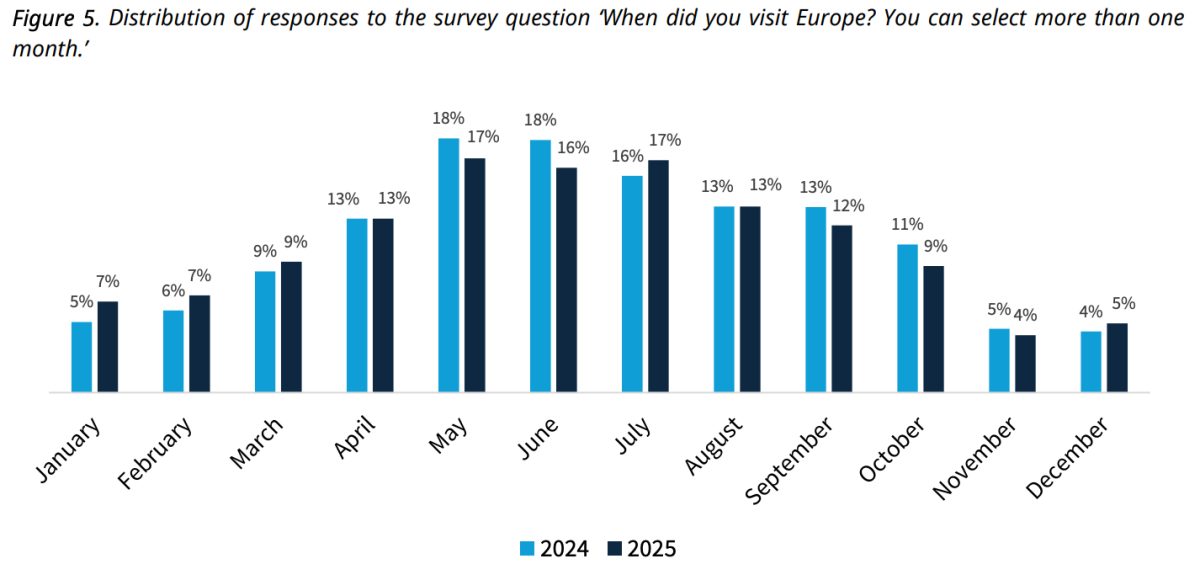
Even modest shifts in when people travel are helping spread tourism pressure more evenly across the year. The off-season travel index rose to 102, suggesting visitors are finally cottoning on to the idea that traveling during shoulder seasons means cheaper prices, fewer crowds, and deeper cultural encounters. Nobody needs to be convinced twice that missing peak summer and visiting in spring or fall is smarter.
But intention still outpaces action
Here's where the research gets honest. Travelers have good intentions, but practical barriers keep them from following through. Seasonal schedules are unclear. Rail booking systems across Europe feel fragmented and confusing. Electric vehicle charging infrastructure remains spotty. Without fixing these frictions, even motivated travelers revert to the easiest option: renting a car or booking flights between cities.
The European Travel Commission's CEO, Eduardo Santander, acknowledged the gap: "Travellers are increasingly open to small, feasible adjustments that reduce tourism pressure. But stakeholders must address practical barriers from transport planning to infrastructure so these intentions translate into real change."
The commission is pushing initiatives like the Unlock the Unexpected campaign to encourage deeper exploration and year-round travel. But that only works if the on-the-ground infrastructure supports it. Making off-season dates transparent on destination websites, simplifying international rail booking, and dropping prices on green transport options would unlock behavior change that surveys alone cannot achieve.
What this means for your next European trip
If you're planning to visit Europe, the moment to experiment with sustainable travel is now. Train journeys across the continent are becoming easier to navigate and more competitively priced. Local accommodations and family businesses actively welcome international visitors who want to spend money in their communities rather than multinational chains. Traveling in March or October rather than July doesn't just reduce crowds and cost, it also means better engagement with locals who actually have time to talk with you.
The research suggests travelers worldwide are ready to make these adjustments. They just need clearer information, simpler booking systems, and confidence that choosing the slower, greener, more local option isn't harder or more expensive than the default path. That's not asking travelers to sacrifice experiences. It's inviting them to have better ones.