Portugal has a problem: too many travelers love it. With record-breaking visitor numbers flooding in year after year, the country's aviation infrastructure is straining under the weight of success. So the government is making a massive bet on the future, even if that future feels impossibly distant.
The Luís de Camões Airport, Lisbon's long-promised replacement hub, will cost somewhere between €7.9 billion and €8.9 billion (at 2024 prices). But here's the catch: it won't open until 2037. That's more than a decade away. Under the current baseline schedule, contracts won't even be signed until April 2029, with construction starting in mid-2030 and wrapping up toward the end of 2036.
The Portuguese government, eager to move faster, is pushing for a 2035 opening instead, which would shave two years off that wait. Even so, anyone planning a trip to Lisbon in the next few years will land at the existing Humberto Delgado Airport, a facility that's increasingly creaking under demand.
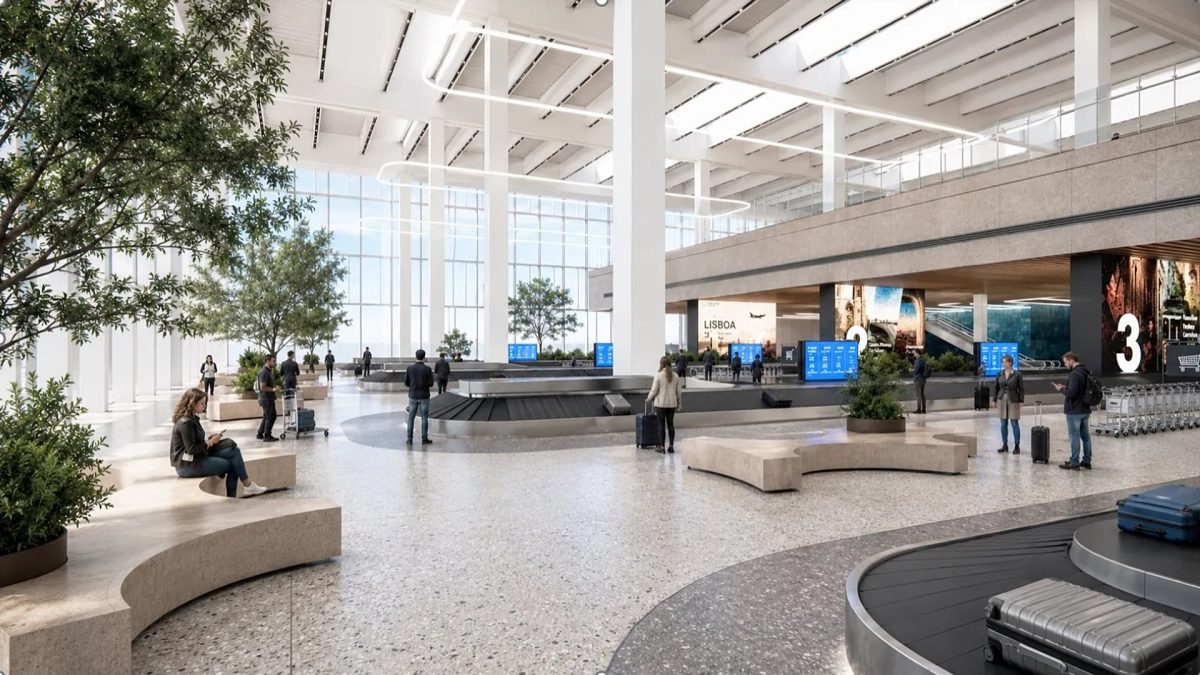
When it finally does open, the new airport will be built at Campo de Tiro de Alcochete, south of the Tagus River, more than 50 kilometers from central Lisbon. The location is remote, but the designers are thinking big: the terminal will eventually handle up to 85 million passengers annually, with two runways, 120 parking spots for aircraft, and 64 boarding gates. Getting there from the city will involve more than just taxis. High-speed rail will cover the distance in about 26 minutes, with services running every two hours, while a conventional rail option from Entrecampos will take roughly 45 minutes and arrive every 15 minutes. A shuttle service from Lisbon's Oriente station is also planned, promising the 20-minute journey every half hour.
The question hanging over this entire project: will costs actually stay within estimates? Europe's airport infrastructure is facing intense pressure and rising costs, and the team running the airport (ANA, owned by French infrastructure giant Vinci) has already warned that geopolitical chaos, supply chain disruptions, and market volatility could push the final bill even higher.
Why Portugal Can't Wait
Portugal isn't sitting around for 2037 to arrive. The country welcomed 32.5 million guests in 2025 alone, with tourists logging 82.1 million overnight stays. International visitors accounted for 57 million of those nights. By May 2026, the momentum hadn't slowed: the country was on track to welcome 12 million guests, generating 28.7 million overnight stays in just five months.
This surge means the government is pumping more than €400 million into existing airports across the country right now. Porto's Francisco Sá Carneiro Airport, which currently handles around 17 million passengers annually, is undergoing major renovation work on its runways and terminal, plus a new operations control center. The long-term plan targets 30 million passengers a year. Faro Airport, the gateway to the Algarve, handled about 10 million passengers in 2025 and is expanding its infrastructure and terminal to handle more. Madeira Airport, which has nearly doubled its traffic in a decade (hitting over five million passengers in 2025), is renovating its facilities to keep pace.
These investments aren't optional upgrades. They're survival tools for an airport network that's being crushed by Portugal's own tourism success. Airport overhauls across Europe are reshaping travel logistics in real time, and Portugal is no exception. The country is essentially playing a race against time: modernize the existing system now while building the future system later.
What This Means for Travelers
If you're planning a trip to Lisbon in the next five to ten years, you'll arrive at the current airport. Expect crowds, but also expect that the Portuguese government is pouring money into making that experience less painful. Terminal improvements and expanded capacity are underway. For those traveling to Porto, the Algarve, or Madeira, similar upgrades are happening across those airports too.
The real transformation arrives after 2035 (if the accelerated schedule holds) or 2037 (on the baseline plan). A brand new, purpose-built mega-airport with modern rail connections will replace the aging Humberto Delgado facility. It's a significant shift, but it also means Portugal is serious about staying competitive in European travel.
The price tag is eye-watering, the timeline is long, and costs could still climb. But Portugal's boom isn't slowing down, and neither is the government's determination to keep the country accessible to the world.