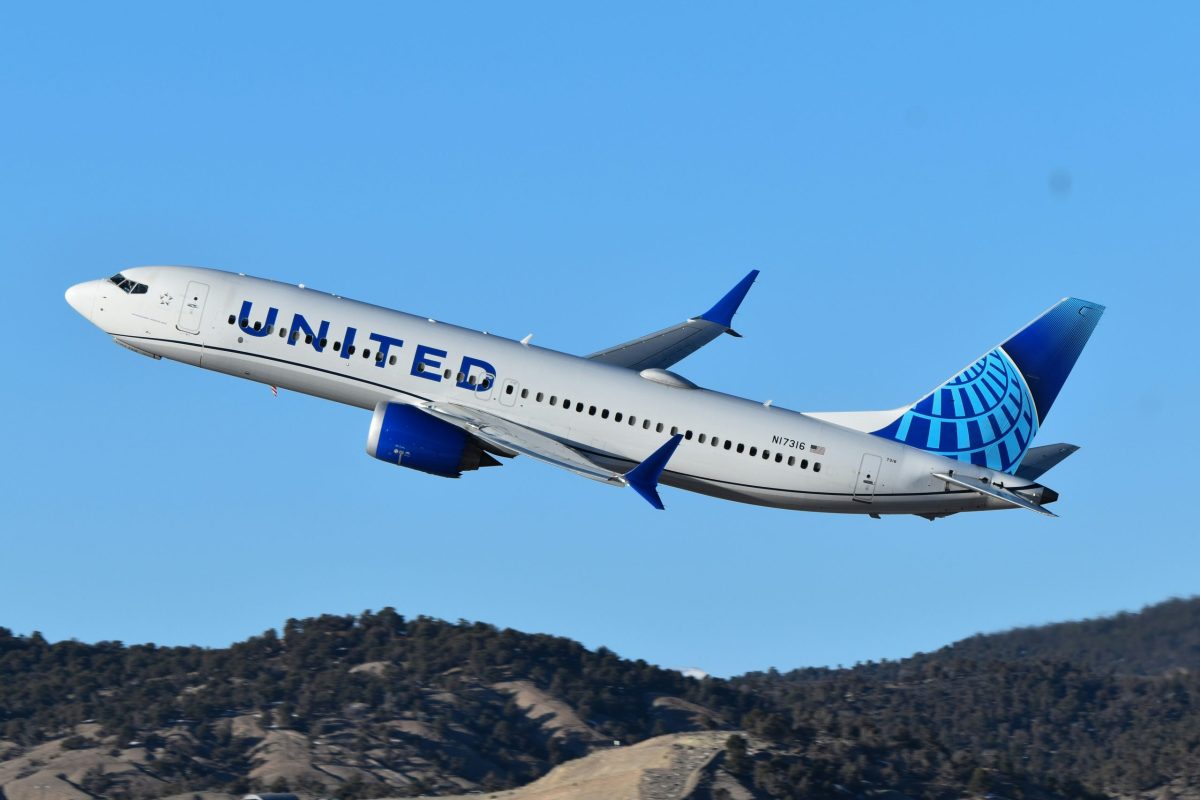
It was just after 11 p.m. on a Saturday night when United Airlines Flight 1681 lifted off from Las Vegas, bound for Newark. The cabin was settling into the quiet rhythm of a red-eye, passengers dimming screens and pulling up blankets. Then a flight attendant glanced at a passenger's phone and saw something that turned the flight upside down.
According to air traffic control audio and reports from Simple Flying, the crew member spotted a text message in which the passenger said he planned to hijack the plane. The message reportedly read, “crash ur row only,” a chilling phrase that immediately triggered alarm. The flight attendant alerted the pilot, who made the call to lock the cockpit and turn the Boeing 737 MAX 8 around over the Arizona desert, near the ghost town of Oak Grove.
The flight returned safely to Las Vegas just 14 minutes after departure, but the drama was far from over. Because the plane was still heavy with fuel for the cross-country journey, and the 737 MAX 8 doesn't have a fuel-dumping system, the pilots had to burn off extra fuel by circling before landing. They requested the full length of Runway 26L, which stretches more than 3,200 meters, as a precaution.
When the aircraft finally touched down, police were waiting. The 25-year-old passenger was arrested on charges of making a threat or providing false information regarding an act of terrorism. If convicted, he could face anywhere from one to 20 years in prison. The Federal Aviation Administration has also opened an investigation into the incident.
For the other passengers, the ordeal meant an unexpected overnight stay in Las Vegas. United rebooked them on a flight to Newark the next morning, after the crew timed out. The airline issued a brief statement confirming the flight had returned to address a potential security concern, without offering further details.
This incident is a stark reminder of how seriously airlines and authorities take any hint of a threat, even one that turns out to be a bad joke or a reckless comment. It also highlights the vigilance of cabin crew, who are trained to spot unusual behavior. In this case, a simple text message was enough to trigger a full security response.
If you're a frequent flyer, you know that security protocols have tightened in recent years. From longer lines at European borders to stricter checks at Copenhagen Airport, the travel experience is changing. But this incident shows that the human element, the watchful eye of a flight attendant, remains just as important as any scanner or screening machine.
For travelers, the takeaway is simple: think before you type. A text message, a social media post, or even a joke about bombs or hijacking can land you in serious trouble. Threats made in jest are still threats in the eyes of the law, and airlines have zero tolerance for anything that compromises safety.
As for the passengers on Flight 1681, they eventually made it to Newark, albeit a day late. The suspect, meanwhile, is facing a federal charge that could change his life forever. All because of a few words on a phone screen.