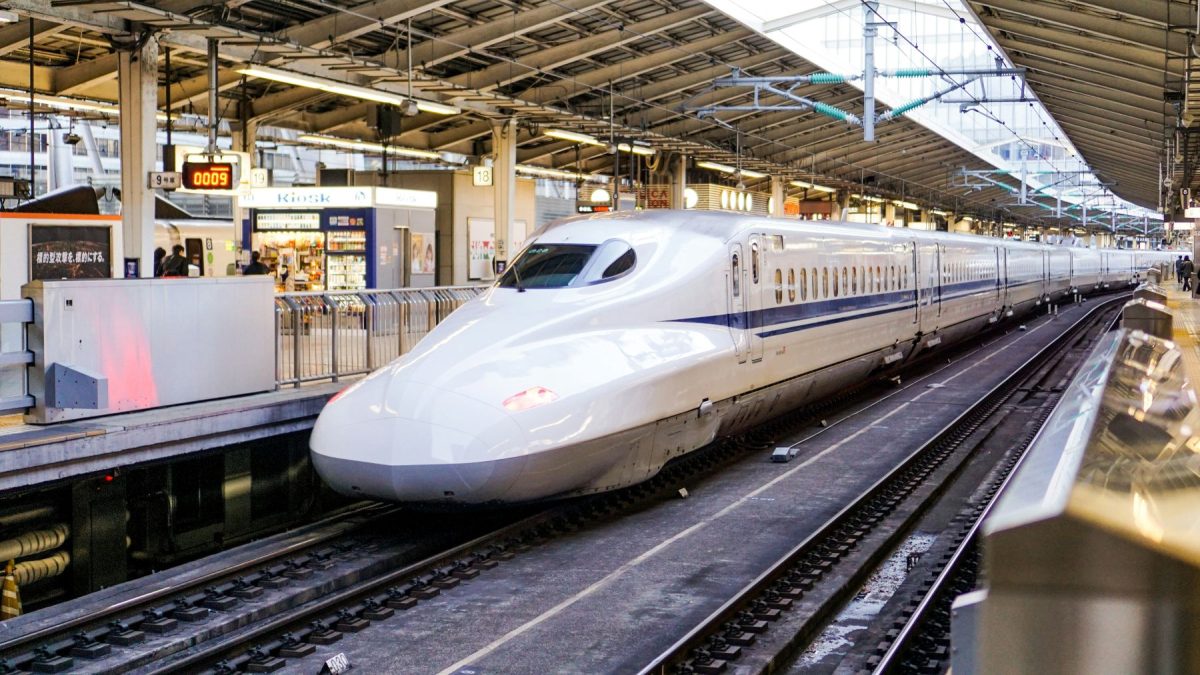
Japan's legendary bullet trains are about to get a major luxury upgrade. Come October 1, 2026, the Shinkansen will roll out its most ambitious overhaul yet: private, lockable compartments called Supreme Class that aim to compete directly with first-class airplane seating.
This isn't just a minor cosmetic refresh. JR Central and JR West, the two operators handling this transformation, are betting big on a fundamental shift in how travelers experience ultra-fast rail. The new cabins will debut on trains connecting Tokyo, Nagoya, Kyoto, Osaka, Hiroshima, and Fukuoka, transforming what's already one of the world's most reliable rail networks into something approaching luxury hotel service on wheels.
What you're actually getting
The Supreme Class comes in two flavors. Solo travelers get a compact, enclosed suite designed for one person. Couples or colleagues traveling together can book a larger cabin with a settee and considerably more elbow room. Both configurations feature reclining chairs, though there's one catch: the seats won't rotate to face either direction of travel, so if you're prone to motion sickness, take note.
The perks stack up quickly. Every cabin includes dedicated Wi-Fi, personal speakers at your seat, and individual controls for lighting, air conditioning, and announcement volume. Light snacks and refreshments arrive as standard. You're essentially getting a private office or retreat space hurtling across Japan at 320 kilometers per hour.
JR Central is rolling this out methodically. Initially, just 12 departures per day on the Nozomi Shinkansen (the fastest trains between Tokyo and Nagoya) will feature Supreme Class. By year's end, that jumps to 30 daily departures. The long-term goal: 30 percent of all Tokaido Shinkansen trains sporting the new cabins by the end of 2028. Eventually, slower Hikari and Kodama services might get them too.
The semi-private alternative arrives next year
If the full private suite feels too indulgent, Supreme Class Seats are coming between April 2027 and March 2028. Picture three rows of two rotatable seats, semi-private rather than fully enclosed. These rotating chairs appeal to passengers who suffer from travel sickness, since you can adjust your orientation during the journey. It's a clever middle ground between standard business class and total isolation.
Pricing and booking details
The solo cabin starts at ¥32,440 (around €176) for a one-way journey on the Tokyo-Nagoya route. The larger two-person suite costs ¥47,060 (roughly €255) for the additional passenger, on top of base and express ticket fees. Tickets are digital-only and can be purchased onboard if availability permits, which suits spontaneous travelers who prefer last-minute flexibility.
This premium positioning aligns with a wider global travel trend toward personalized, high-end rail experiences. Airlines have already embraced suite-style seating on long-haul routes, and rail operators worldwide are taking notice. JR Central President Shunsuke Niwa framed it simply: the company wants to serve customers who will pay for genuine quality.
The Shinkansen already commands respect among train enthusiasts for its punctuality, comfort, and speed. Adding private compartments positions it as a genuine alternative to flying for business travelers and leisure passengers willing to spend on comfort. You're looking at a fundamentally different travel experience, where the journey itself becomes a perk rather than something to endure.
The rollout timeline means early adopters will get first crack at this novelty starting this autumn. If you're planning a Japan trip in 2026 or beyond, expect these cabins to book solid during peak travel seasons.