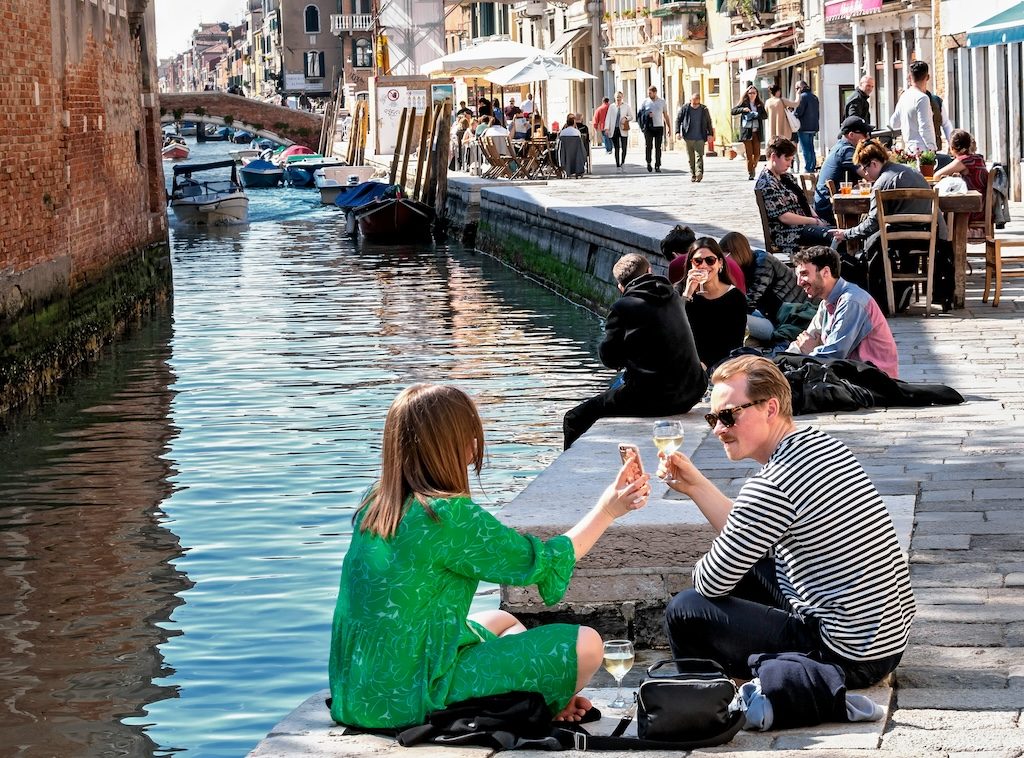
Italy is about to own the summer. New data from the country's Ministry of Tourism reveals that 2026 will be yet another record-breaking year, with international travelers choosing the Bel Paese over every other major European destination combined. The numbers are staggering, and they paint a picture of a nation that refuses to lose its grip on the global imagination.
According to Italy's Ministry of Tourism, hotels and vacation rentals are forecast to hit a 51.2% occupancy rate this summer, a decisive leap ahead of Spain (42.8%) and France (32.9%). What makes this even more remarkable? Italy is achieving this dominance while keeping nightly room rates at an average of 153 euros, undercutting both Spain at 170 euros and Greece at 195 euros. That's the sweet spot every destination dreams about: the most desirable place that won't destroy your budget.
The momentum is real. During the first half of 2026, Italy welcomed 4.43% more tourists than the same period in 2025. But here's the kicker: foreign arrivals surged by 6.45%, while domestic tourism nudged up just 1.97%. This means the world is knocking on Italy's door harder than ever. Europeans are packing bags like never before, and they're picking Italy with unmistakable conviction.
The Regional Winners and Hidden Gems
Calabria, the dramatic southern region most visitors skip, posted the strongest growth across all of Italy, jumping 10.54% in total arrivals and a stunning 23.19% among foreign visitors. Umbria followed with a 9.70% increase, while Piedmont, Sardinia, and Puglia all climbed above 7%. These aren't the usual Venice-Florence-Rome suspects. Travelers are venturing beyond the postcard classics and discovering the landscapes, food, and authenticity that made Italy famous in the first place.
Non-hotel accommodations are winning big too. Villas, guesthouses, and vacation rentals are outpacing traditional hotels by a substantial margin, with a 7.46% jump compared to hotels' modest 2.27% growth. This signals a shift in how people want to experience Italy: less formulaic, more local, more flexible.
Lake Districts and Spa Towns Are the New Stars
When summer peaks in June and July, expect occupancy rates to climb 13.4% and 10% respectively compared to last year. But the real surprise? Lake destinations will edge out coastal resorts. Alpine lakes like Como, Garda, and Iseo are projected to achieve 54% occupancy, while spa resorts and coastal towns tie at 51%. Demand in these segments is doubling the national growth rate, which means savvy travelers are looking beyond the Amalfi Coast.
Among regions, Veneto leads the pack with a projected 57.5% occupancy rate (hello, Venice, Verona, and Lake Garda), followed by Emilia-Romagna at 56.7%, and the northern alpine territories of Trento and Bolzano both exceeding 54%. Sicily and Tuscany round out the top seven, each well above the national average.
Flights Are the Real Tell
The airline data is jaw-dropping. Flight searches to Italy are up 26% compared to 2025, smashing the growth rates of Spain, Greece, and France. Poland leads the charge with a 76% increase in searches, followed by Germany (66%) and Spain (48%). Airlines are responding by expanding their game: direct flight capacity has jumped 14%, outpacing Spain's 8%, Greece's 7%, and France's meager 2%.
Even the traditionally quieter August ferragosto holiday period is heating up. Flight searches for the mid-August exodus (August 14-16) are up 17% this year. Italians and European travelers alike are planning earlier, booking larger groups, and staying longer.
Why Italy Is Winning
Tourism Minister Gianmarco Mazzi didn't mince words: "The summer of 2026 confirms itself as a success for tourism in Italy." He credited the synergy between government, hospitality businesses, and tourism operators for what amounts to a masterclass in destination marketing. Prime Minister Giorgia Meloni echoed the sentiment, thanking entrepreneurs and workers across the sector for positioning Italy as "increasingly attractive and competitive."
The government isn't resting on its laurels either. Despite global economic headwinds, Italian leadership views tourism as a strategic economic pillar and is pledging continued investment. That means infrastructure improvements, better connectivity, and support for smaller regional operators who are driving growth where it matters most.
Summer 2026 belongs to Italy. The question isn't whether the country will dominate European tourism. It's whether you'll book your flights before they become impossible to find.