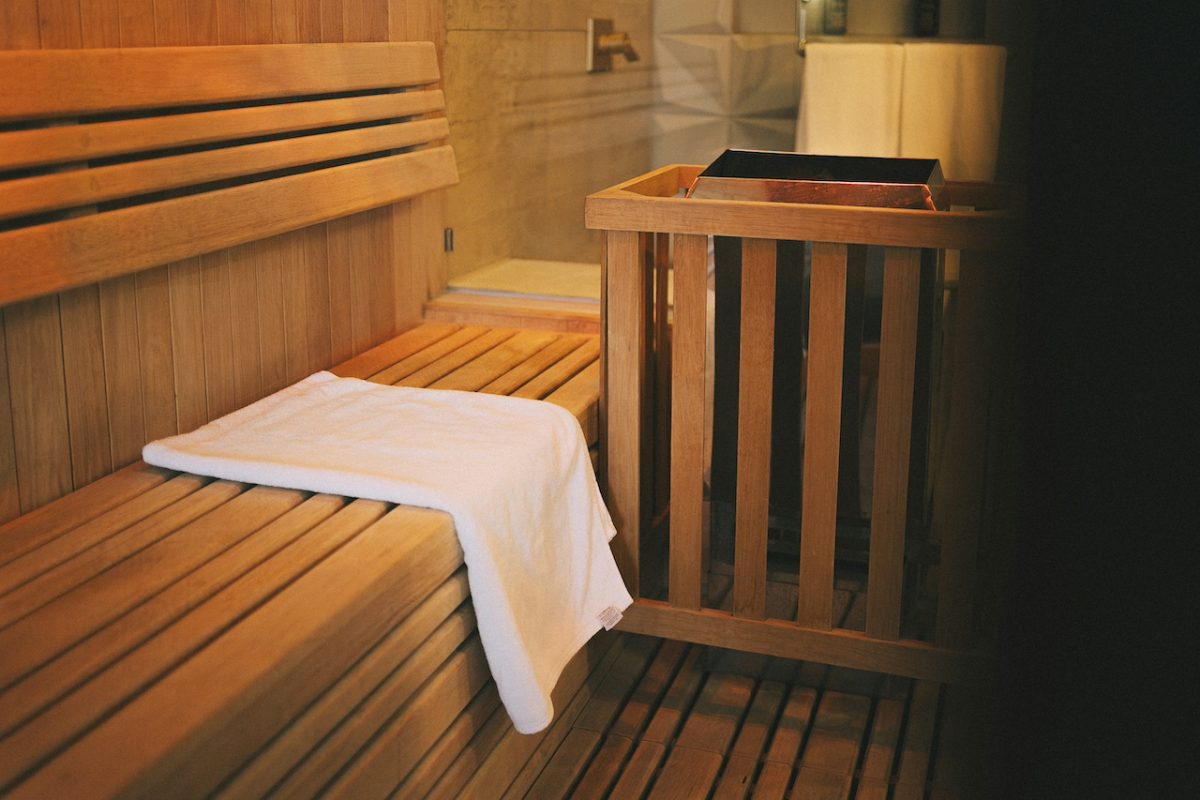
Privacy is a luxury at 35,000 feet, which is exactly why Air France made a bold decision in 2018. When the airline redesigned its Business lounge at Paris Charles de Gaulle Airport's Terminal 2E, it installed not one but two private saunas as the crown jewel of a sprawling 550-square-metre wellness sanctuary. Passengers could slip away before a long-haul flight, change in a private room, shower in solitude, and sweat out the stresses of travel in a wood-panelled sauna built for several people at once.
Five years later, both saunas are gone. The signs have been removed. The doors are locked. A "Staff Only" sign now marks what was once one of the most distinctive perks of flying premium with the French flag carrier.
The discovery came via Live and Let's Fly, an aviation website whose founder Matthew Klint noticed the sealed-off sauna during a recent visit and decided to ask around. A staff member confirmed the facility was "finished." When Klint pressed a lounge manager about whether the closure might be temporary, the response was telling: no, it's permanent. The manager explained that passengers had been "doing things in there that they should not have." The implications were clear enough that Klint didn't need clarification.
Air France has not officially confirmed what those "things" were, nor has the airline issued any public statement about why it pulled the plug. The closure remains based on an account shared between a lounge manager and an aviation journalist rather than any official carrier announcement. That distinction matters. What we know for certain is that the sauna is closed, the reason appears connected to passenger misconduct, and Air France decided the liability outweighed the luxury.
When Privacy Becomes a Problem
The sauna's appeal was straightforward: total seclusion. Unlike the shower suites that remain available in the lounge, the sauna offered complete privacy in a space large enough to accommodate multiple people. For business travelers looking to refresh before a meeting or leisure passengers trying to recover from jet lag, it was appealing. For others, apparently, it was an opportunity.
That tension between passenger comfort and passenger behavior sits at the heart of why premium airport lounges have become increasingly complex spaces. Airlines spend millions designing experiences meant to justify premium ticket prices and frequent flyer loyalty. But every amenity comes with assumptions about how passengers will use it. A shower is a shower. A sauna, on the other hand, occupies a gray area. It's intimate. It's hidden. It requires people to remove their clothes. All of these things make it both desirable and risky from an operational standpoint.
Air France's current lounge still advertises wellness offerings, including showers, relaxation areas, and complimentary Clarins treatments. The sauna simply isn't listed anymore. Other airlines have taken different approaches. Finnair continues to operate a traditional Finnish sauna in its Platinum Wing at Helsinki Airport, available to eligible passengers in the non-Schengen area. Whether Finnair has faced similar issues remains unknown.
The Cost of Being Ahead of the Curve
The sauna was a risk worth taking in 2018. Premium lounges were in an arms race, each trying to offer something competitors couldn't. A private sauna felt like a genuine innovation, a feature that travel bloggers would write about and frequent flyers would celebrate. Air France won that particular battle.
But amenities exist in the real world, not in marketing decks. The permanent closure suggests that maintaining the sauna became untenable. The airline had to choose between enforcing strict behavior protocols (security cameras, attendants stationed outside, constant supervision) or simply removing the feature. They chose the latter.
For travelers planning around premium lounge amenities like the next generation of airport lounge experiences, this serves as a reminder that features can disappear. Amenities listed on a website today might not exist next month. The most reliable lounge offerings tend to be the simplest ones: comfortable seating, decent food, a working shower, and quiet space to work or rest.
Air France's vanished sauna won't be the last amenity to face this kind of problem. As airlines push to differentiate premium experiences and attract high-spending customers, they're essentially building spaces where passenger behavior becomes harder to monitor. A well-designed lounge bar with bartenders is manageable. A private spa suite? That's a different story entirely.