Italy has always been a magnet for travelers, but the country's luxury scene is now growing at a pace that leaves the rest of the tourism market in the dust. A new study by Demoskopika reveals that stays in five-star hotels have more than doubled since 2008, jumping 111.1% over 17 years. Meanwhile, the overall hotel sector grew just 14.5% in the same period. That is not a gentle rise. That is a full-blown luxury surge.
The money behind this boom is staggering. In 2025, five-star and luxury hotels pulled in €10.4 billion, which is over 17% of the entire hotel turnover in Italy. Every single night a guest spends in a luxury property generates €702 on average, more than three times what a standard hotel earns per room. And it is not Italians driving this. Foreign visitors account for 77.7% of all luxury overnight stays, up 7.5% from the previous year.
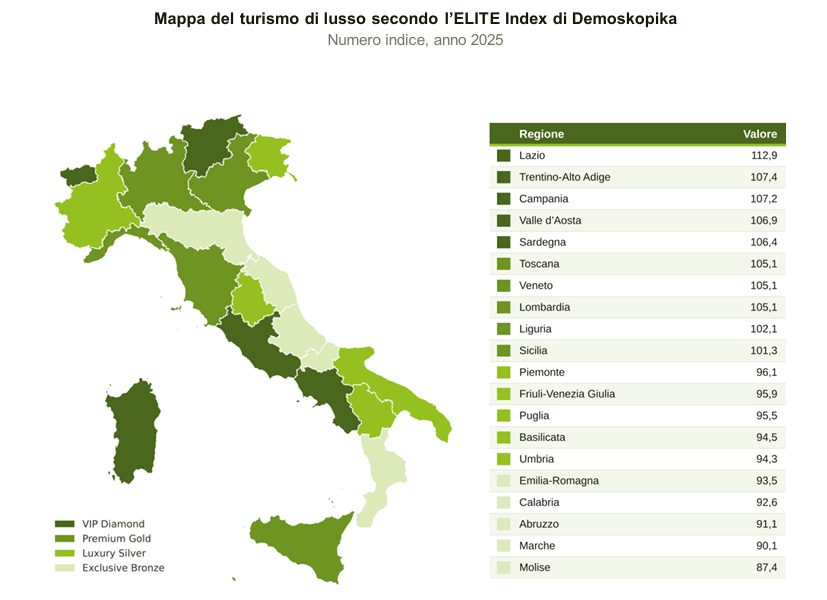
But here is the twist. Luxury tourism is not spread evenly across Italy. The study's ELITE Index shows that just five cities, Rome, Bolzano, Venice, Florence, and Milan, capture 53.4% of all high-end overnight stays. Rome alone accounts for nearly 20%. Add in 12 other major hubs, and you cover 79.2% of the luxury market. Meanwhile, 25 Italian provinces have no five-star hotel at all. The gap between the glittering hotspots and the quiet corners of the country could not be wider.
Regionally, Lazio, Trentino-Alto Adige, Campania, Valle d'Aosta, and Sardinia dominate the luxury segment. These are the places where the rich and famous come to play, from the Roman hills to the Dolomites, from the Amalfi coast to the emerald waters of the Sardinian coast. But the study suggests there is plenty of room for growth elsewhere, especially in the south, where the season is shorter and bed occupancy often falls below the national average of 37.1%.
Italy already leads Europe in total overnight stays, with 535 million in 2024, ahead of Spain (513 million), France (472 million), and Germany (440 million). Yet Italy has fewer visitor nights per inhabitant than Spain, 9.1 versus 10.4. The potential is huge, particularly if Italy can attract more high-spending travelers from Germany, the United States, and the UK, who are the top source markets for luxury travel. The luxury segment added 38 new hotels in 2025, bringing the total to 809, and the study argues there is still room for more.
So what does this mean for the average traveler? For one, the luxury boom is not just about the ultra-rich. It is reshaping how Italy handles tourism overall. The Brussels Forum says the real tourism battle is getting there, and Italy is listening. Extending the season, especially in the south, is part of the answer to capacity issues. But as noted at this week's Global Tourism Forum, pulling visitors in beyond the high season requires more than just flights. It needs services, cultural events, and a reason to stay.
For travelers, this means the luxury experience in Italy is becoming more accessible, but also more concentrated. If you want to avoid the crowds and still enjoy five-star comfort, look beyond the usual suspects. The two nations betting big on tourism to reshape their futures show that smaller destinations can offer just as much, if not more, than the big names. And with Europe's first-ever tourism strategy, the push for sustainable, high-quality travel is only going to grow.
One thing is clear. Italy's luxury market is not just surviving. It is thriving, and it is changing the face of Italian travel. Whether you are a five-star regular or a curious explorer, the landscape is shifting. Five-star stays generate €702 per night, and that money is flowing into a handful of cities. But the potential for growth in the rest of the country is enormous. The question is whether Italy can spread the wealth without losing the magic that makes it so special.