In the late 1990s, something unusual happened in the travel industry. While sustainability buzzwords echoed through conference halls and glossy marketing materials, a growing number of people started asking an uncomfortable question: was anyone actually doing anything about it?
That frustration sparked what became the responsible tourism movement. But its birth story is far more human than you might expect, rooted not in corporate mandates or regulatory pressure, but in the personal values of people who simply thought travel should do less harm.
When a Charity Asked Tour Operators Why They Cared
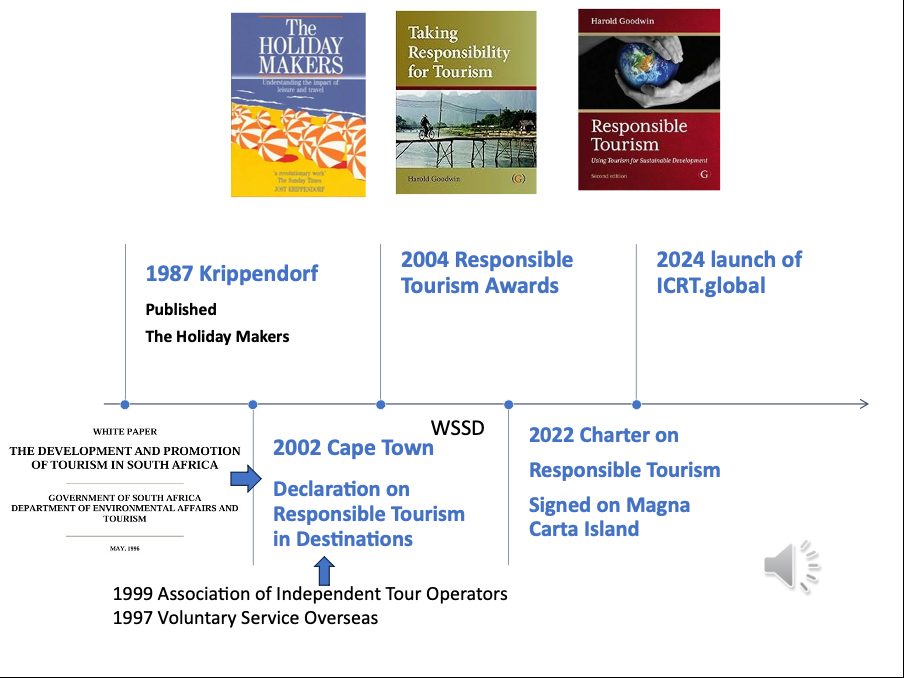
The UK volunteering organization VSO surveyed its members working across the globe about the biggest challenges facing their local communities. The results were stark: tourism topped the list. A few years later, only HIV/AIDS would rank higher. Alarmed by these findings, VSO launched a campaign for ethical travel practices and invited a small group of tour operators to participate in research that would help define what ethical tourism actually meant.
Working with Richard Hearn, founder of the tour company Inntravel, researchers reached out to members of AITO (Association of Independent Tour Operators) with a deceptively simple question: "What motivates you, or might motivate you, to follow an ethical trading policy?"
The responses came back in volume and detail. When researchers sorted through them, clustering similar answers together, a clear pattern emerged. Twenty-two percent cited moral conviction, personal values, and conscience. Seventeen percent wanted to preserve the places they worked in, maintaining the integrity of cultures and environments that drew visitors in the first place. Fourteen percent were personally invested in environmental and cultural issues. Only seven percent mentioned partnership with local communities and supplier loyalty.
Here's what stunned the researchers: not a single respondent identified commercial advantage or market benefit as their primary driver. These were business owners talking about why they cared. Yet none of them mentioned profit.
The Quiet Work Behind the Scenes
Beyond the headline motivations, the survey revealed something deeper. Two-thirds of AITO members described their suppliers as like-minded partners working toward shared goals, not simply vendors to extract value from. About one in five companies was actively investing in local development projects or supporting conservation efforts. One in three made regular charitable donations to their destinations. Half reported worrying about tourism's footprint at the places they featured in their brochures.
When asked whether AITO members should collectively commit to ethical standards, 52 percent said yes. Twenty percent remained undecided. Twenty-seven percent opposed it. The numbers suggested an industry hungry for structure around values it already held.
AITO's Responsible Tourism Committee, chaired by Hearn, concluded that the survey had uncovered "unexpectedly extensive good practice," with members across Europe and beyond already making tangible differences. The committee decided that acting collectively could amplify that impact. After the survey, membership in the committee nearly doubled from three companies to seven. Though the group hesitated to use the word "ethical" because of implications they found troubling, they endorsed a set of advisory guidelines in May 2000.
South Africa Makes History
While British tour operators were quietly building a framework for responsible travel, something far more significant was unfolding thousands of miles away. When South Africa's African National Congress took power in 1994, the country had no tourism strategy. Decades of anti-apartheid boycotts and security concerns had effectively shut down the industry.
As the nation rebuilt itself as a democracy, officials saw tourism as a lever for economic growth and social development. But they wanted it done differently. In 1996, South Africa released "The Development and Promotion of Tourism in South Africa," a white paper that looked conventional on the surface but contained something radical for its time: responsible tourism wasn't buried in the fine print. It was central to the policy, featured prominently on the cover and threaded throughout.
The government defined responsible tourism as "tourism that promotes responsibility to the environment through its sustainable use; responsibility to involve local communities in the tourism industry; responsibility for the safety and security of visitors and responsible government, employees, employers, unions and local communities." South Africa became the first nation to explicitly anchor a national tourism strategy to responsible practice, setting a precedent that would influence global conversation. This work eventually converged with international efforts, culminating in the 2002 Cape Town Conference on Responsible Tourism, held as an official side event to the World Summit on Sustainable Development.
Today, responsible tourism isn't fringe ideology. It's woven into how major operators think about their work, how destinations market themselves, and what travelers increasingly expect. That shift began not with mandates from above, but with people who believed their industry could operate according to conscience as well as commerce. It's a reminder that the most durable change often starts quietly, driven by individuals who simply think something should be better.