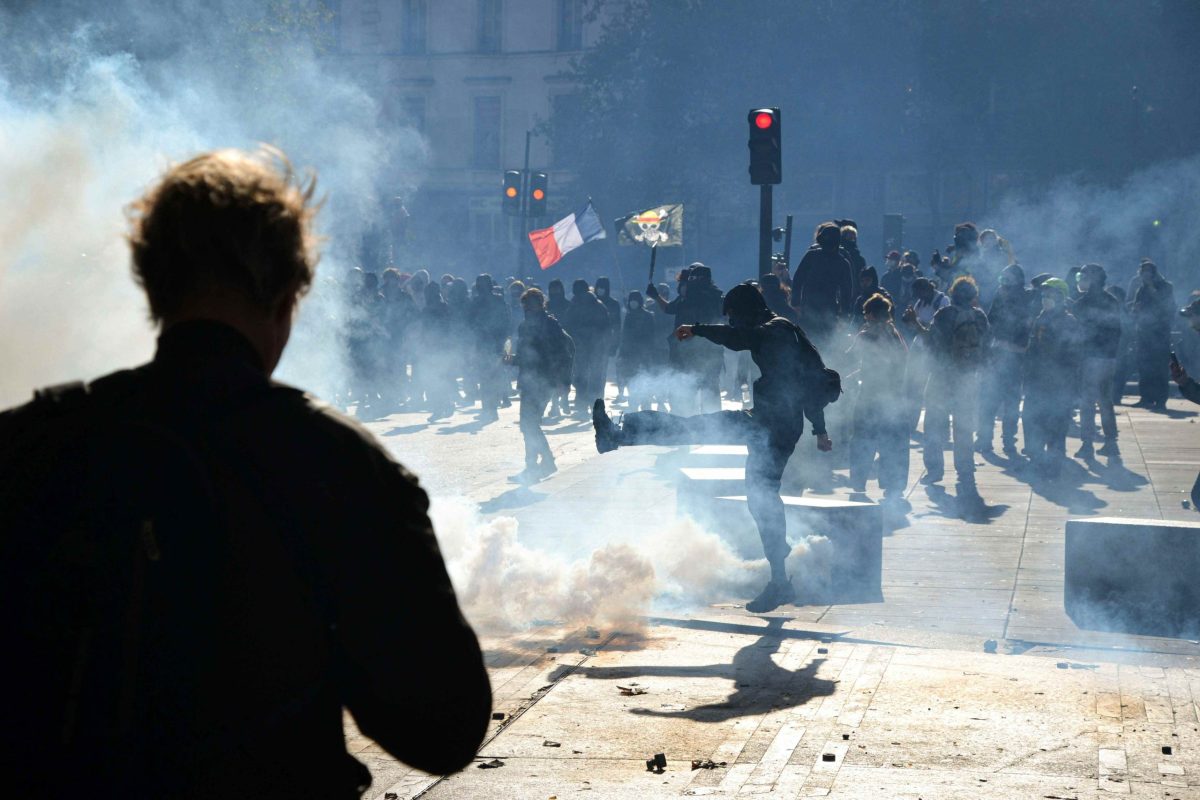
France is the world's most visited country, but right now its streets are anything but welcoming. A wave of protests that began as student demonstrations over inequality has morphed into a national anti-poverty movement, and in recent weeks it has erupted into violent clashes, looting, and arson in Paris, Nice, Lyon, and other major cities. The French government has responded with curfews, but for the tourism sector, the damage may already be done.
Christelle Cassagne, head of ADN Tourisme, the national federation of French tourism institutions, didn't mince words. She called the surge of violence in city centers "catastrophic." And the impact is tangible. Tourists who booked the trip of a lifetime are finding themselves locked out of iconic cultural sites. The Louvre, the Musée d'Orsay, and other world-famous attractions have temporarily shut their doors, leaving visitors with little to do but stare at their hotel walls. As Cassagne put it, "When you book a hotel for a week, it is not to stay shut away in your room."
The numbers back up the alarm. Didier Arino, head of research consultancy Protourisme, says that just one day of riots in Paris triggered a one percent cancellation rate for the month. Hotel bookings in the capital are down year-on-year, with MKG Consulting reporting a drop from 1 to 0.2 percentage points for stays from October 20 to 29, and from 3.5 to 1.9 points for October 20 to 25. That might sound small, but for a city that thrives on tourism, every percentage point counts.
Governments around the world are taking notice. Several nations have issued new travel advisories for France, warning citizens to avoid large gatherings, follow official instructions, register with safety apps, and in some cases, postpone trips altogether. The message is clear: the unrest is a serious concern for travelers.
But the ripple effects could extend far beyond France's borders. Thailand, which counts French visitors as its second-largest European market, is watching nervously. The Bangkok Post has speculated that if French tourists decide to stay home due to road closures, curfews, or financial strain from property damage, Thailand's tourism numbers could take a hit. So far, arrivals from France have held steady, with more than 610,000 visitors by mid-October, according to the Tourism Authority of Thailand. But the overall picture is mixed, with total foreign arrivals down 4.12% year-on-year, largely due to a dip in Chinese travelers after Golden Week.
For travelers who are still planning to visit France, the situation is fluid. More protests are scheduled for Saturday, October 24, and a general strike is set for November 5. That means transportation, access to museums, and general safety could be affected. If you have a trip booked, it's wise to check the latest advisories, stay flexible, and have a backup plan. Consider travel insurance that covers civil unrest, and keep an eye on official announcements from local authorities.
This isn't the first time France has faced tourism challenges, and it won't be the last. The country has weathered strikes, terrorist attacks, and pandemics, and it always bounces back. But for now, the streets are tense, and the message from tourism officials is clear: the situation is serious. If you're thinking about a trip to Paris or Nice, you might want to hold off until things calm down. Or, if you're already there, make the most of it by exploring quieter neighborhoods and supporting local businesses that are feeling the pinch.
For more on how France's unrest is reshaping travel, check out our analysis of France's burning streets and what they mean for your trip. And if you're looking for alternative European destinations, consider the sixteen cities that just made the cut for Europe's new tourism crown. Or, for a completely different kind of escape, read about France's highest hotel, which sits above the clouds and below the stars.
The coming weeks will be telling. If the protests subside and the curfews lift, France's tourism industry could recover quickly. But if the unrest continues, the cancellations could mount, and the country's reputation as a must-visit destination could take a lasting hit. For now, the world is watching, and travelers are making decisions with their wallets.