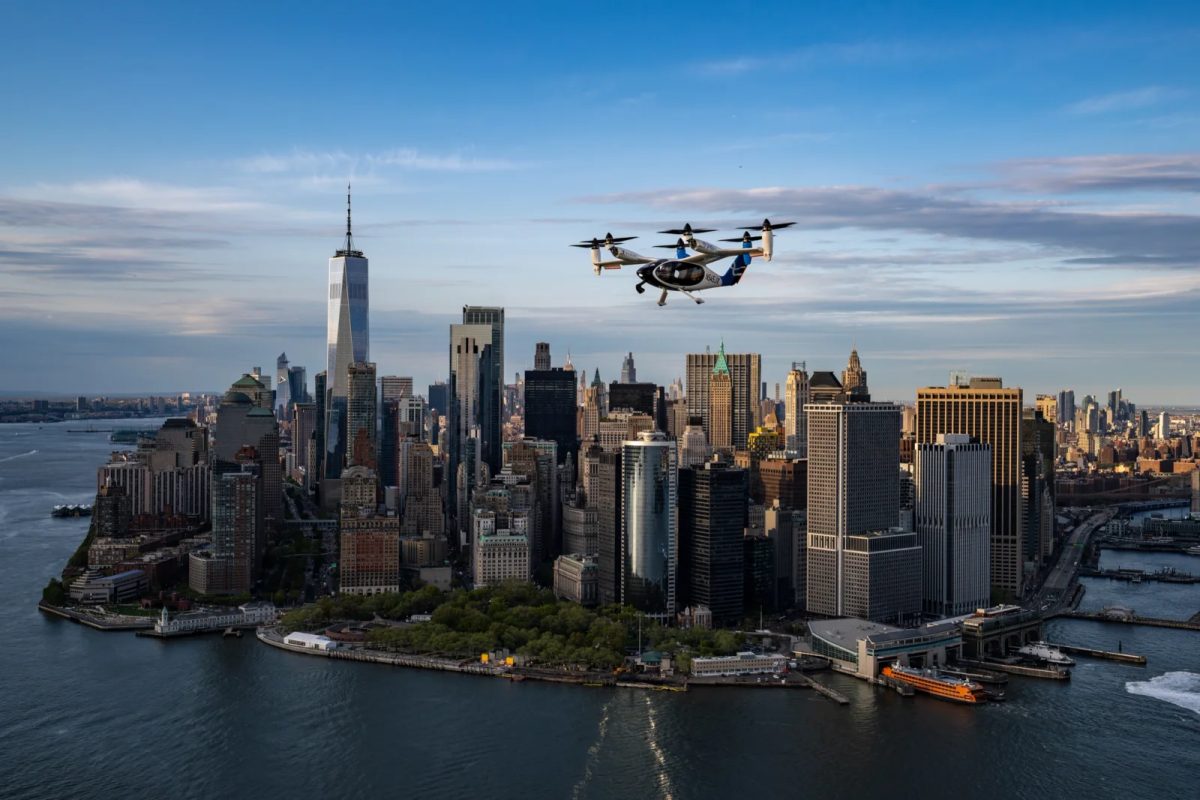
Remember when flying cars belonged to Saturday morning cartoons? Well, they just landed in New York City for real. Joby Aviation has completed the first operational electric air taxi flights connecting JFK Airport to Manhattan heliports, slicing what would normally be a 45-minute slog through traffic down to just nine minutes.
The achievement marks a genuine turning point in urban mobility. These aren't render-farm fantasies or dusty prototypes anymore. The Port Authority of New York and New Jersey partnered with Joby to conduct a 10-day trial period as part of the Federal Aviation Administration's official eVTOL Integration Pilot Program, backed by the White House. This isn't fringe innovation anymore. It's government-sanctioned, runway-tested reality.
How These Aircraft Actually Work
Joby's air taxis carry up to four passengers and look nothing like helicopters, despite functioning similarly. Six tilting propellers allow the aircraft to launch vertically like a helo, then transition into forward flight at speeds near 200 miles per hour. They're remarkably quiet and produce zero direct emissions, which matters in a city choking on exhaust fumes. The entire design prioritizes stealth and sustainability in ways traditional helicopters simply cannot match.
The test route connected midtown Manhattan to JFK in what the company calls "point-to-point" operations. That means direct flights between specific landing zones without intermediate stops. If this becomes routine service, your airport commute transforms from a teeth-grinding ordeal into something almost luxurious.
The Price Question Everyone Asks
Cost remains the elephant in the room. Currently, getting from JFK to Midtown via car service or ride-hailing runs between $150 and $250. Joby's CEO JoeBen Bevirt told NBC News the company aims to eventually undercut those prices, though inaugural pricing will almost certainly be premium. Think early airline pricing before routes commoditize and competition drives fares down.
That's where the real transformation happens. Once electric air taxis become standard infrastructure rather than novelty, pricing typically adjusts to match or beat traditional ground transport. The economics work because these aircraft burn no fuel and require minimal maintenance compared to conventional helicopters.
What This Means for Travelers
For anyone who's endured the New York airport gauntlet, this feels like salvation. That final transfer from airport to hotel has always been the trip's worst part. Long waits for ground transportation, traffic that swallows hours, aggressive pricing. Now imagine stepping off your international flight and being airborne toward Manhattan in minutes instead of sitting in a car for two hours watching the same neighborhoods repeat.
Similar operations are already being tested elsewhere. Joby flew demonstration flights over San Francisco Bay earlier this year, showcasing the aircraft against iconic backdrops like the Golden Gate Bridge. Dubai is preparing to launch commercial flying taxi operations by 2026, which tells you how real this has become across multiple markets. This isn't a New York peculiarity. It's a global shift in motion.
Beyond Airport Runs
The technology's applications extend far beyond airport transfers. Emergency cargo delivery, medical flights, offshore energy support, and eventually autonomous operations are all in active testing phases. Some of these use cases matter more to industry and logistics than tourism, but they accelerate the infrastructure buildout that benefits everyone.
What makes this moment significant is the governmental buy-in. Kevin O'Toole, chairman of the Port Authority, framed these trials as the agency's responsibility to "keep pace with the future." That's bureaucratic language for: we're not ignoring innovation anymore. We're actively shaping it. Jeanny Pak from the New York City Economic Development Corporation called the flights "historic" and noted that the future of advanced air mobility "is no longer a Jetsons-esque fantasy. It's already here."
The path from successful test flights to regular commercial service still requires regulatory approval, infrastructure expansion, and the inevitable scaling challenges. But the barrier between possible and real just collapsed. If you're planning a New York trip a few years out, don't be shocked if your airport transfer options include a sleek electric aircraft humming quietly through Manhattan's airspace. The future isn't coming anymore. It's already taxiing in.