There's a quote often misattributed to Albert Einstein about insanity: doing the same thing repeatedly while expecting different results. The actual origin is messier (it surfaced in a 1981 addiction recovery guide), but the idea sticks. And it's exactly what's been wrong with tourism across Europe for the past 20 years.
Hotels and destinations have been operating on autopilot, cycling through the same patterns year after year. Overflowing beaches. Overtaxed infrastructure. Local communities squeezed out of their own neighborhoods. The tourism playbook was stuck on repeat, and everyone knew it wasn't working anymore.
What's changed is that the evidence of success is becoming impossible to ignore. In 2004, tourism entrepreneur Justin Francis and academic Harold Goodwin created the Responsible Tourism Awards to surface examples of businesses genuinely rethinking their operations. Twenty years later, hundreds of tourism operators across Europe have shown that sustainable practices aren't just possible - they're often more profitable than the old model.
Real Businesses, Real Results
The 2025 awards revealed which European operators are leading the charge. Club Marvy, an all-inclusive resort in Turkey, won gold for proving that luxury and environmental responsibility don't have to be at odds. Delphina Hotels and Resorts in Sardinia took gold for local sourcing and supporting small suppliers, then went on to win at the global level. MEJDI Tours, which operates in post-conflict destinations like Northern Ireland and Bosnia and Herzegovina, swept the peace and understanding category and claimed a global award.
These aren't fringe players or small boutique operations. They're hotels managing thousands of guests, tour operators running major destinations. Liberty Fabay in Turkey and Skiathos Palace in Greece both won silver for reimagining waste management. Castelli Hotel in Greece, Emotional Sicily, and others proved that nature-positive tourism and cultural preservation translate into competitive advantage.
The pattern is clear: businesses that invest in genuine responsibility aren't losing money. They're building loyalty, attracting conscious travelers, and often cutting costs through smarter resource use.
Scaling What Works
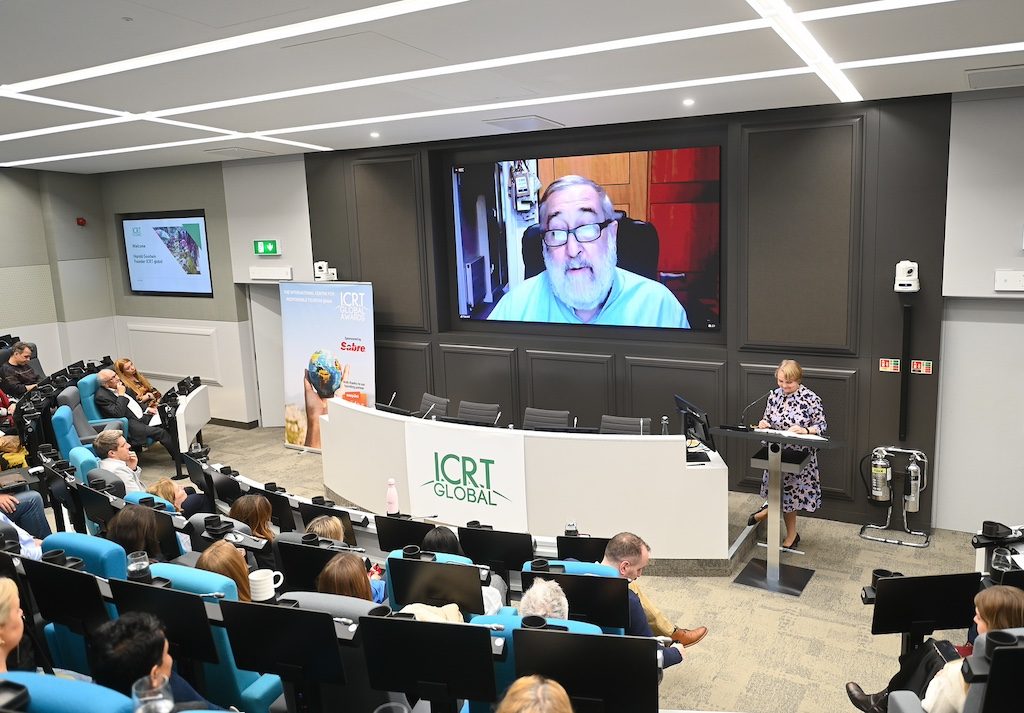
The challenge now isn't finding solutions. It's spreading them faster. Debbie Hindle, chair of ICRT.global, convened a panel of European changemakers to share proven practices across the continent. The organization's model is straightforward: highlight what's working, train others to replicate it, and use awards and research to accelerate the shift away from business as usual.
An upcoming webinar on March 16, 2026, will bring together tourism leaders and innovators to discuss practical opportunities. Participants will hear from the founders of Travel Tomorrow, Low Season Traveller, and from major players like easyJet holidays about how they're restructuring operations.
Your Chance to Enter
The 2026 European Responsible Tourism Awards opened for submissions in January. Entry is free. Competitions will judge initiatives in six categories: local economic benefit, diversity and equity, nature positive outcomes, cultural diversity, climate adaptation, and regenerative tourism.
Gold winners automatically advance to the Global Responsible Tourism Awards, announced each November in London. The awards deadline is April 3, 2026, with winners announced in Brussels in June.
If you run a hotel, manage a destination, or operate tours anywhere in Europe, the calculus is straightforward. Entering isn't just about winning a trophy. It's about signaling to travelers, investors, and other operators that you're serious about change. Equally, if you know of a business leading by example, encouraging them to apply spreads innovation across the sector faster than any conference or think tank could manage.
The tourism industry's old habits die hard. But across Europe, one hotel, one tour operator, one destination at a time, the playbook is finally being rewritten.