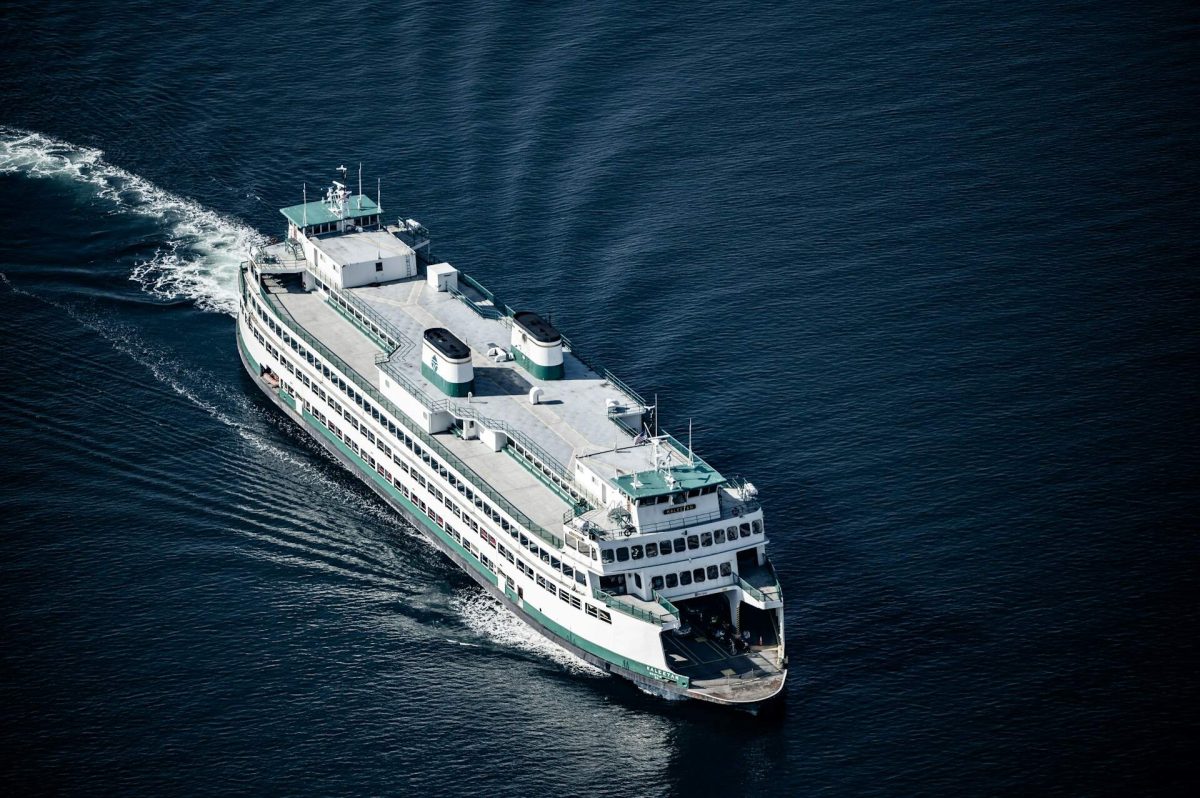
Boarding a ferry feels virtuous. You're avoiding the congestion of driving, the carbon footprint of flying. You're taking the scenic route. Except, according to fresh analysis from the clean transport NGO Transport & Environment (T&E), those ferries might be dirtier than you'd think.
The numbers are striking. A new study examining 1,043 vessels across Europe's 100 busiest ports found that ferries collectively emitted 13.4 million tonnes of CO2 in 2023. That's equivalent to the pollution from 6.6 million cars. In some port cities, the air quality impact is even worse. Dublin, Barcelona, and Naples all suffer from more sulphur oxide pollution (the kind that triggers respiratory disease) from ferry traffic than from all cars combined.
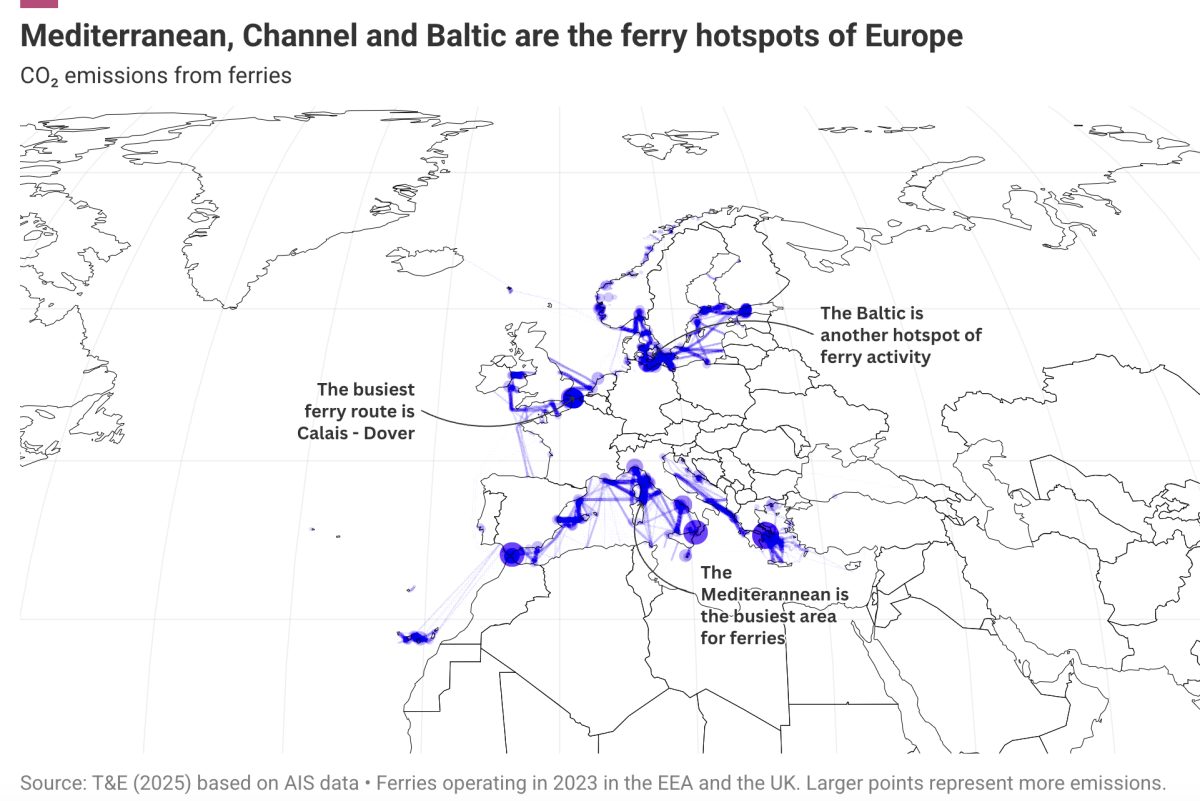
The worst offenders are unsurprising given their scale. Barcelona tops the list as Europe's biggest ferry-related CO2 emitter, followed by ports in Marseille, Rotterdam, and Valencia. The grueling Travemünde to Helsinki route produces the highest emissions of any ferry crossing on the continent, though the Dover-Calais run is close behind. Dublin, Las Palmas, and Holyhead round out the top polluters, with Las Palmas projected to overtake Dublin by 2027.
Why regulations aren't enough
You might assume new rules would solve this. They're helping, but not as much as hoped. New Emission Control Areas are coming to the north-east Atlantic by 2027, and the entire Mediterranean already became a Sulphur Emission Control Area in May 2025. Yet in Barcelona, ferry emissions still produce 1.8 times more sulphur oxide than road traffic produces, even after these regulations kicked in. Clearly, rule-making alone won't cut it.
The electric ferry revolution is actually happening
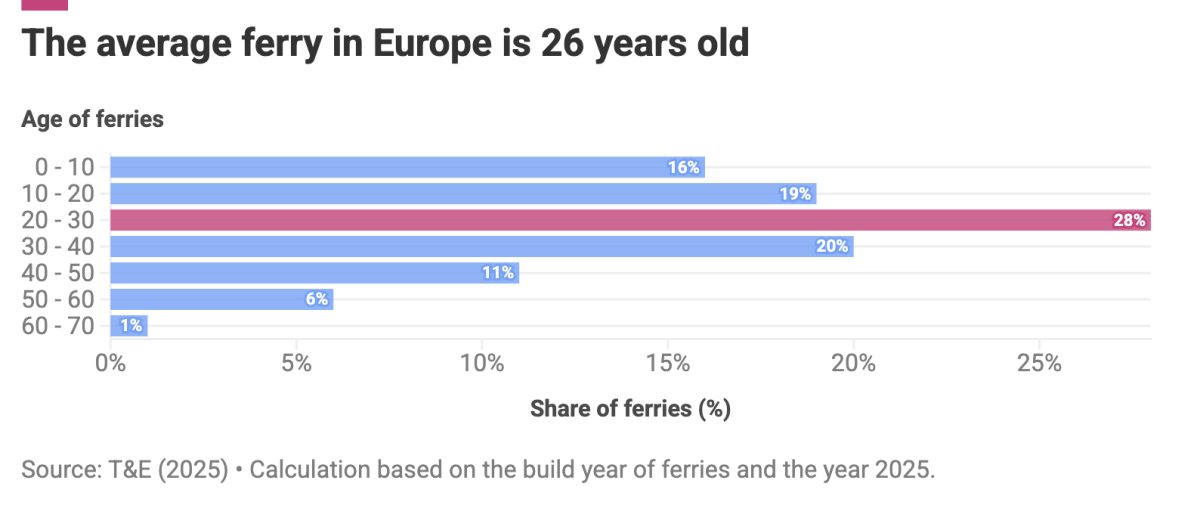
Here's where the story gets optimistic. Europe's roughly 2,000 ferries have an average age of 26 years. That means a massive fleet replacement is coming whether operators plan for it or not. The real question is what replaces them.
Research suggests up to 60% of Europe's ferries could run on electricity by 2035. That's not pie-in-the-sky thinking. Electrifying ferries could slash CO2 emissions by up to 42% while dramatically improving air quality in port cities where residents already breathe in maritime exhaust daily. The math works, too: electric ferries are already cheaper to operate on many routes, and more will become cost-competitive within the next few years.
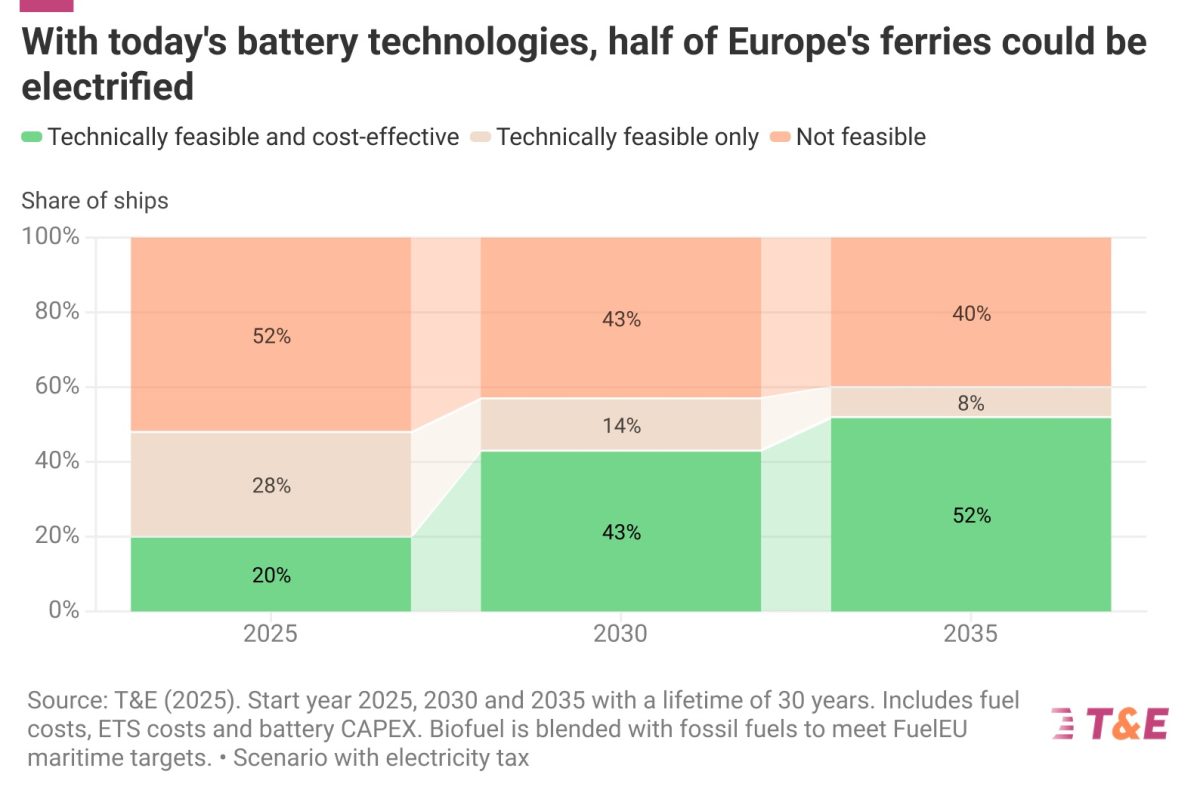
The charging infrastructure that was once seen as the main barrier? It's not as daunting as feared. According to T&E's analysis, 57% of ports would need only small chargers below 5MW to support electric ferry operations. Electrifying 20% of Europe's ferries by 2025 and 43% by 2030 is "technically feasible and cost-effective," the study concludes. The real obstacle is financing the transition, which will require substantial investment from EU policymakers and shipping companies alike.
Real-world proof already exists
This isn't theory. In Stockholm, an electric hydrofoil ferry trial cut emissions by 94% while slashing journey time from 55 minutes down to 30 minutes. Electric ferries will debut on Lake Tahoe too, offering a 30-minute cross-lake service designed to reduce road traffic and emissions on both shores. These aren't futuristic concepts; they're operational today.
Felix Klann, T&E's shipping policy officer, frames it simply: "Ferries should connect communities, not pollute them. Electrifying them could dramatically cut emissions and bring fresh air to millions of people." He notes that the case for switching is becoming harder to ignore as electric ferries drop in operating costs.
Dublin Port Company has already acknowledged the problem and started laying groundwork, announcing plans for shore-side power facilities. Other port operators will likely follow as the economics become clearer and regulatory pressure mounts. For travelers, this means the ferries you'll take in five or ten years could be radically cleaner than the ones you're taking today.