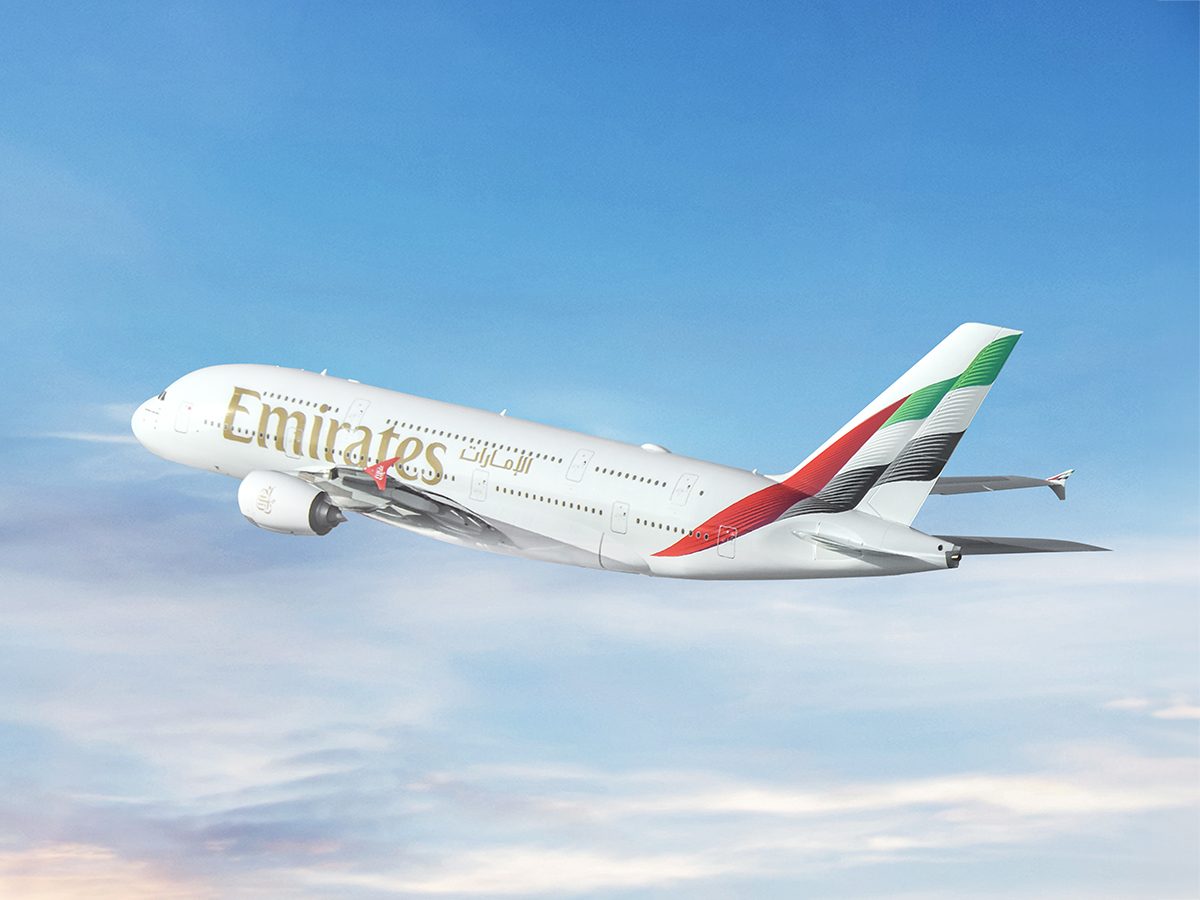
The first-ever World's Best Airlines ranking, a collaboration between TIME magazine and data firm Statista, has crowned Emirates as the planet's top carrier. The Dubai-based airline didn't just win the overall title. It also swept the Best Value and Business Travel categories, a triple win that signals a major shift in how we judge the flying experience.
Here's the part that might sting for European travelers. No European airline cracked the top 10. The first European carriers appear at positions 14 through 17, with Turkish Airlines, Finnair, LOT Polish, and British Airways in that order. Virgin Atlantic did manage to snag the best long-haul offering, but Emirates came second. And in the family-friendly category, Qatar Airways took the top spot, proving the Middle East is dominating more than just the luxury market.
So how did they decide? Statista surveyed passengers on every continent, asking them to rate up to five airlines they had flown in the past three years. The scores covered cabin comfort, service quality, entertainment, connectivity, food and drink, value for money, and family suitability. Then they merged those results with operational performance data, including flight analysis from OAG. The result is a list that balances passenger love with hard numbers.
Niels Terfehr, deputy CEO of Statista R, said Emirates' results "stand out for their consistency." Leading both the overall and business categories is no accident. It reflects a carrier that nails the basics while pushing premium boundaries. TIME pointed to Emirates' premium cabins, its expanding Premium Economy offering, and the sheer appeal of Dubai as a destination. Partnerships with tourism boards across the Indian Ocean, Europe, Southeast Asia, and the UAE didn't hurt either.
And the airline isn't resting. Sir Tim Clark, Emirates' president, said customers notice when an airline gets the fundamentals right, and the company is already working toward an even stronger 2027. That means a US$7 billion cabin retrofit program, with 108 aircraft already completed. By December 2026, Premium Economy should serve close to 100 destinations. Free Starlink Wi-Fi is live on 74 aircraft across all cabins, the entertainment system offers more than 6,500 channels, and there are 42 lounges worldwide. If you're curious about how this tech is spreading, check out our piece on free Starlink Wi-Fi on Brussels Airlines.
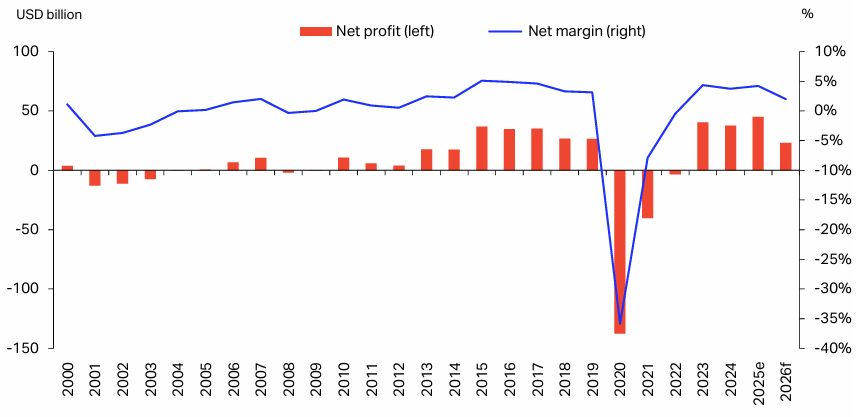
But this ranking arrives at a brutal time for the industry. In June 2026, IATA cut its annual profit forecast to $23 billion on revenues of $1.17 trillion, a net margin of just 2%. That's roughly half of what was projected before the war in Iran. Revenues are expected to rise about 9.5% in 2026, but costs are climbing 13.1%, with fuel eating up 31.4% of operating expenses. Seçkin Özkul, a supply chain academic at the University of South Florida, told TIME that airlines are "running on real thin margins."
So how are carriers coping? Ancillary income from seat selection, baggage, and meals hit nearly $160 billion in 2025, about 16% of revenue, up from 9% in 2016. Low-cost carriers keep base fares low and charge for everything else. Ryanair, Europe's largest airline, actually tops the reliability sublist, which might surprise some flyers. Meanwhile, bigger airlines are pouring money into premium seats. A 2026 McKinsey report found that on busy transatlantic routes, a business-class cabin can generate nearly as much revenue as economy while taking up far less space. That's a trend we're seeing across the board, as explored in how airlines are betting on comfort.
For travelers, this means the flying experience is becoming more polarized. You can either go ultra-budget and pay for every extra, or splurge on premium and get a taste of Emirates' winning formula. The question is whether the industry can sustain this pace. Emirates has shown that investing in the passenger experience pays off, but with margins this thin, every airline is walking a tightrope. As the airline industry braces for more turbulence, you might want to check how Arab airlines are preparing for a $4.3 billion storm in 2026.
One thing is clear. The days of assuming European carriers lead the world are over. The Middle East has taken the crown, and it's not giving it back anytime soon.