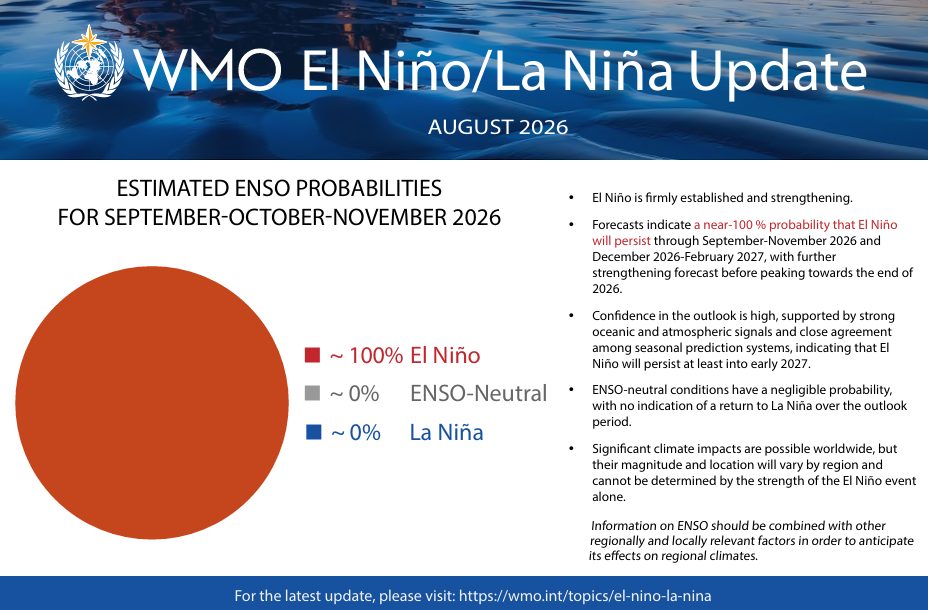
Autumn 2026 is shaping up to be a season of weather extremes, and the culprit is a familiar one. El Niño has officially established itself in the Pacific, and forecasters expect it to strengthen before peaking late in the year. The World Meteorological Organization puts the odds of El Niño conditions lasting through February 2027 at nearly 100 percent, which means travelers and tour operators alike should start adjusting their plans now.
This isn't a blanket warning for every destination. El Niño shifts rainfall, temperature, and atmospheric patterns in complex ways, and other ocean cycles can amplify or mute its effects. But the broad strokes are clear: expect disruptions from floods, drought, heatwaves, wildfires, and storms, along with added pressure on water, food, and transport systems in vulnerable regions.
A Shifting Map of Risk
In the Horn of Africa, heavy rains from October through December could flood roads and disrupt safari camps, making overland travel tricky. Southern Africa faces the opposite problem. The European Commission's Joint Research Centre forecasts drier-than-average conditions across South Africa, Namibia, Botswana, Zimbabwe, Mozambique, and Madagascar during the 2026-27 summer. That's bad news for wildlife viewing and agriculture, and it could mean water shortages in popular lodges.
Central America, parts of Southeast Asia, the Maritime Continent, and later northwestern Australia also lean drier than normal. These are regional probabilities, not guarantees for any single town or resort, so local forecasts matter more than ever.
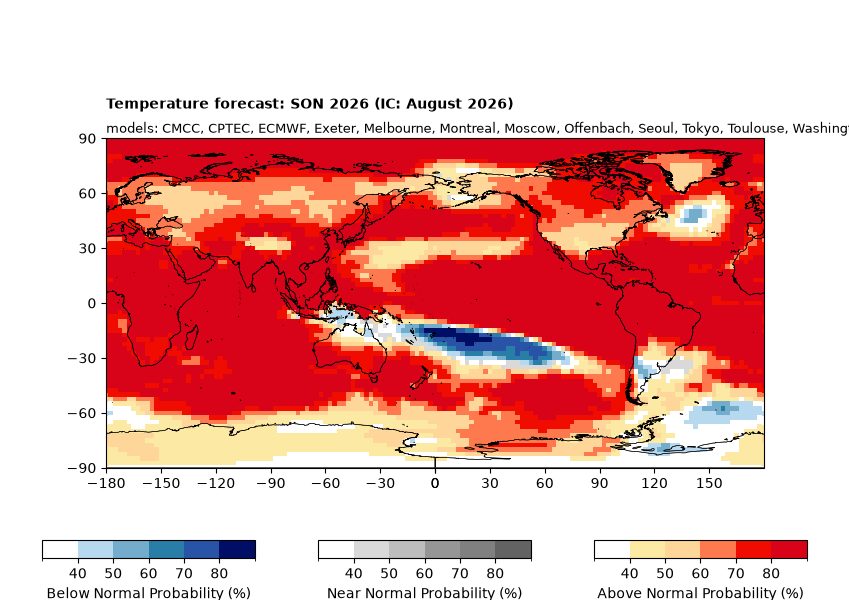
On the flip side, western South America, particularly Peru and Ecuador, often sees heavy rain and flooding during strong El Niño events. Travelers heading there should monitor national weather services closely. In the United States, the southern tier is likely to be wetter, and Pacific storms may shift toward California, raising flash flood risks. But don't assume a uniformly soggy winter for the West Coast just yet.
One silver lining: El Niño typically suppresses Atlantic hurricanes by increasing wind shear. NOAA gives the 2026 hurricane season a 55 percent chance of below-average activity. Still, the Caribbean remains a zone to watch, and drought could affect parts of the region and Central America, with conditions varying by island and season.
Europe's response is less predictable. The JRC sees a possible warm anomaly in autumn, potentially strengthening by spring 2027. That could mean an extended Indian summer or an unusually mild winter, but it's too early to tell. The takeaway is to prioritize destination-specific forecasts and official warnings over general climate models.
What the Industry Can Do
Airlines, tour operators, hotels, and destination managers need to build resilience into their operations. That means linking contingency plans to official alerts, offering alternative routes and backup accommodations, and having flexible staffing and clear shelter or evacuation procedures. Contracts should spell out what happens when weather closes roads, ports, or attractions, and businesses in drought-prone areas need water and energy plans that don't rely on a single source.
Cruise, safari, and adventure operators should review route access, wildfire exposure, and medical support capabilities. A remote camp that's cut off by flooding is a different challenge than a city hotel, and preparation needs to reflect that.
How Travelers Can Protect Their Plans
Flexibility is your best friend. Book tickets and accommodations that allow changes, build extra time into connections, and avoid itineraries that depend on one road, flight, or ferry. Before buying travel insurance, read the fine print on coverage for known events, weather disruption, missed departures, evacuation, and cancellation. Given the near-certain El Niño forecast, premiums could rise, so shop around.
Monitor national weather services and official travel advice before and during your trip. Save alerts offline, and keep medicines, key documents, and emergency contacts accessible. If you're heading to a hot destination, carry water, seek shade, and avoid the hottest hours of the day. In drought-hit areas, respect water restrictions and reduce your usage. Divers should check current reef and marine-park advisories, since marine heat can damage coral.
Shoulder-season travel or lower-risk alternatives might help, but even racecation-style trips can face disruption. The key is to stay informed and adaptable. For those planning European getaways, autumn from orbit looks like a planet changing its mind, so keep an eye on seasonal shifts. And if you're flying, strikes like the one at Leeds Bradford can add another layer of unpredictability.
Flexible bookings are essential for any trip between October 2026 and early 2027. Destination-specific forecasts beat general climate models when deciding where to go. And travel insurance may cost more given the near-certain El Niño, so budget accordingly.