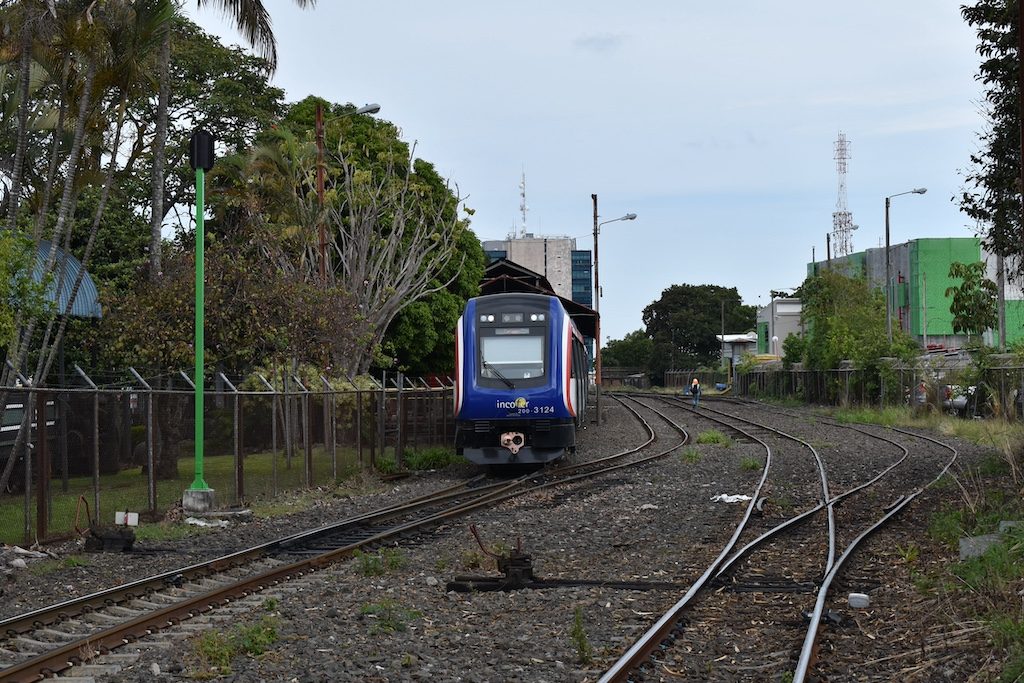
Picture this: you board a gleaming passenger train in Panama City, watch the urban landscape fade into lush jungle, and arrive in Costa Rica ready to explore one of the world's most biodiverse corners. That dream is technically one step closer to reality after Costa Rica's national rail operator INCOFER and Panama's National Railway Secretariat signed a memorandum of understanding to explore building a cross-border rail corridor between the two nations.
Before you book your tickets, though, pump the brakes. This is still in the early planning stages, and Central America has a complicated history with trains. The proposed rail line would run approximately 475 kilometers from Panama City to Paso Canoas on the Costa Rican border, with around 14 stops including Albrook, La Chorrera, Santiago, David, and Bugaba. The first phase would focus on connecting Panama Pacífico to Divisa. The agreement itself doesn't yet commit to extending into Costa Rica either, instead setting up a formal framework for both countries to conduct feasibility studies, engineering assessments, and environmental reviews.
The bigger vision is genuinely ambitious. Both governments are eyeing a broader Central American rail network that could eventually connect with Mexico's Tren Maya and other regional corridors. In the most optimistic scenario, passengers could theoretically board a train in Panama's jungle and theoretically reach the US border entirely by rail. It's the kind of infrastructure dream that could reshape how people travel across the region for decades.
Why This Matters for Travelers
Here's the thing: connectivity across Central America has historically been fragmented. Most countries dismantled their rail networks decades ago, leaving buses and airplanes to handle regional mobility. Costa Rica technically has a train network, but it's confined to commuter services around San José. Panama operates just one modern passenger line, connecting Panama City to Colón, mostly used by tourists and daily commuters. For everything else, travelers rely on buses, which are cheap and plentiful but not exactly comfortable for long journeys.
A functioning passenger rail service would change the calculus entirely. It would open up seamless travel between two of Central America's biggest tourism draws. Costa Rica's cloudforests, biodiversity hotspots, and Pacific beaches have made it a bucket-list destination. Panama offers the iconic Canal, dense rainforests, and San Blas Islands culture. Connecting them by rail would make it far easier for travelers to experience both in a single trip without dealing with car rentals, unpredictable bus schedules, or airport transfers.
The Obstacles Standing in the Way
The hard part is always the execution. Similar cross-border infrastructure projects in Central America have collapsed due to funding shortfalls, environmental concerns, land acquisition disputes, and political shifts when administrations change. Cross-border coordination introduces another layer of complexity entirely. Both countries need to align on engineering standards, border protocols, environmental protections, and cultural heritage safeguards.
Panama has already approved funding for a consultancy study and appears to be moving faster than Costa Rica, which is still in cooperation and preliminary planning mode. That enthusiasm mismatch itself could become a friction point. Plus, neither country has a particularly strong track record maintaining existing rail infrastructure, which raises questions about how well a new cross-border line would be managed long-term.
What Comes Next
Right now, both governments are in the data-gathering phase. Engineers will need to assess the route's viability, environmental scientists will study impacts on the region's sensitive ecosystems, and planners will figure out where stations should go and how to handle border crossings. This could take years. Then comes the funding question, which is the real test. A 475-kilometer railway doesn't come cheap, and neither country has unlimited resources for infrastructure projects.
The diplomatic importance here is real, even if the practical outcome remains uncertain. This memorandum represents a genuine commitment from both nations to explore regional integration. It shows that Central American governments are thinking beyond their borders about how travelers and goods move across the region. Whether that vision becomes steel rails and moving trains is a question only time and funding will answer.