If you've been following travel warnings lately, you've probably heard chikungunya mentioned alongside destinations like Bolivia and the Seychelles. But here's what should concern you more: this virus is no longer just a tropical threat. According to the CDC, warmer temperatures are making transmission possible across much of southern Europe, and climate change isn't slowing down.
Chikungunya spreads through mosquito bites, and the name itself tells you something about how nasty it can get. The word comes from the Kimakonde language in Tanzania, where the virus was first identified in the early 1950s. It roughly translates to the way infected people curl up from the pain. That's not marketing hyperbole. That's the actual disease.
What Chikungunya Actually Does to Your Body
Symptoms range from mild or even undetectable to genuinely severe. When the virus hits hard, expect fever, crushing fatigue, headaches, and joint and muscle pain so intense that movement becomes difficult. Some people develop rashes, nausea, and in rare cases, the infection turns fatal, particularly for older adults, newborns, and those with existing health conditions.
Here's the part that should make you take this seriously: up to 40 percent of people infected with chikungunya end up with severe arthritis and chronic pain that lasts as long as five years after infection. That's not something you want to gamble with before a major trip.
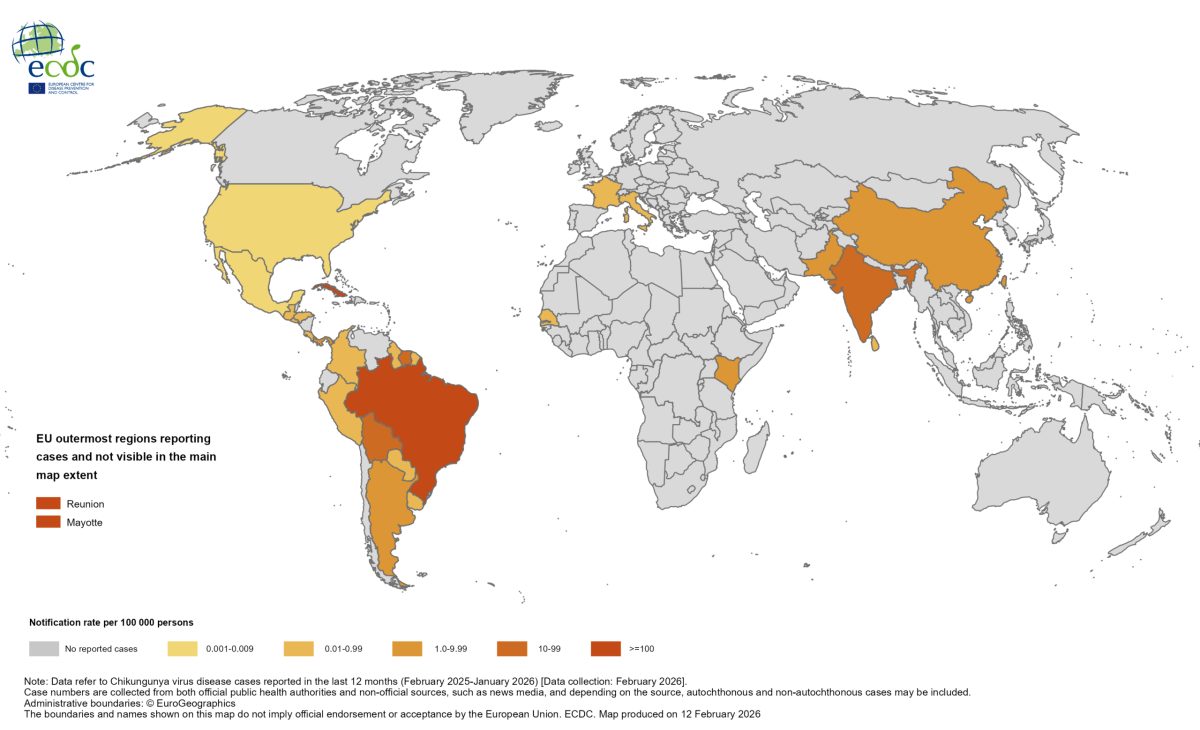
The numbers are climbing. In 2025 alone, there were over half a million cases across 41 countries and territories, with 186 deaths reported, according to the Pan American Health Organisation.
Where the Real Risk Is Right Now
Bolivia and the Seychelles have earned CDC Level 2 warnings, which means the agency is recommending travelers get vaccinated before going. If you're pregnant, they're suggesting you reconsider the trip altogether.
But the bigger story is unfolding in Europe. A new study published in the Journal of the Royal Society found that southern European countries like Greece, Italy, Portugal, and Spain now have conditions suitable for chikungunya transmission for more than half the year. Belgium, France, Germany, and Switzerland are seeing three months of potential transmission annually. Even parts of the UK's south-east are becoming hospitable to the virus for a few months each year. As global temperatures keep rising, researchers predict the virus will continue spreading northward.
How to Actually Protect Yourself
Vaccines exist, but they're not the simple solution travelers might hope for. Two chikungunya vaccines have regulatory approval in some countries, one for ages 18 to 59 and another for 12 and up. However, they're expensive, still under review in many places, and nowhere near widely available yet. If you're heading to a high-risk zone, ask your doctor about getting one before you leave, but don't expect it to be easy to find.
For everyone else, basic mosquito defense works. Use insect repellents and mosquito nets even during daytime hours, since these mosquitoes are active around the clock. Wear long sleeves and pants that give you full coverage, and choose pale colors when you can, since mosquitoes are less attracted to lighter shades. Eliminate standing water around your accommodation where mosquitoes breed. These steps might sound simple, but they're genuinely effective.
Over-the-counter pain relievers like paracetamol can manage fever and discomfort if you do get infected, but prevention is obviously the better strategy.
The Bigger Picture
Chikungunya isn't the only disease benefiting from warmer global temperatures. As climate zones shift, mosquito-borne illnesses are expanding their ranges. If you're planning trips to any at-risk areas in the coming years, check current CDC advisories before booking. Your future self will thank you for the small amount of planning that keeps you from spending months dealing with joint pain.