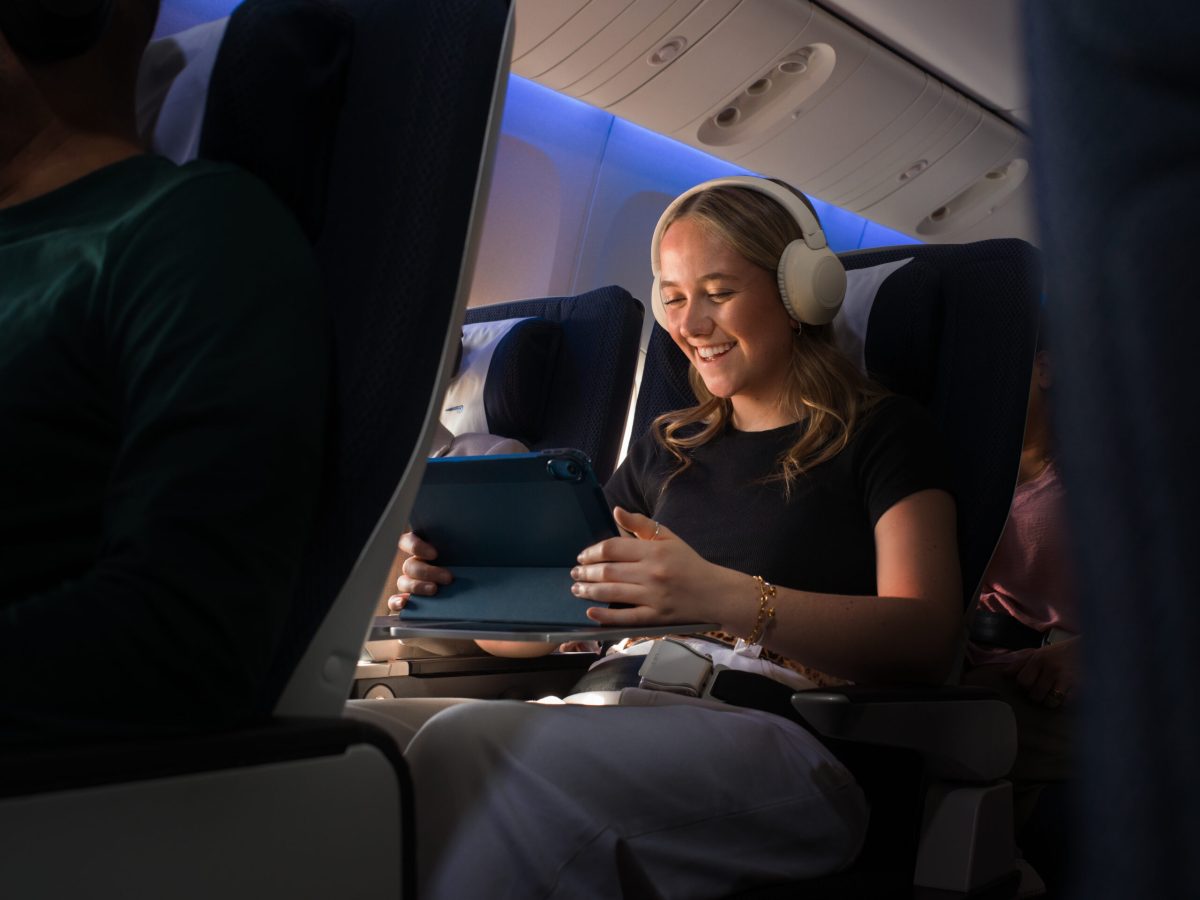
Your next flight from London could feel a lot less like being trapped in a digital void. British Airways has just become the first UK airline to flip on Starlink satellite internet, and it's doing something most carriers won't: offering it free to everyone, regardless of which cabin you're sitting in.
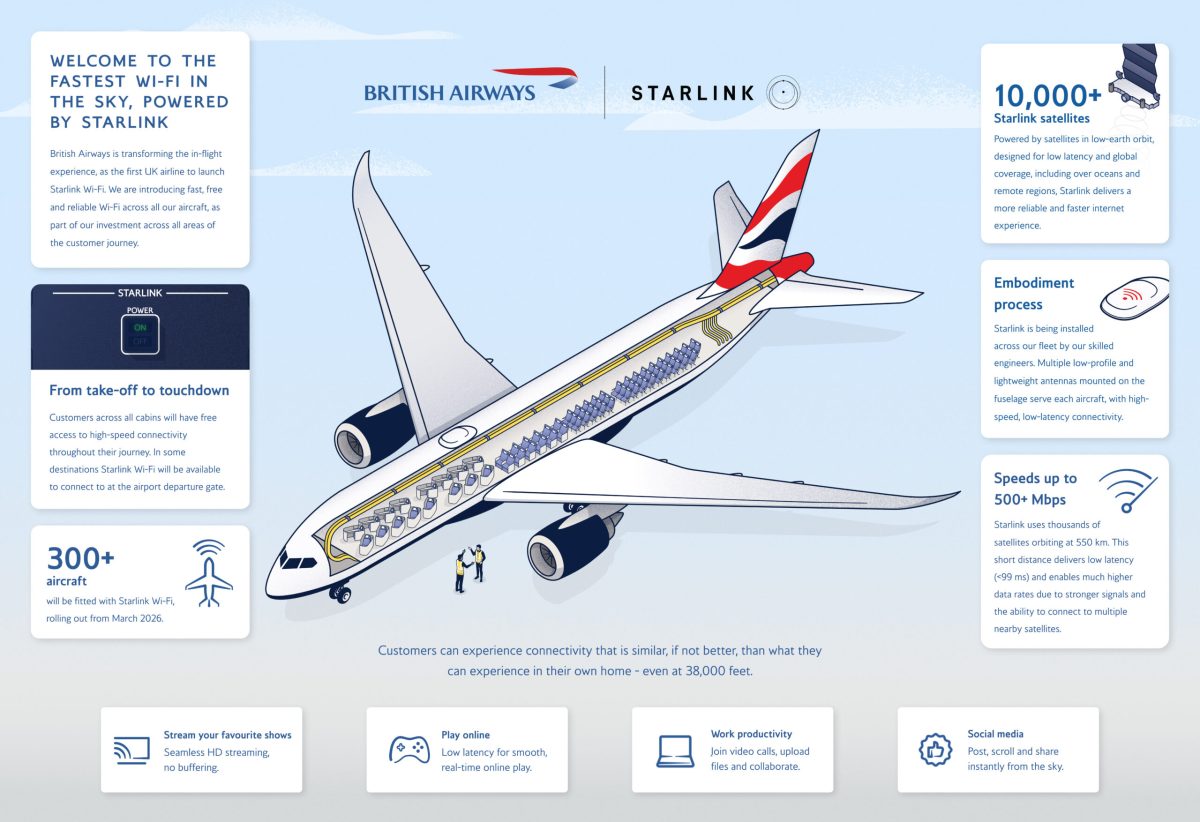
Flight BA197 from Heathrow to Houston took off on March 19 as the historic first, a Boeing 787-8 Dreamliner equipped with the new system. But this isn't some experimental flight that's here and gone. British Airways is serious about this upgrade. The entire fleet of over 300 aircraft (both long-haul and regional routes) will get the retrofit over the next two years, part of a bigger 7 billion pound modernization push that includes new lounges and cabin redesigns.
How Starlink Actually Works at Cruising Altitude
Starlink operates through a network of more than 10,000 satellites orbiting in low Earth orbit, developed and run by SpaceX. This matters because it means the connection doesn't rely on traditional ground infrastructure. The satellites are close enough that you get what's called "low-latency" connectivity, which translates to speeds that actually feel like home broadband. One early passenger put it best: "At 36,000 feet traveling at 450 mph, it's actually better than being stationary."
Forget messaging and checking email. This is real internet. You can stream video, work remotely, game, shop online, or even order food to be waiting when you land. That last part isn't a joke. For businesspeople and content creators, this changes the calculus of long-haul flights entirely.
Free for Everyone, Finally
Until now, British Airways charged passengers between 4.99 and 21.99 pounds for WiFi access, depending on how much data you needed. That paywall is gone. Every single passenger gets fast, reliable connectivity included, whether you're in economy or business class. It's one of those rare moments where an airline does something that actually feels generous.
This move is part of a larger ripple across European aviation. Starlink has already launched on airBaltic flights, and British Airways announced this milestone as airlines like Air France test the system. In North America, Hawaiian Airlines and JSX already offer it. But British Airways being first in the UK signals something bigger: satellite internet is becoming standard, not premium.
The Domino Effect
As part of International Airlines Group, which owns British Airways, this agreement with Starlink extends to sister carriers Iberia, Aer Lingus, Vueling, and LEVEL. That means a huge swath of European air travelers could see this technology deployed across multiple airlines simultaneously. British Airways continues to modernize its operations while competing with other carriers on the service front, and this move puts it ahead of the pack.
Not Everyone's Thrilled
There's a catch, or at least what some travelers see as one. Frequent flyers have openly worried that constant connectivity erases one of modern life's last "offline" refuges. One commenter captured the tension perfectly: "On one hand, I love the progress. On the other hand, airplanes were quiet zones. That window is rapidly closing."
It's a real tension. For some travelers, a flight was a rare chance to disconnect, read, sleep, or just sit with your thoughts. For others, the inability to work, communicate, or stay entertained mid-flight felt like a punishment. Starlink erases that excuse. Whether that's a win or a loss depends entirely on who you are.
What's clear is that we're at an inflection point in air travel. The technology reshaping how we travel isn't just about planes anymore. It's about what happens inside them. And once one major carrier goes all-in on free, fast internet, everyone else will have to follow. British Airways just raised the bar. The question is whether the rest of the industry can keep up.