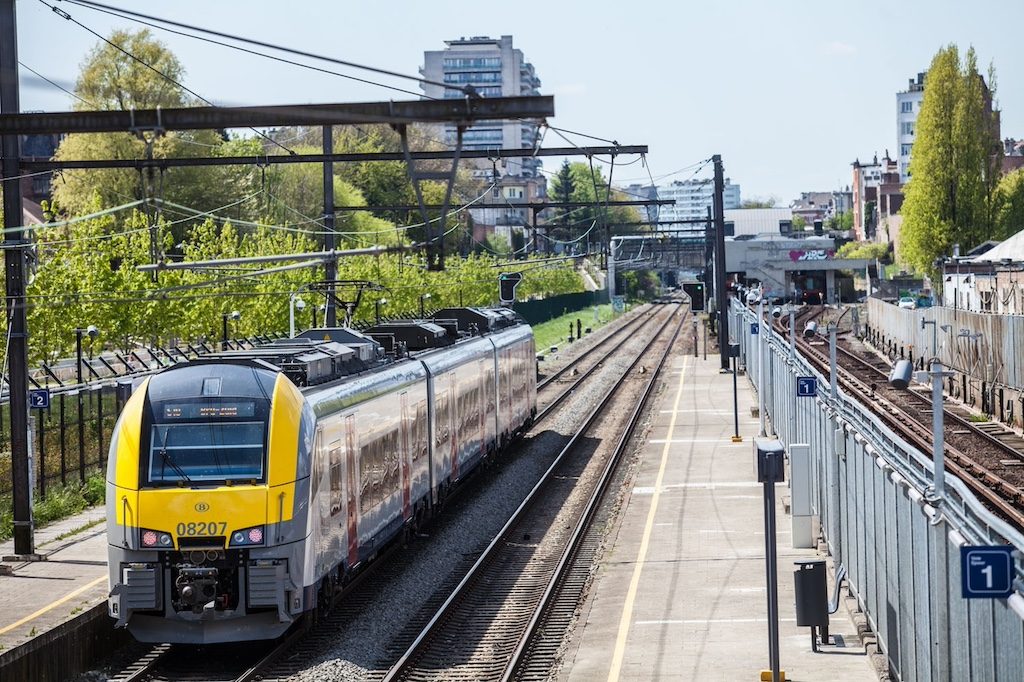
Something curious is happening at Belgian train stations. Travelers are buying tickets across borders at rates not seen before, with summer 2025 recording 1.6 million international journeys, up from 1.5 million a year earlier. That six percent jump might sound modest until you realize what it signals: the slow, steady collapse of the car-and-plane monopoly on European travel.
The numbers tell a revealing story. From Brussels South Station alone, you can now reach 6,000 destinations across fifteen European countries. A thousand of those sit within six hours of travel time, making them practical for weekend escapes or mid-week adventures. Paris and Amsterdam aren't the edge of the world anymore. They're just a morning train ride away.
Why trains are winning the climate battle
Ask someone why they switched from flying to rail and the answer often circles back to the planet. Three-quarters of Europeans now say climate concerns shape their travel choices, according to research by the European Travel Commission. And the physics backs them up. Trains emit roughly 80 to 90 percent less carbon dioxide per passenger-kilometer than commercial flights. Cars? They lose that comparison too, depending on how many people are riding along.
But the environmental argument is only half the story. Trains also offer something airlines and highways can't: comfort. No security theater. No cramped middle seats. No white-knuckle highway driving. The journey becomes part of the experience rather than something to endure.
Where Belgian travelers are actually going
France dominates. Paris pulls the obvious crowd, but travelers are branching out to Lyon, Avignon, and Montpellier, discovering that southern France exists beyond the Côte d'Azur. The Netherlands appeals just as strongly, with Amsterdam and Rotterdam drawing steady traffic. Germany's Cologne and Berlin have their followers too.
The real surprise is the rise of the far-flung routes. Austria, Czechia, Italy, and Spain are becoming less exotic and more achievable. Direct trains and smooth connections are making these destinations feel less like "someday" and more like "next month." Cheapening fares across Europe certainly help the case.
The rail expansion that's coming
NMBS/SNCB, Belgium's national operator, isn't sitting on this momentum. By 2030, they're planning to connect travelers to 8,000 international destinations. That's not just adding routes. It's fundamentally reshaping how people move through Europe. Brussels South Station already processes nearly 300,000 passengers weekly, cementing its status as a genuine international hub.
Behind the scenes, strategic partnerships are making this possible. NMBS/SNCB is deepening ties with France's SNCF to expand the OUIGO budget service. Switzerland's SBB is extending the TGV INOUI line from Brussels through Strasbourg and into Basel. Working with Dutch NS, the operator launched Eurocity Direct in 2024, offering straightforward connections from Brussels to Amsterdam South and Rotterdam without the connection headache.
The rail boom has been climbing steadily since 2019, with ridership jumping more than fifty percent in that span. That's not a temporary spike. That's a genuine shift in how Europeans travel. Whether you're chasing cheaper fares, lower emissions, or simply a more civilized way to cross borders, the train is becoming the obvious choice. And Belgium, sitting at Europe's geographic crossroads, is perfectly positioned to capitalize on that change.