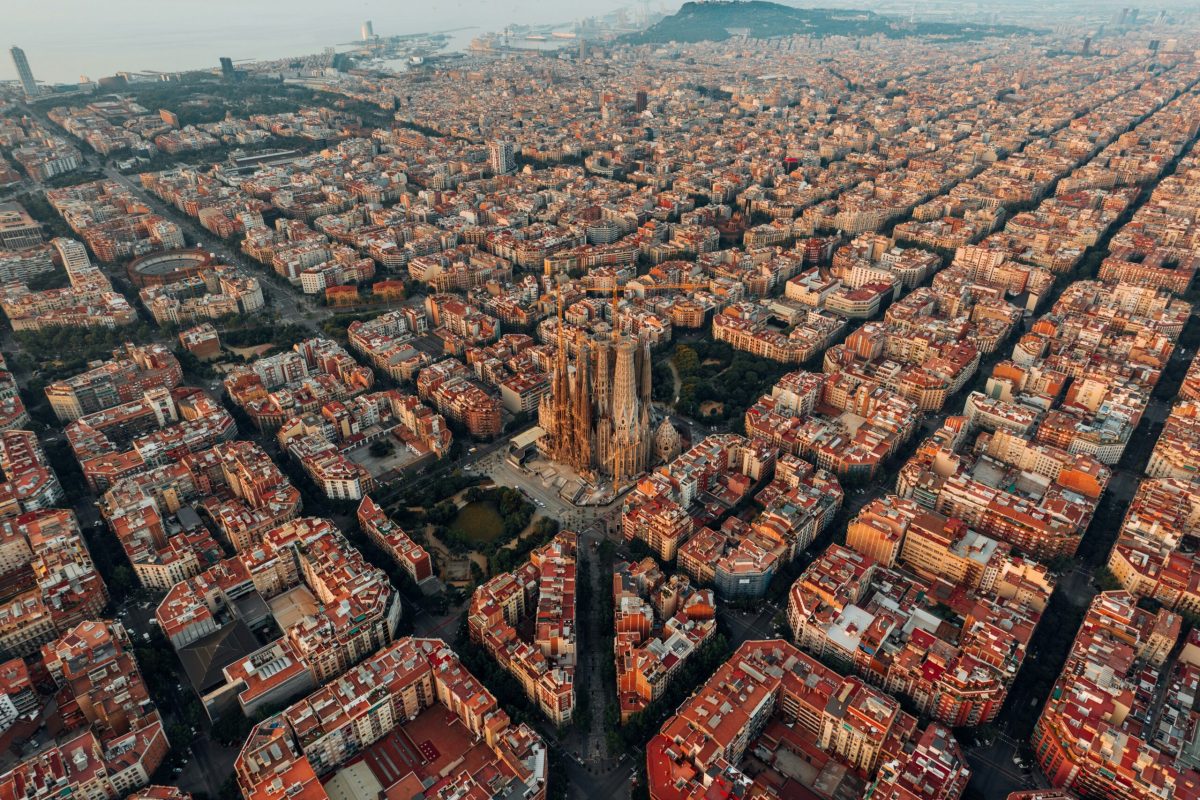
Barcelona has a message for the world's travelers, and it's not the usual invitation. The city that once lured millions with promises of Gaudí, tapas, and beach days is now asking for something different. It wants fewer tourists, but better ones. The new strategy, announced by the city's tourism board, is a deliberate shift away from growth and toward curation.
At the center of this change is a recommendation engine similar to what Netflix uses for movies. Instead of pushing everyone toward the Sagrada Família or Park Güell, the system will suggest experiences based on what each traveler actually cares about. Love contemporary art? Here's a gallery in Poblenou. Obsessed with seafood? Try a market stall in La Barceloneta. The goal is to spread visitors out and steer them toward the city's lesser-known corners.
The numbers explain why. Barcelona welcomed 15.7 million tourists in 2025, roughly ten times its residential population. Protests in the summers of 2024 and 2025 saw locals spraying water guns at visitors, a visceral sign of the strain. The city has already moved to phase out 10,000 short-term rental licenses by 2028 and doubled its tourist tax for overnight stays. Now it's going further by rethinking who gets to come at all.
“The message of the city now is: not one tourist more,” José Antonio Donaire, Barcelona's commissioner for sustainable tourism, told The New York Times. “The city has decided to fix a flat horizon on a curve that otherwise rises infinitely. We don't want to grow more. We want the tourists that the city already has.”
The rebrand from Visit Barcelona to This Is Barcelona is more than a logo change. It's a philosophical pivot. The new platform doesn't just list attractions; it offers guidance on respectful behavior and local customs. It's an attempt to make tourism compatible with daily life, not a separate industry that exists apart from it.
Mateu Hernández, CEO of Barcelona Turisme, frames it as a correction. “For the last 15 or 20 years we've only been talking about negative externalities of tourism, which are correct, but we have to also highlight the positive externalities and not take them for granted,” he told The Independent. The new site will push travelers toward concerts, exhibitions, and restaurants that define the city's cultural pulse, rather than just its monuments.
This approach mirrors a broader conversation happening across Europe. Sixteen cities just made the cut for Europe's new tourism crown, and many are watching Barcelona closely. The question is whether a destination can actively shape its own tourism economy without killing the very appeal that draws people in the first place.
For travelers, the practical takeaway is simple. Barcelona is no longer a place to tick off landmarks. The city wants you to come for a specific reason, a once-in-a-lifetime concert or a meal you can't get anywhere else, and then build your trip around that. The era of the spontaneous, see-everything Barcelona vacation is over. If you're planning a visit, think about what genuinely interests you, because the city's new tools are designed to reward that kind of intention.
The strategy is a gamble. It bets that quality can replace quantity, that a smaller number of engaged visitors can sustain the local economy better than a flood of selfie-stick crowds. It's a bold experiment, and one that could reshape how cities everywhere handle the pressures of global tourism. As AI could save tourism from itself, or make overtourism worse, Barcelona's algorithm-driven approach will be a test case for the industry.