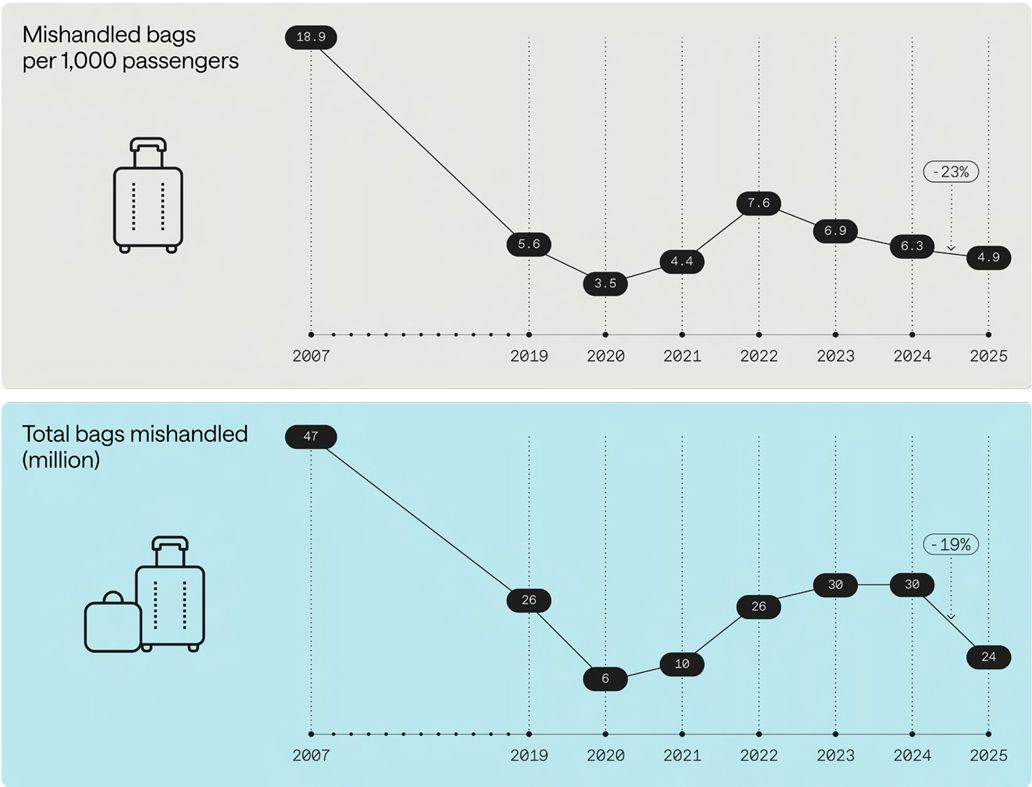
If you've ever watched your luggage circle an airport carousel that wasn't yours, take heart. The airline industry just delivered its best baggage performance in nearly two decades. According to SITA's 2026 Baggage IT Insights report, mishandled baggage dropped 23% in 2025 compared to the year before, sliding below pre-pandemic levels for the first time. With 5 billion passengers flying that year, the absolute number of lost or delayed bags fell to 24 million worldwide. That's progress worth celebrating, even if the fine print tells a different story.
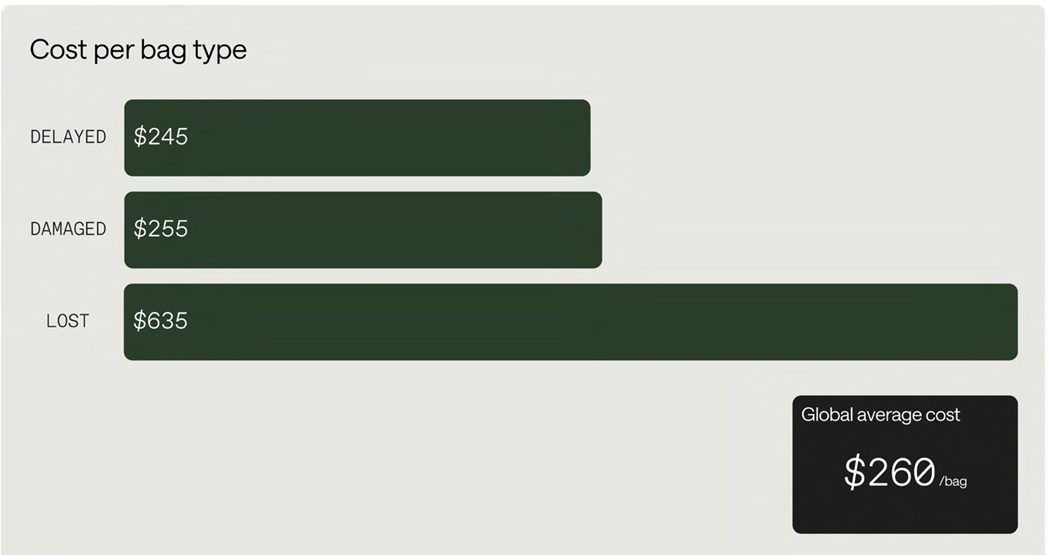
The math gets grim once you dig into the cost structure. A single mishandled bag now costs airlines roughly $260 to resolve, replacing the outdated $150 figure industry watchers used for years. That adds up to $6.3 billion in annual losses for the aviation sector, a number that barely budged despite the 23% improvement in handling rates. To put this in perspective, airlines earn an average net profit of just $8 per passenger. One damaged suitcase erases the profit from more than 30 seats' worth of ticket sales.
The Secret Sauce Behind Better Baggage
This turnaround didn't arrive via some single miracle technology. Instead, airlines and airports started treating baggage like the data problem it actually is. Real-time information sharing between carriers and ground handlers now flags potential issues before bags disappear into the system. Artificial intelligence systems predict delays and suggest alternative routing for luggage before congestion happens. Automated sorting equipment, biometric baggage drops (goodbye, lost boarding passes), and RFID tags that electronically track your suitcase throughout its journey have all layered together to create a genuinely smarter baggage ecosystem.
Passengers themselves became part of the solution when Apple AirTags and similar trackers went mainstream. SITA's integration with Apple's Find My technology reduced permanently lost luggage by 90% in its first operational year and cut recovery time for delayed bags by 26%. Google's Find Hub location sharing has since joined the platform, giving airlines yet another data stream when something goes sideways. The takeaway: turn on location tracking on your luggage, then grant airlines permission to see it. Your suitcase becomes findable in ways that previously required luck.
Where the System Still Breaks Down
Transfer flights remain the baggage industry's biggest pain point. Bags traveling between connecting flights account for 39% of all mishandled luggage cases, barely improved from 41% the year before. This explains why international journeys cause so much baggage anxiety compared to domestic flights. Cross-border trips mean more handlers, tighter connection windows, and more opportunities for something to go wrong. Delayed baggage represents roughly three-quarters of all mishandling incidents and drives about 70% of the total costs attached to luggage problems.
Real-world examples show how far automation can push efficiency forward. Thai Airways implemented SITA's automated baggage management tools across nine airports, replacing manual processes with digital systems. One task that previously consumed three minutes per bag now takes one second. The airline processed delayed baggage faster, reduced paper forms, and gathered detailed data on what causes delays in the first place. That feedback loop allows continuous improvement, which is precisely how you solve systemic problems.
What's Coming Next for Your Luggage
The industry isn't resting on this progress. About 73% of airlines plan to make artificial intelligence a top IT investment priority over the next two years. Half intend to roll out real-time baggage updates throughout passengers' journeys, letting you track your suitcase like a package delivery. IATA Resolution 753, the international standard requiring airlines to record baggage at critical checkpoints (check-in, loading, transfers, arrival), has passed 50% adoption. Full compliance targets 2027.
Future features sound increasingly convenient. Print your baggage tag at home before heading to the airport. Drop luggage at off-site facilities without visiting the terminal. Route bags separately from passengers when that saves time and money. These aren't distant possibilities; they're roadmaps airlines are actively building. The system that loses your suitcase will look almost unrecognizable in five years. Whether that's fast enough for frustrated travelers is another question entirely.