The future of urban travel just got a little more futuristic. On July 22, 2026, at the Farnborough International Airshow, Virgin Atlantic and Joby Aviation shook hands on a partnership that will bring electric air taxis to the UK. London and Manchester are locked in as the launch cities, and the implications for how we move between them are genuinely exciting.
This wasn't exactly a surprise. The two companies had been dancing around the idea since 2025, and Joby's existing relationship with Delta Airlines (which owns a 49 percent stake in Virgin Atlantic) made the partnership feel almost inevitable. Still, seeing it formalized is another signal that electric vertical takeoff and landing aircraft, or eVTOLs, are moving from science fiction into actual business strategy.
How the partnership actually works
Virgin Atlantic will handle the customer-facing side of things. The airline will sell Joby's air taxi service directly through its booking platforms, website, and mobile app, letting travelers link their air taxi rides seamlessly with long-haul flights. They'll also manage infrastructure integration and customer acquisition at both London and Manchester hubs. Essentially, they're the sales and marketing engine.
Joby keeps operational control. They'll manage the aircraft, determine routes, and navigate the regulatory minefield of getting approval from the UK Civil Aviation Authority. CAA certification for passenger-carrying eVTOLs is expected by the end of 2028, which gives both companies a realistic timeline to aim for.
"This agreement marks an exciting next chapter in our partnership with Joby and a significant step towards bringing electric air taxi services to the UK," Virgin Atlantic CEO Corneel Koster said. "Together, we'll create more seamless journeys for our customers, making it easier than ever to travel between towns, cities and our airports."
What you'll actually ride in
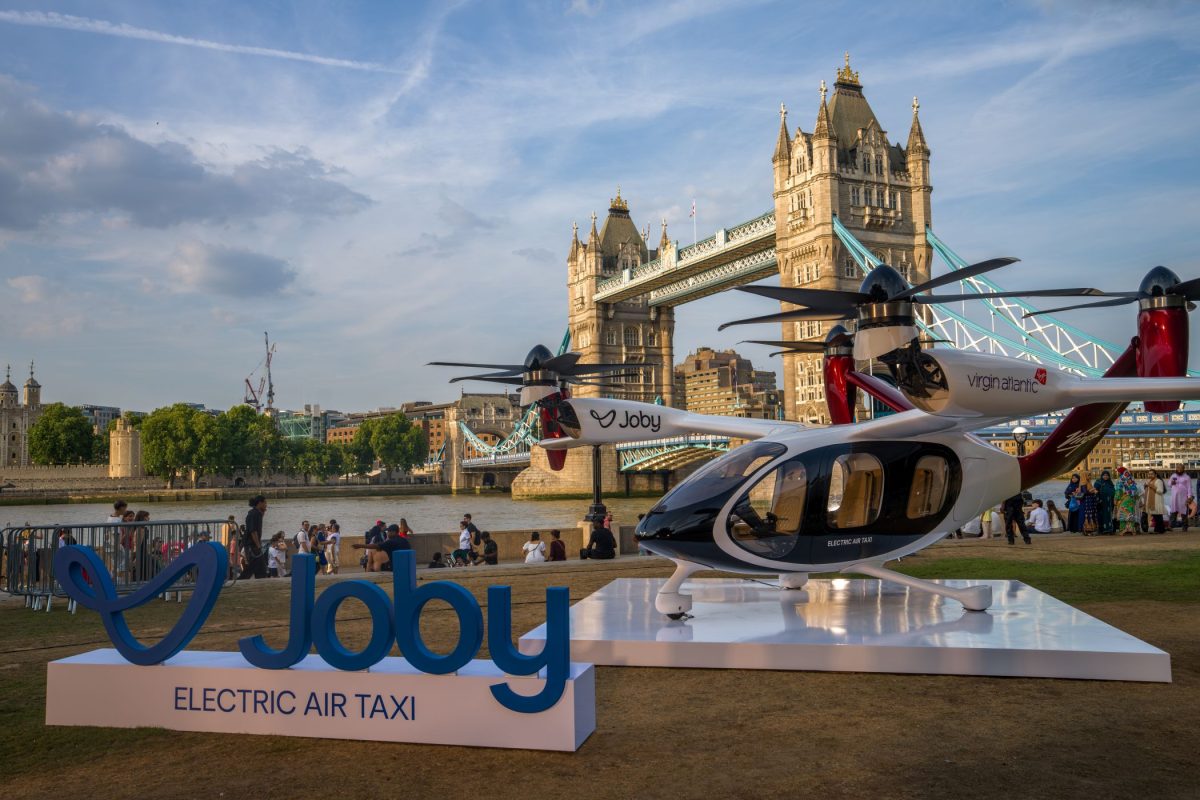
Joby's aircraft are worth understanding if you plan to book a seat. They have six tilting propellers that allow vertical takeoff and landing with noise levels a fraction of what helicopters produce. Each plane carries one pilot plus up to four passengers and can cruise at 200 mph. That's quick enough to matter.
The practical range is up to 100 miles, which opens up some genuinely useful routes. Manchester Airport to Leeds would take around 15 minutes by air. Heathrow to Central London, a journey that typically eats an hour or more in traffic, could happen in about 8 minutes. Joby has been testing the concept in real-world conditions, building confidence that this isn't just theoretical.
Pricing sits in the Uber Black range. Expect to pay roughly 100 to 120 pounds (around 130 to 160 dollars) for a trip between Heathrow and Central London, according to Joby's operations president Bonny Simi. That's premium, but for time-pressed travelers, beating an hour-long commute into a 8-minute journey might justify the cost.
The bigger picture for travel
This deal reflects a broader shift in how the aviation industry is thinking about short distances. Scotland's Loganair is planning to fly electric planes across Europe, signaling that zero-emission flight is becoming standard infrastructure rather than a novelty. Urban air mobility isn't a distant dream anymore. It's being locked into airline business plans and regulatory calendars.
The timeline is still fluid. No specific launch date has been announced beyond the regulatory target of late 2028. But with two major commercial partners now committed, funding secured, and UK aviation authorities working on certification standards, the path from concept to operation looks surprisingly concrete.
For travelers planning trips to London or Manchester in the next few years, this is worth watching. The ability to skip traffic entirely on a critical journey could reshape how people plan connections and business trips. It's not revolutionary in isolation, but it's one more piece of evidence that how we move through cities is genuinely changing.