For years, Turkmenistan has been the mysterious neighbor that other Central Asian countries talk about in hushed tones. Getting in required invitation letters, patience, and persistence. That's changing. In April 2025, the government passed legislation introducing electronic visas, removing the invitation requirement and joining regional peers like Kazakhstan and Kyrgyzstan in making entry straightforward. The move is deliberate: opening borders to grow tourism revenue and trade.
The real test comes this spring. From April 14 to 17, 2026, Ashgabat will host TurkmenTravel-2026, an international forum that brings together tour operators, airlines, hospitality leaders, and cultural heritage experts. Over 100 foreign delegates and 60 local tourism professionals will gather to explore partnerships, pitch new travel products, and discuss how to position the country on the global tourism map. The government has made clear this isn't a casual conference; President Serdar Berdimuhamedov personally directed that preparations meet a high standard and that Turkmenistan's tourism assets be showcased in alignment with official strategy.
A Country Built on Silk Road Secrets
What exactly is Turkmenistan trying to sell? Plenty. The country holds three UNESCO World Heritage sites: Ancient Merv, Kunya-Urgench, and the Parthian Fortresses of Nisa. Merv ranks among the largest and best-preserved oasis cities along the historic Silk Road. Nisa reflects the early power structures of the Parthian Empire. Kunya-Urgench showcases architectural brilliance from the Islamic era. These aren't obscure ruins; they're gateways to understanding how trade, faith, and civilization shaped Central Asia for two millennia.
Beyond monuments, Turkmenistan's living traditions matter. Carpet-making, dutar music, and traditional dance rituals appear on UNESCO's intangible heritage list. Visit during the right season and you're not just seeing artifacts in a museum; you're witnessing practices that communities still practice today.
Natural Wonders That Demand Seeing
The Darvaza Gas Crater, which has burned continuously since the early 1970s, sits about 260 kilometers north of Ashgabat in the Karakum Desert. Locals call it the Door to Hell. Visitors call it unforgettable. Yangykala Canyon cuts through rust-colored cliffs that glow during sunrise and sunset. These aren't soft, manicured landscapes; they're raw, otherworldly, and impossible to find anywhere else.
On the Caspian coast, the Avaza National Tourist Zone offers a different flavor. Once primarily a gathering place for international conferences, it's evolved into a proper resort destination that welcomes roughly 150,000 visitors annually. Hotels, parks, leisure facilities, and business spaces create a compound designed for both relaxation and work.
Marble, Mud, and Mountain Healing
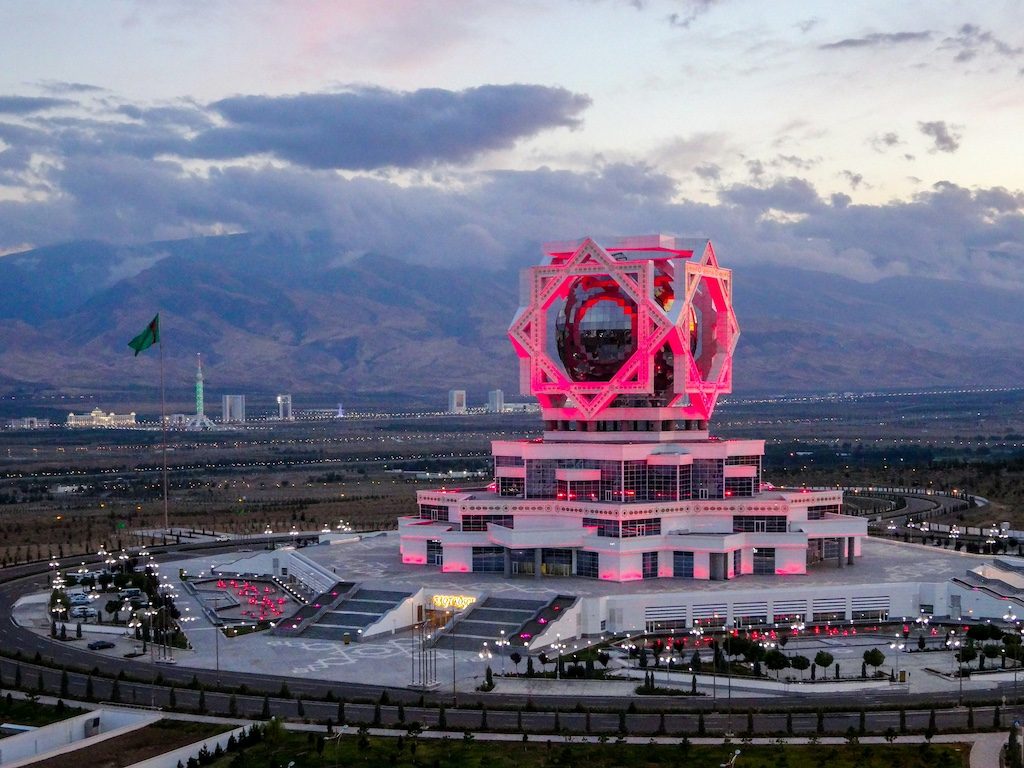
Ashgabat itself is a draw. The capital holds a Guinness World Record for the highest density of white marble-clad buildings. Whether you love or question the architectural uniformity, it's distinctive and photograph-worthy.
For travelers interested in wellness, the Caspian Sea region has enormous potential for wellness and ecological tourism, with mineral-rich waters and therapeutic muds. The Mollagara resort near Balkanabat offers specialized rehabilitation, healing mineral waters, therapeutic mud treatments, and sanatorium facilities. Archman provides similar offerings. These attract serious wellness seekers rather than casual spa tourists, which is precisely the market Turkmenistan is targeting during the forum.
The business program at TurkmenTravel-2026 will highlight all three tourism streams. Organizers plan specialized seminars on ecotourism and ethnographic routes, partnering with the United Nations World Tourism Organization and hosting a conference on innovation in the sector. B2B and B2G meetings will connect government bodies with private operators to expand cooperation.
Why This Moment Matters for Travelers
Like other emerging destinations repositioning themselves on the world stage, Turkmenistan faces a timing question. The infrastructure exists; the cultural assets are genuine; the natural wonders are real. What's missing is visitor familiarity and established tour networks. The e-visa system and the spring forum are attempts to fix that gap fast.
For adventurous travelers, this is worth watching. The country remains less crowded than mainstream Central Asian destinations. Authenticity runs high. Prices remain reasonable. And the historical depth rivals anywhere in the Silk Road corridor. Once tour operators begin properly marketing ethnographic routes, wellness packages, and desert expeditions, Turkmenistan could shift from being the mysterious neighbor to becoming a serious stop on Central Asian itineraries.
The question isn't whether Turkmenistan has tourism potential. It clearly does. The question is whether the government's push to streamline entry and host a major industry forum can translate that potential into actual visitor numbers. If TurkmenTravel-2026 succeeds in convincing regional and international tour operators to develop products around Merv, Nisa, Darvaza, and Avaza, the country's isolation may finally end. And for travelers who arrive in those early years, before the crowds catch on, that could mean discovering something genuinely undiscovered.