The year is 1916. The Great War has already chewed through a generation, and three brothers from the New South Wales coast are itching to get into it. Samuel, James, and young Eric Wilson, just 17, sign up with their father's blessing. They imagine adventure. They get Fromelles.
Within weeks of arriving in northern France, two of them are dead and the third is wounded, all in a single afternoon of chaos. The attack on a German stronghold near Lille was meant to be a diversion. Instead, it became Australia's worst 24 hours in military history, with over 5,500 casualties and no ground gained. The village of Fromelles would be etched into the national memory, but for the Wilson family, it was personal.
Their parents, George and Isabella, learned of the disaster in a series of telegrams that arrived over a single weekend. One son wounded. One missing. One killed. The missing boy, Eric, was later confirmed dead. Decades on, the family would say their mother died of a broken heart before she ever knew her youngest would not come home.
The Battle That Should Never Have Been Fought
The assault on 19 July 1916 was flawed from the start. Allied commanders sent troops across open ground in broad daylight, straight at intact German bunkers. The artillery barrage had failed to cut the barbed wire or destroy the concrete shelters. The result was a slaughter.
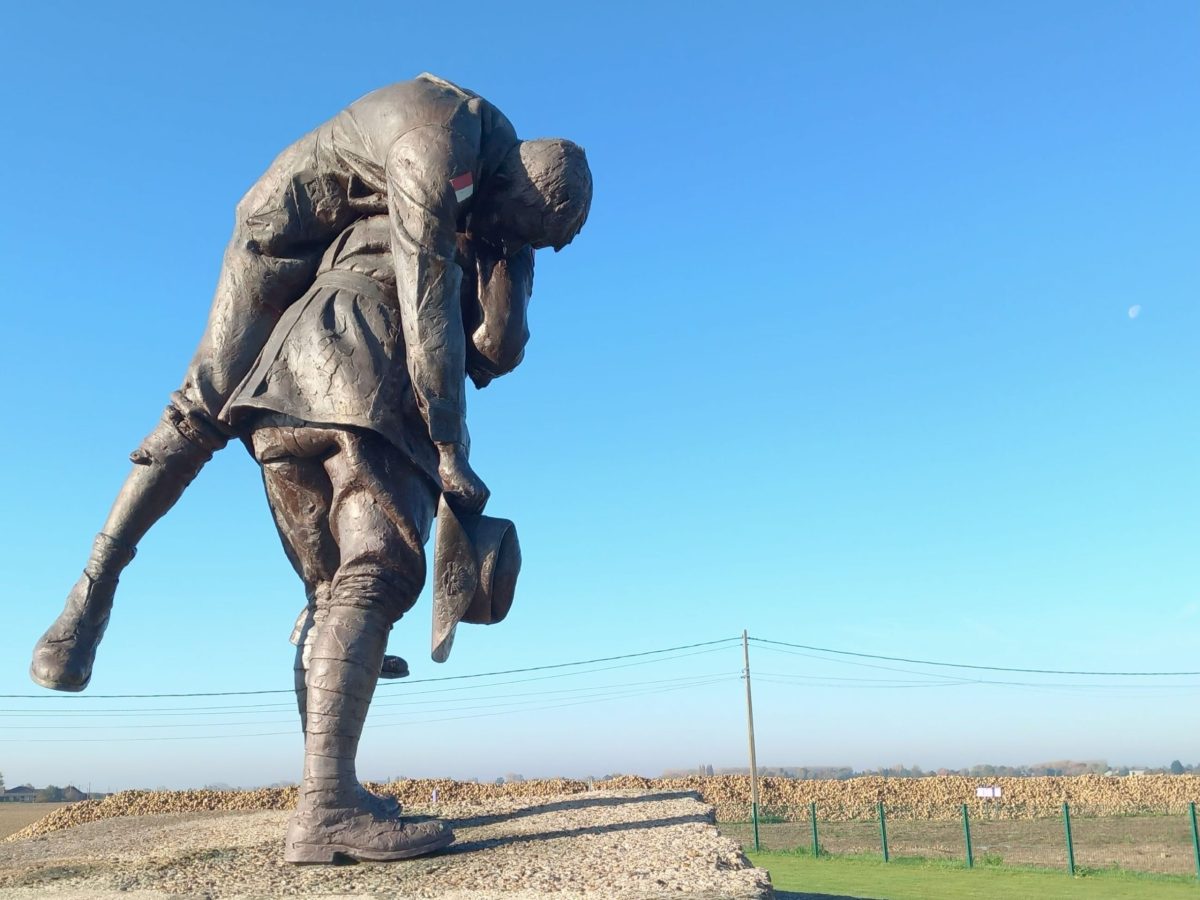
Yet out of the carnage came stories of extraordinary courage. Australian soldiers crawled back into No Man's Land under fire to drag wounded mates to safety. One of them, Sergeant Simon Fraser, became the face of this selflessness. His rescue of a wounded soldier, captured in Peter Corlett's bronze sculpture Cobbers, now stands in the Australian Memorial Park. The statue is a tribute to the mateship that defined the Australian experience of the war.
Today, the park sits quietly within the working French countryside. In autumn, sugar beets pile up in the fields. Just down the lane, beside active horse stables, lies the VC Corner Australian Cemetery, a unique collective grave for more than 400 unidentified Australian soldiers. The silence there is heavy.
Remembering the Fallen
The Museum of the Battle of Fromelles in the village itself tells the story with care. It also covers one of the most remarkable forensic recoveries in modern military history. In 2009, a mass grave was discovered near Pheasant Wood, and DNA analysis helped identify many of the soldiers. The museum's exhibits, including personal letters and photographs, bring the men back to life.
The Fromelles Association of Australia continues this work, documenting the personal stories of the soldiers and helping families trace their connections to those who served. It is a volunteer effort, driven by the belief that these men should not be forgotten.
How to Visit Fromelles
Fromelles is easy to reach from Lille, which has regular trains from Paris and Brussels. From Lille or nearby Armentières, take a taxi or Uber to the museum or the cemetery. The village is small, and you can see the key sites in a few hours, but plan for a full day if you want to walk the battlefield and absorb the atmosphere.
For those interested in the broader context of the war, the nearby city of Lille offers a base with plenty of hotels and restaurants. And if you are planning a trip to the region, consider pairing Fromelles with a visit to the Belgian national park just across the border, a peaceful contrast to the somber history.
The story of the Wilson brothers is a reminder that war is not just a matter of strategy and politics. It is about families, and the grief that follows. The Battle of Fromelles is a place where that grief is still palpable, and where the courage of ordinary men is honored. Visiting the memorial park and the museum is a powerful experience, one that stays with you long after you leave.