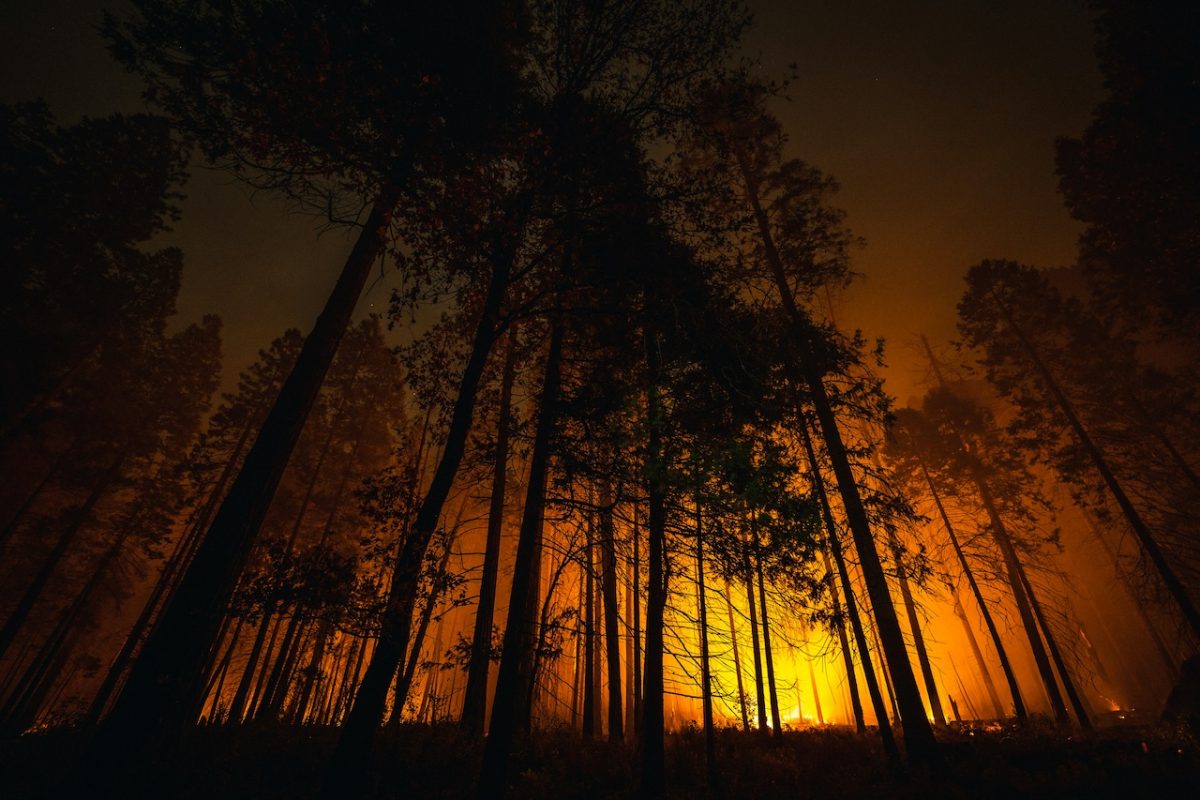
Pack your bags for a mountain getaway in Portugal next July? Book that cabin in the Canadian Rockies? Plan a hiking trip through South America? Before you finalize those summer dates, consider this: the atmospheric conditions needed to ignite and spread devastating wildfires are occurring at rates never recorded before.
A recent study published in Science Advances reveals that global synchronous fire weather (the simultaneous arrival of hot, dry, and windy conditions across multiple regions) has exploded from an average of 22 days per year in the early 1980s to more than 60 days annually by 2023 and 2024. That is not a gradual creep. That is a sharp acceleration.
Why this matters for travelers right now
You might think this concerns only firefighters and forest managers. But the science points to a harder truth: when dangerous fire conditions strike multiple regions simultaneously, emergency resources get stretched thin. Planes, personnel, and equipment that could normally be shared across continents end up locked down in single countries. The result? Fires burn longer, smoke spreads wider, and entire regions become nearly uninhabitable for weeks at a time.
The summer of 2021 offers a cautionary tale. A brutal heat dome combined with severe drought swept across the northwestern United States and Canada at the same time. Both nations found their firefighting resources completely overwhelmed. Travelers who had booked trips to places like Oregon, Washington, and British Columbia faced hazardous air quality and, in some cases, evacuations. Similar situations unfolded that same year across Europe, where Portugal and Spain both battled extreme fire conditions during the same weeks.
Which regions face the sharpest increases
The geographic picture is bleak and uneven. South America has been hit hardest by this shift. Synchronous fire weather days there jumped from 5.5 per year in the late 1970s to an average of 70.6 annually over the past decade. In 2023 alone, the continent experienced 118 such days. That is a staggering increase for travelers hoping to explore the Amazon basin, national parks in Chile, or forest reserves in Argentina.
The continental United States is not far behind. Fire conditions that align across multiple states have risen from roughly 7.7 days annually (1979-1988) to 38 days in the past ten years. If you are planning trips to national parks in the Mountain West, Southwest, or Northern California during late summer, research current fire conditions before booking.
Europe presents a mixed picture. Portugal and Spain now face three additional synchronous fire weather days every decade. This might seem modest, but when fire suppression resources for an entire nation are committed simultaneously, the impact on tourist infrastructure and air quality can be severe. Southeast Asia, by contrast, is moving in the opposite direction. Increasing humidity in that region has actually reduced dangerous fire weather days, offering relative relief for travelers heading to Thailand, Vietnam, or Indonesia.
The climate change connection
Scientists point firmly to fossil fuel combustion as the driver behind more than 60 percent of this surge. Climate change is not creating these fire conditions out of nothing. It is making them happen far more often, in more places, at overlapping times. John Abatzoglou, a fire scientist at the University of California, Merced, noted that when synchronous conditions spike across continents, suppression becomes exponentially harder. "That is where things begin to break," he said.
Interestingly, the regions most vulnerable to these fires are not always the world's largest producers of fossil fuels. South America, which consumes far less oil and gas than North America or Europe, is experiencing the worst increase. This inequity means some travelers are bearing disproportionate risk despite contributing less to the underlying problem.
What this means for your travel planning
If you are serious about visiting fire-prone regions during their warm seasons, check real-time air quality indexes and fire danger maps before booking. Many travel destinations now publish seasonal fire forecasts. Summer trips to the American West, Mediterranean Europe, or South American national parks require flexibility and monitoring. Consider visiting these places during cooler months when fire risk drops sharply. Travel insurance that covers trip cancellation due to natural disasters has become more valuable than ever.
The world has not stopped being worth exploring. But how we explore it now demands more planning, more awareness, and honest reckoning with how climate change is reshaping when and where we can safely go.