The adventure travel industry just hit a milestone that should make every operator pay attention. The global market is now worth $1.16 trillion, and a fresh analysis from the Adventure Travel Trade Association shows that most travelers are open to adventure. But here's the catch: what people mean by "adventure" today would baffle someone from a decade ago.
This isn't about adrenaline anymore. Or rather, it isn't only about adrenaline. Travelers now weave together outdoor exploration with cultural immersion, local food scenes, historical sites, and personal growth opportunities. They want their hiking trips to come with storytelling. They want their wildlife expeditions to include conversations with locals. The old model of pure activity-driven tourism is fading fast.
North America Is Leading the Charge
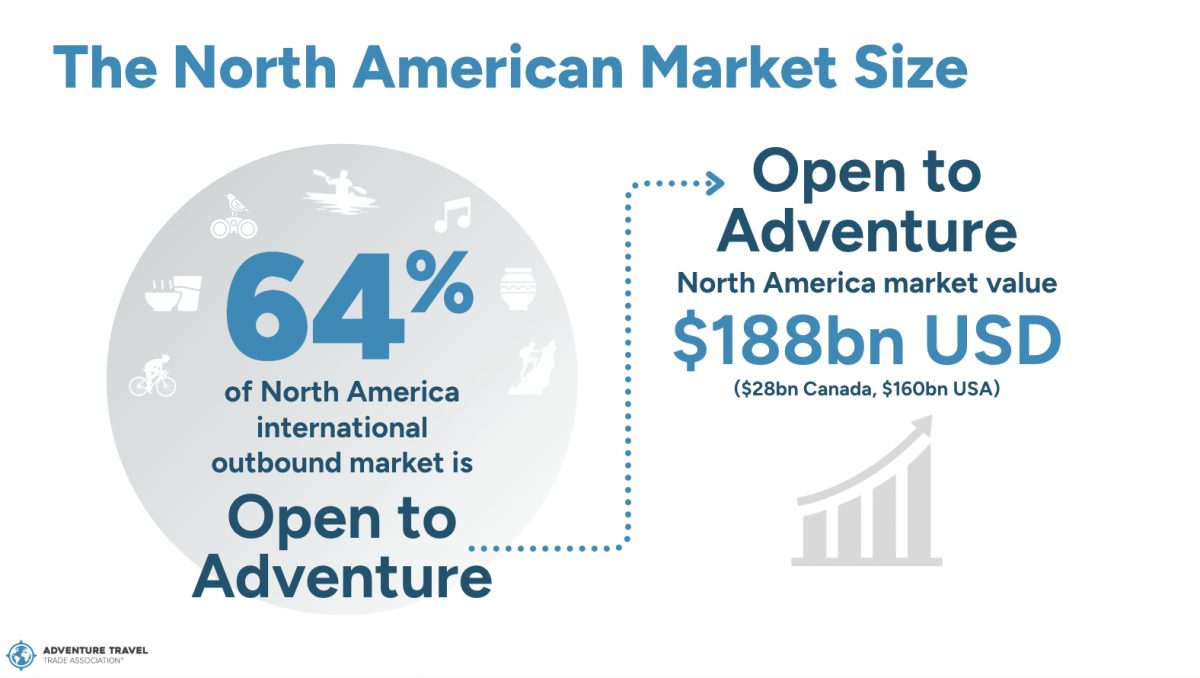
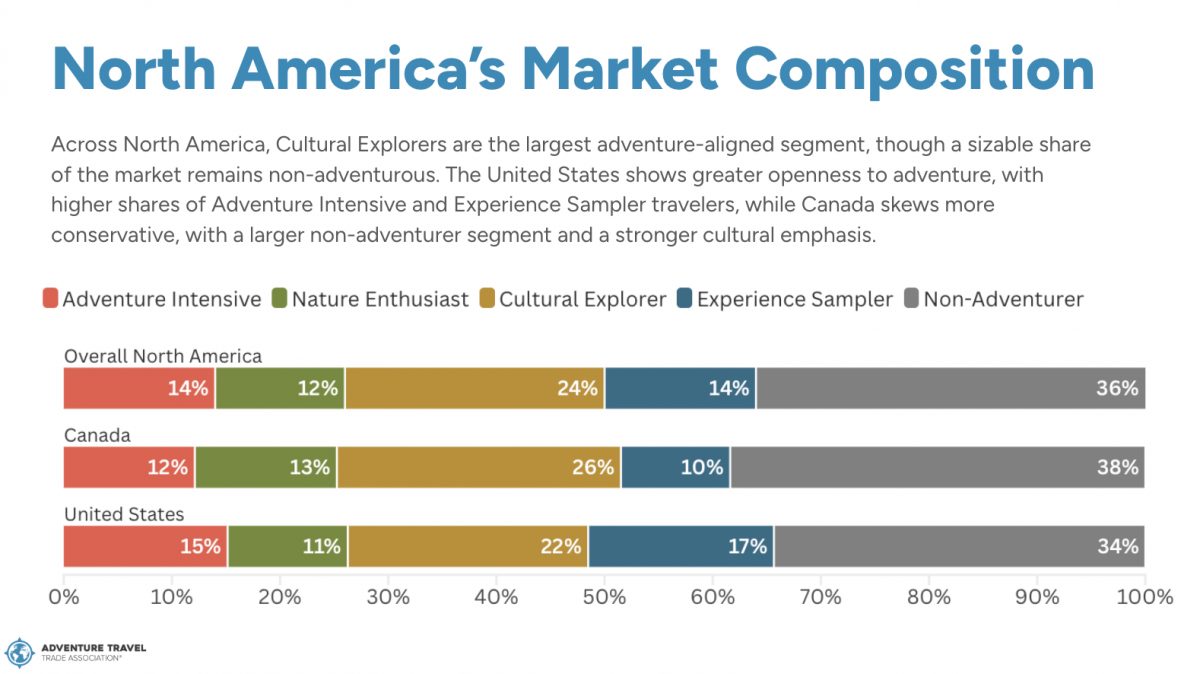
North America drives about $185 billion of this market and sets the tone for what destinations offer worldwide. The region is described as "one of the world's most influential outbound regions," and for good reason. Here, 64% of international travelers identify as "adventure-aligned," meaning they actively seek these enriched experiences rather than stumbling into them by accident.
Americans and Canadians approach adventure differently, though. U.S. travelers spend more per night and per trip, prioritizing seamless transitions and creature comforts. Canadians stay longer and weight safety, sustainability, and environmental responsibility much more heavily. Both groups direct money straight to local businesses, which creates real community impact. And both expect crystal-clear value for their spending. They'll pay premium prices, but only if they understand exactly what they're getting and why it matters.
The destinations pulling North American travelers are predictable but telling. Western Europe dominates, along with cross-border U.S.-Canada travel and Caribbean getaways. Central America and Mediterranean hotspots rank high too, largely because they offer accessibility mixed with cultural richness.
The Four Kinds of Adventure Seekers
The industry divides travelers into four distinct buckets, and understanding them changes everything about how destinations should market themselves.
- Cultural Explorers (24% of the market, the largest segment) prioritize heritage sites and deep cultural immersion. They tend to be older, want enrichment with comfort, and represent a goldmine for destinations loaded with history or archaeology.
- Adventure Intensives (14%) live for activity, but don't confuse activity with roughing it. They expect quality accommodations, flawless logistics, and excellent value. Rugged terrain? Yes. Rugged service? Absolutely not.
- Nature Enthusiasts (12%) seek structured outdoor engagement. They prefer trails they understand and wildlife viewing they can rely on, not random wilderness surprises.
- Experience Samplers (14%) are restless optimists, craving variety within a single trip. They want a mix of activities, cultural touchpoints, and personal growth wrapped into layered itineraries.
All four groups think in terms of return on investment. They spend willingly, often generously, but they want to feel that every dollar moved them forward.
Europe Plays a Different Game
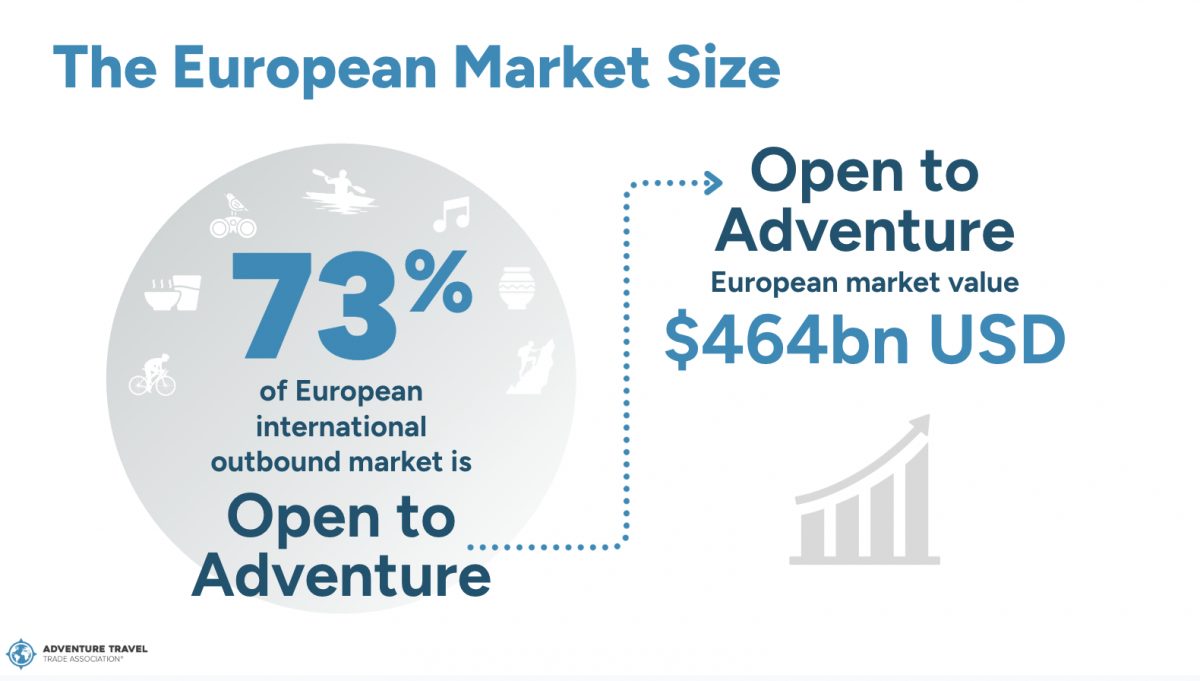
Europe's adventure market clocks in at $464 billion, with 73% of travelers open to adventure. Yet the European approach diverges sharply from North America. Here, culture, nature, and exploration blend together from the start. Southern Europe (Spain, Italy) centers adventure travel around cultural immersion and local food. Northern markets (Netherlands, UK) lean toward active exploration. Germany and France occupy middle ground.
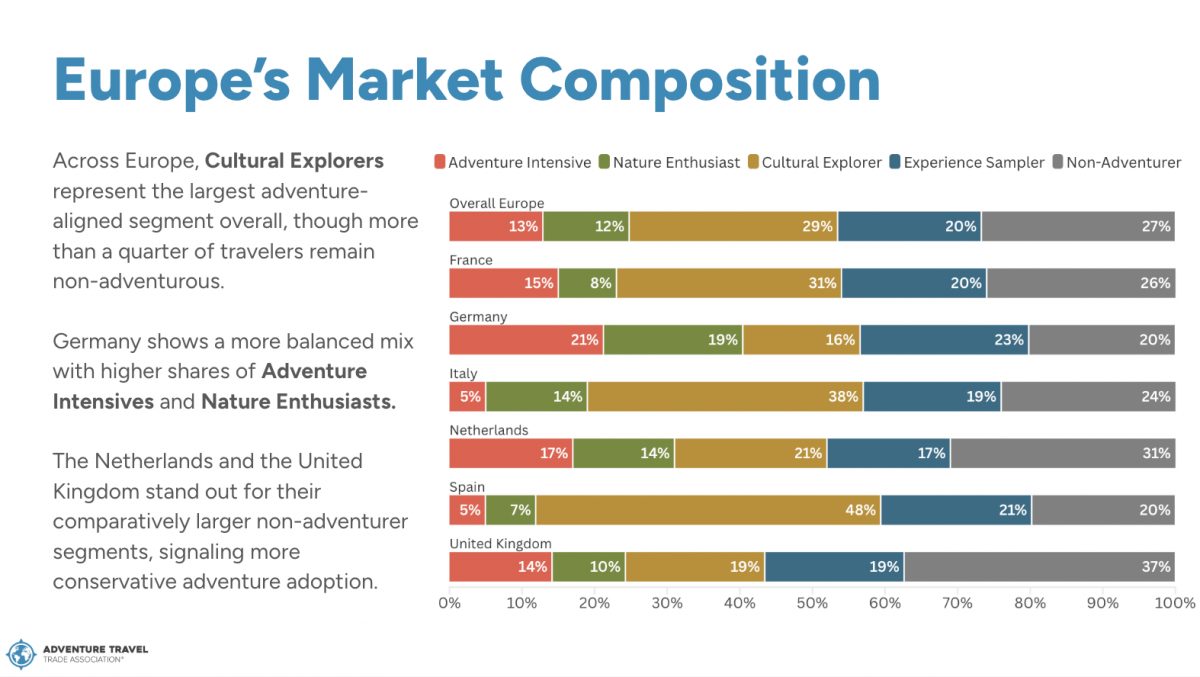
Affordability matters across all six major European markets the analysis examined, but again, "affordable" doesn't mean "cheap." Europeans, who tend to be highly experienced travelers, equate value with thoughtfulness. A well-designed trip that respects their time, connects them with local life, and offers genuine enrichment feels worth the money. Price alone won't win them.
European travelers increasingly chase meaning through their trips. They want to know the locals. They want to spend time in nature. They want their travel choices to matter. Even practical touches like streamlined border processes contribute to the overall sense that their trip was thought through properly.
What This Means for Your Next Trip
If you're planning an adventure, the landscape has genuinely improved. Operators now understand that you don't want a checkbox list of activities. You want experiences that stick with you because they taught you something or connected you to a place. You want your money to support the community you're visiting. You want quality even when roughing it slightly. You want your adventure to feel like it was built for you, not mass-produced.
The trillion-dollar shift happening right now is really about travelers refusing shallow experiences. We're done with tourism that treats destinations as props and locals as background actors. The adventure industry is adapting because it has to. The travelers with money are demanding better, and they're winning.