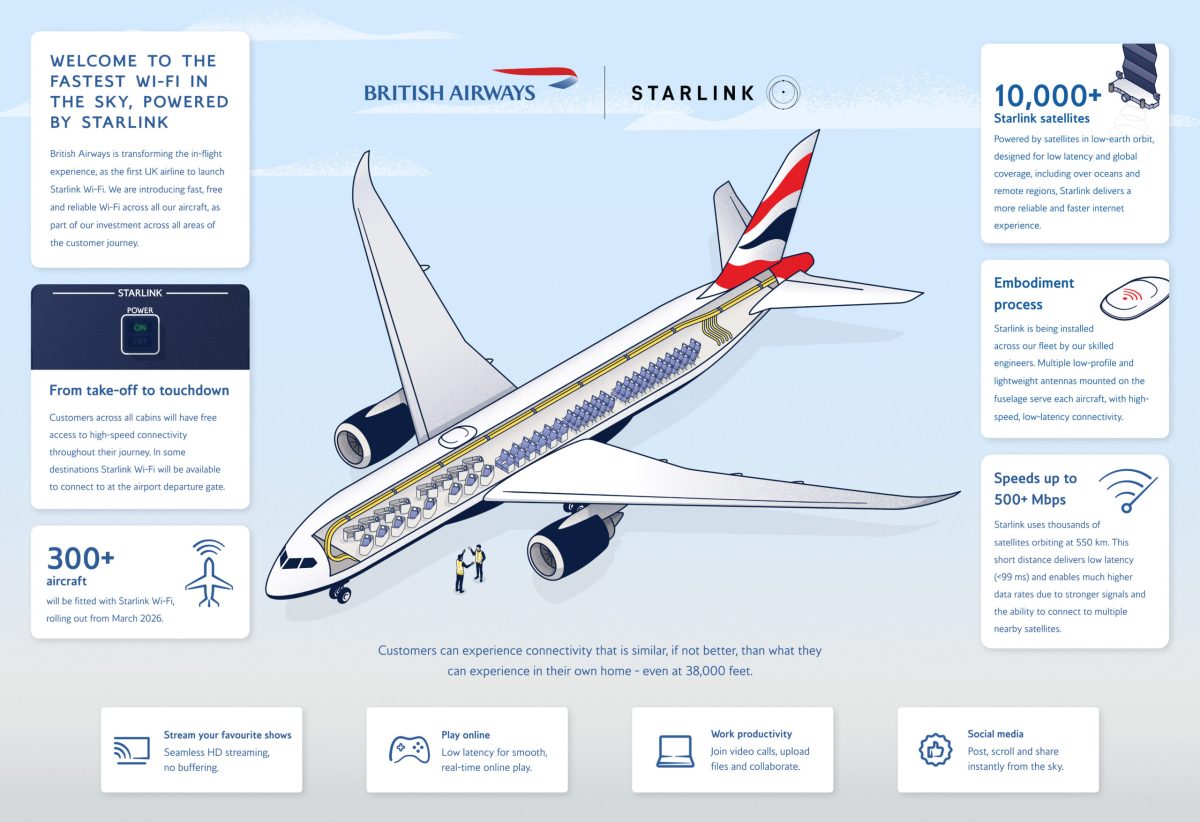
The airline industry just quietly handed every passenger on British Airways aircraft something unprecedented: the ability to make crystal-clear video calls at 35,000 feet. Starting with a single Boeing in March 2026, BA is rolling Starlink Wi-Fi across more than 300 aircraft over the next two years, promising speeds up to 500 megabits per second. It's the kind of connectivity upgrade that sounds amazing in a boardroom presentation. On a real flight? It's triggering genuine panic among travelers and crew alike.
What BA is actually offering
The Starlink rollout hands passengers something no major carrier has dared enable before: unrestricted video calling, streaming, gaming, and all the digital life you'd have on the ground. For remote workers juggling time zones, for families separated by oceans, for anyone who's ever felt trapped by dead airtime, this seems like a revolution. BA frames it as transforming the flying experience through "elevating every aspect of our customer journey." The infrastructure is legitimate. The speeds are genuinely impressive. The problem? Human behavior at 30,000 feet doesn't improve with bandwidth.
Why everyone's suddenly nervous
Flights used to exist in a strange pocket universe where normal work rules suspended. Your boss couldn't find you. Your clients couldn't ping you. You had an excuse, finally, to be unreachable. That buffer is evaporating. Travel experts call this the "work week creep," that slow erosion of downtime that happens when the technology to work exists everywhere. Now colleagues will expect you to jump on video meetings from the cabin. Your therapist might expect a call back. That person from high school might video chat when they see you're online.
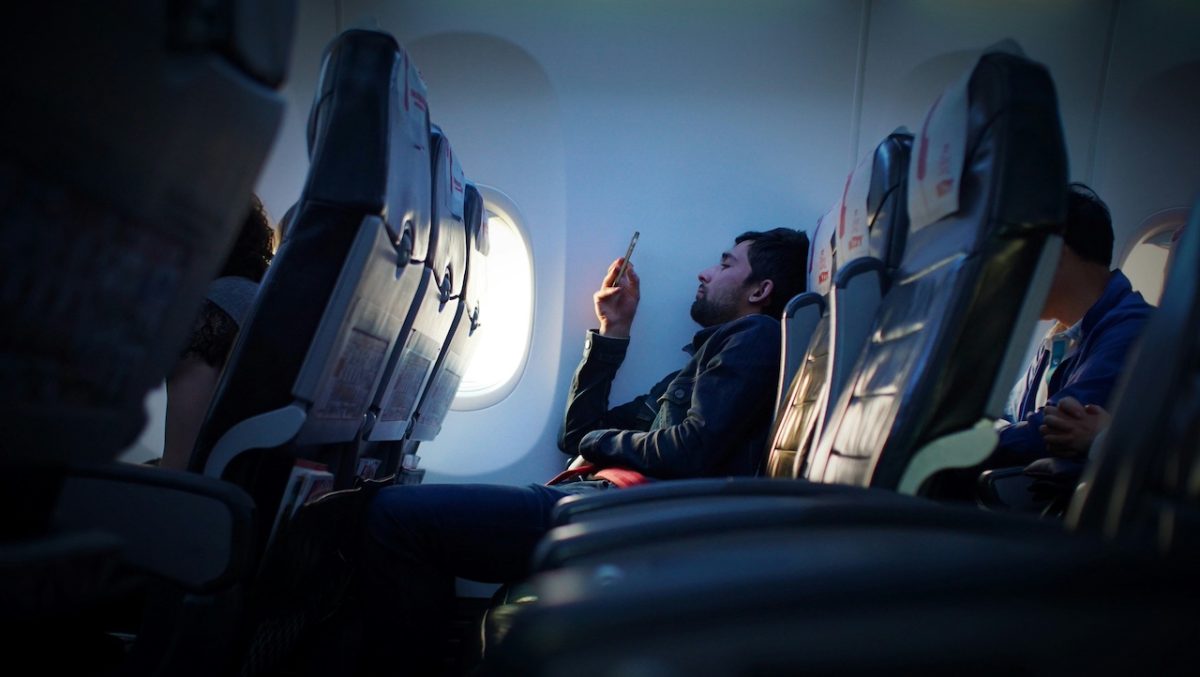
What's even more pressing: the simple human nightmare of sitting three feet from a stranger conducting a business call or a personal video chat. On red-eye flights where people desperately need rest, the prospect of someone's FaceTime lighting up the cabin is something airlines have never properly contended with.
The numbers don't lie about what passengers want
Here's the staggering part: the US Department of Transportation surveyed travelers about in-flight phone calls, and 96 percent said they should stay banned. Ninety-six percent. That's the kind of consensus you almost never see on anything. These same passengers said calls should only be permitted during emergencies. For decades, the Federal Communications Commission blocked phone calls on US domestic flights by restricting certain radio frequencies. But Wi-Fi calls exist in a regulatory gray zone. The DOT has confirmed that calls made over internet protocols don't fall under that same ban, meaning American carriers and passengers face the same reckoning brewing in Europe right now.
Quiet zones might actually happen
British Airways is already taking a "please be considerate" approach, posting guidance telling callers to keep voices low and use headphones. Aer Lingus and Iberia, both BA's sister carriers under the same parent company, plan similar advisory campaigns. Air France jumped into Starlink earlier in 2025 and is watching this unfold closely. Other partners of Elon Musk's satellite internet including airBaltic, Qatar Airways, and SAS are likely reviewing their in-flight etiquette rules as they expand Starlink service.
Some airlines are already considering "quiet zones" inspired by similar policies on European trains, where phone calls are outright prohibited in certain cars. Whether passengers will accept these boundaries, or whether enforcement becomes a cabin crew nightmare, remains unseen. The problem with asking people to be quiet on a call is simple: nobody thinks their call is the annoying one.
The real question nobody's answering
Technology companies and airlines keep asking "should we?" and less often "should we, really?" A flight is one of the last places humans can't reach you instantly. That's not a bug. It's something we've collectively relied on. Once Starlink spreads across fleets, once everyone can video call from cruise altitude, that sanctuary disappears. You can read all about how competitors like Delta are choosing different satellite Wi-Fi partners, but the core question persists: just because we can, should we abolish the last refuge from constant availability?
BA has opened the door. What comes through it next depends on whether passengers, crew, and regulators are willing to draw a line in the sky.