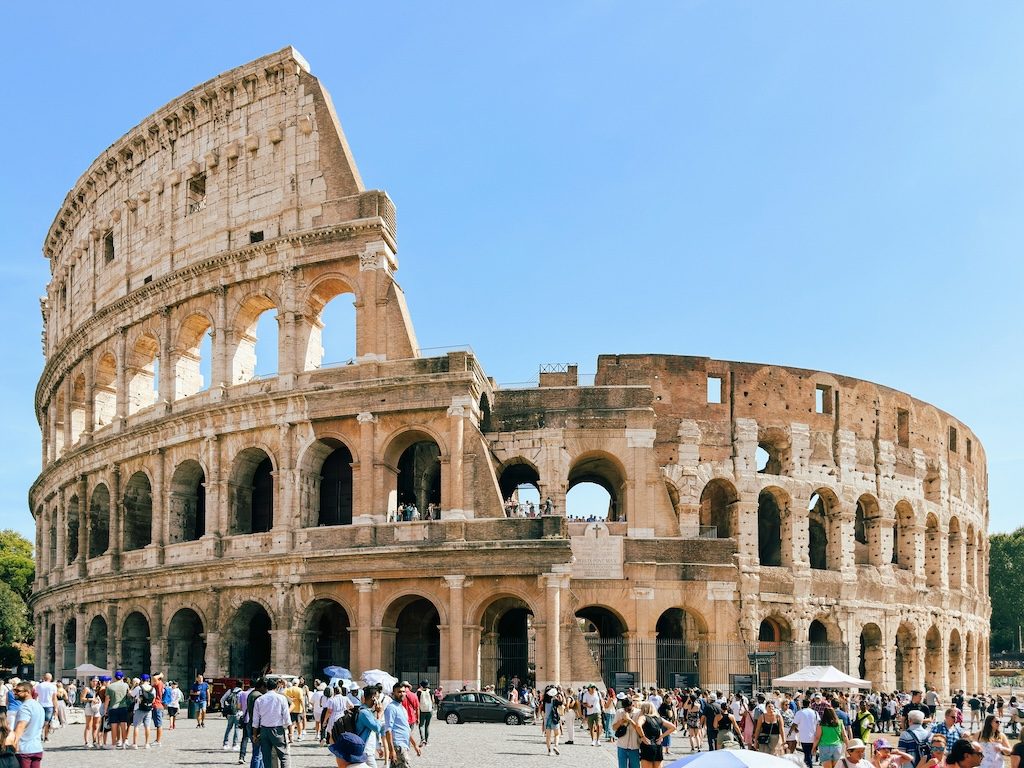
Imagine standing in a crowd of 50,000 people, craning your neck upward as towering marble arcades climb 50 metres overhead. The roar of the arena echoes ahead. You shuffle forward with thousands of others, clutching your token, desperate not to miss the opening clash. This is what a trip to the Colosseum felt like two millennia ago.
Now you can actually experience that sensation. Rome's most iconic monument has just completed a project that reconstructs the entrance experience for modern visitors. Using marble quarried from the exact same travertine seam as the original structure, architects have rebuilt the semicircular piazza where ancient spectators once gathered and waited.
Walking in the Footsteps of Emperors and Commoners
The Colosseum, built between 70 and 80 AD, was Rome's ultimate public space. Gladiators fought. Animals were hunted. The crowd watched everything under the hot Italian sun, seated according to strict social hierarchy. For centuries, the graceful arcades that framed the entrance remained standing, guiding visitors through grand colonnaded walkways before they entered the main arena.
Time and earthquakes toppled those arcades long ago, leaving only rubble and memory. But architect Stefano Boeri and his team had a vision: restore the visual proportion and spatial drama those ancient visitors experienced. The marble blocks are positioned exactly where the original supporting pillars once stood, giving you a genuine sense of the arcade's scale and geometry. Even better, they're inscribed with reproduction Roman numerals that match the original seating sections. Stand on a block marked with your section number, and you're literally finding your place in history.
Archaeology Meets Modern Access
The reconstruction wasn't just about aesthetics. Diggers uncovered a treasure trove while working on the piazza: animal bones, coins, statues, and a stunning gold ring. Each artifact whispers something about the daily life of people who walked this ground 2,000 years ago.
Just as exciting, the team excavated and restored a secret tunnel known as the Corridor of Commodus. This hidden passageway allowed the emperor to enter the arena without mingling with ordinary crowds. It reopened to visitors in October 2025, giving you a chance to walk the same route emperors once used to bypass the vulgar masses.
Getting There Has Never Been Easier
Rome's infrastructure has caught up with its ambitions. A multi-billion-euro investment created a brand new Colosseum metro stop on the subway system, making it simpler than ever to reach the monument. Whether you're a gladiator enthusiast, history buff, or casual tourist, you can now step off a train and into one of the world's most powerful symbols of Roman engineering and brutality.
The Colosseum remains one of the planet's most visited attractions, drawing up to nine million people annually. But most visitors see it as ruins and rubble. With this piazza reconstruction, you'll see it as what it truly was: a stunning public gathering space, designed to impress, intimidate, and entertain. The marble blocks beneath your feet are more than replica materials. They're an invitation to travel backward, to understand what ordinary Romans felt when they arrived at the greatest show on earth.