There's a particular kind of anxiety that comes with renovating an icon. The Park Hyatt Tokyo isn't just a hotel. It's a place burned into the collective memory of travelers worldwide, thanks in large part to Sofia Coppola's 2003 film. When Paris-based design studio Jouin Manku took on the task of refreshing the property after nearly three decades of operation, they had to answer a deceptively simple question: what do you change in a space that doesn't need changing?
The hotel opened its doors in 1994 inside the Shinjuku Park Tower, a gleaming structure designed by the legendary Kenzo Tange. From the start, it became a fixture of Tokyo's landscape. Yet it took Coppola's film, with Bill Murray and Scarlett Johansson wandering its minimalist corridors, to cement it as something more. A generation of travelers saw that movie and thought: I need to go there. That quiet, melancholic atmosphere where the city felt as present as the silence around you. After 19 months of careful work, the hotel has reopened and managed the seemingly impossible feat of honoring that legacy while letting the space breathe anew.
What Changed and What Stayed
The trick wasn't renovation in the traditional sense. Jouin Manku didn't gut the place and start over. Instead, they listened. Patrick Jouin and Sanjit Manku describe their approach as one of subtle revelation rather than transformation. Lines in public spaces were refined. Colors softened. The central cabinet that defines the rooms remained, but with a gentler hand.
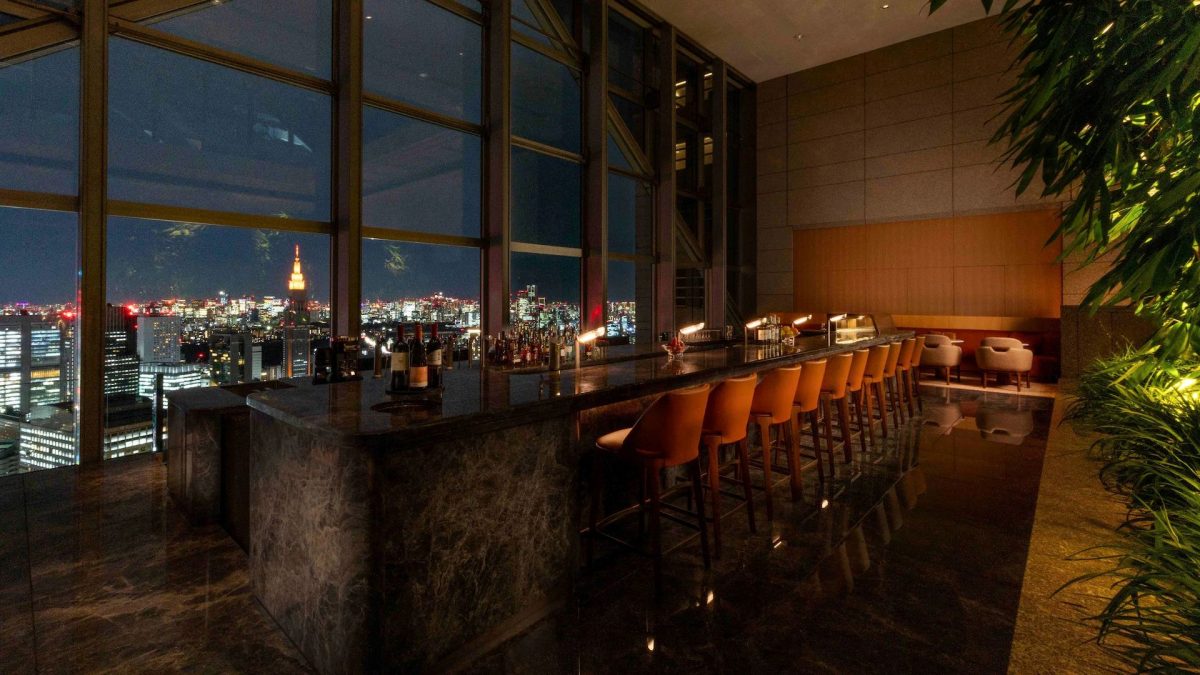
The Peak Lounge on the 41st floor is perhaps the most visible change, though change might be too strong a word. The space was purified. Refined. The spectacular city views that made the room legendary remain unchanged. What's different is how you experience them now, without the distraction of design that once felt too austere. The rooms themselves retained their spatial DNA while gaining from subtle tonal shifts and custom-made furnishings that make the spaces feel more human, less like a museum.
The suite offerings tell a story of varying commitment to change. The Tokyo Suite was restored to its original 1994 design, a deliberate nod to history. The Diplomat, Governor's, and Presidential Suites received more extensive updates. A new Park Suite joins the collection, expanding options for guests willing to spend accordingly. Like many high-end reopenings, this wasn't about adding flash. It was about discerning what needed to remain untouched and what simply asked for a softer touch.
Why This Matters Right Now
Twenty years after "Lost in Translation" first hit screens, there's a reason people still talk about it. The hotel captured something about Tokyo that few places manage. That vertical ascent into calm. That particular quality of light. That silence that doesn't feel empty but full. Those elements haven't gone anywhere. What's changed is our approach to luxury travel itself. We're done with the idea that new always means better. The Park Hyatt's reopening embraces something smarter: that maturation can be more powerful than novelty.
The 171-room property, including 29 suites, has reopened for guests. Rates start around $800 to $1,000 per night, which puts it solidly in the luxury tier but not quite the stratosphere of some competitors. For anyone chasing that specific atmosphere that made the Coppola film resonate, this is the place. The pool remains. The views remain. The sense of being suspended above the city while utterly removed from it remains.
If you've been waiting for the right moment to see what all the fuss was about, the timing is now. The hotel isn't trying to reinvent itself for a new era. It's simply learning to exist more gently in the one it already defined.