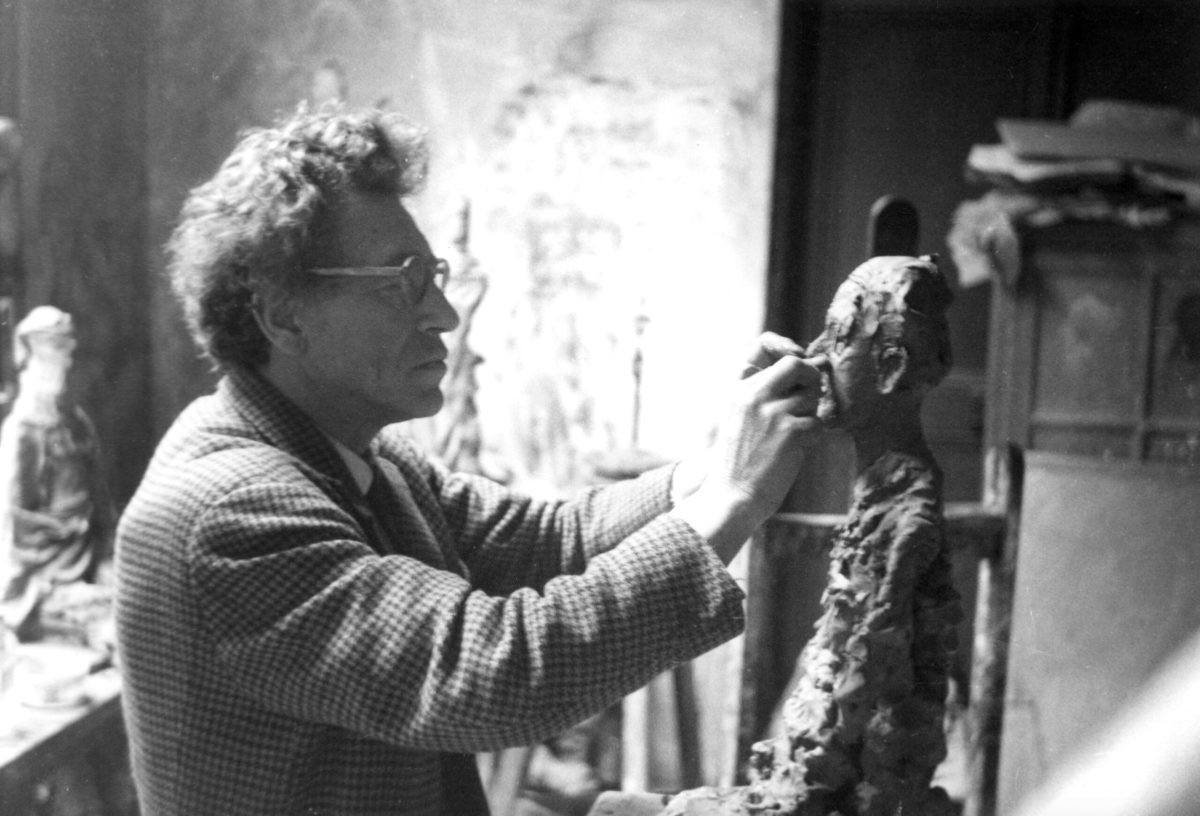
For nearly 45 years, Alberto Giacometti created some of the 20th century's most haunting sculptures in a cramped 23-square-meter rental space in Montparnasse. The Swiss artist arrived in Paris in 1922 and never really left, pouring his genius into that modest studio until his death in 1966. What emerged from that tiny room has now become a collection of staggering proportions: over 10,000 pieces spanning drawings, sculptures, paintings, prints, and archival materials that tell the complete story of a visionary artist.
His widow, Annette, spent three decades after his death meticulously cataloguing every work, preserving not just finished masterpieces but sketches, experiments, and materials that reveal how Giacometti's vision evolved across different periods of his life. When Annette passed in 1993, the Fondation Alberto et Annette Giacometti took over stewardship of this extraordinary legacy.
Until now, there's never been a dedicated Giacometti museum anywhere in the world. The foundation has operated from a compact 350-square-meter institute in Paris's 14th arrondissement since 2018, but that space was never intended as a permanent solution. The real goal has always been to find a home worthy of the collection's scale and cultural significance.
A Former Train Station Gets a Second Life
That moment arrives in late 2028 when the Musée & École Giacometti opens its doors at the former Gare des Invalides train station in the 7th arrondissement. The historic building, which once carried travelers to and from the capital, is being transformed as part of Paris's sweeping Réinventer Paris urban renewal initiative. Located right along the Seine beside the iconic Pont Alexandre III, the new museum will occupy 6,000 square meters of thoughtfully designed space.
The building will be far more than a gallery. Alongside extensive exhibition galleries that will showcase hundreds of Giacometti works never before displayed publicly, visitors will find a café, restaurant, bookshop, and dedicated educational spaces. Foundation director Catherine Grenier emphasized the scope of what will finally be revealed: "We have masterpieces from the earliest period when Giacometti was very young, masterpieces from the Surrealist period, masterpieces from wartime, masterpieces from after the war, masterpieces from the late period." The collection spans his entire artistic trajectory, offering something for everyone from contemporary art enthusiasts to students of modern sculpture.
Not Without Its Critics
The ambition hasn't gone unnoticed by everyone. Some observers have questioned whether such a grand space befits an artist known for working within such humble constraints. In November 2025, Swiss Info published skeptical commentary about whether the scale might feel incongruous with Giacometti's sparse aesthetic. Architect and sculptor Serge Lemeslif voiced concerns that the architecture didn't match the simplicity that defined the artist's practice.
Grenier and curator Peter Selz reject this logic. They argue that the sheer volume of the collection and the museum's educational mission fully justify its footprint. This isn't vanity; it's necessity. With over 10,000 works to preserve and display, a modest space simply won't suffice.
Originally planned for 2026, construction delays have pushed the opening to the second half of 2028. But for anyone who's spent time in Paris, the wait is worth it. This museum will finally give Giacometti's legacy the space and accessibility it deserves, transforming a defunct train station into a destination that belongs alongside the city's greatest cultural institutions.