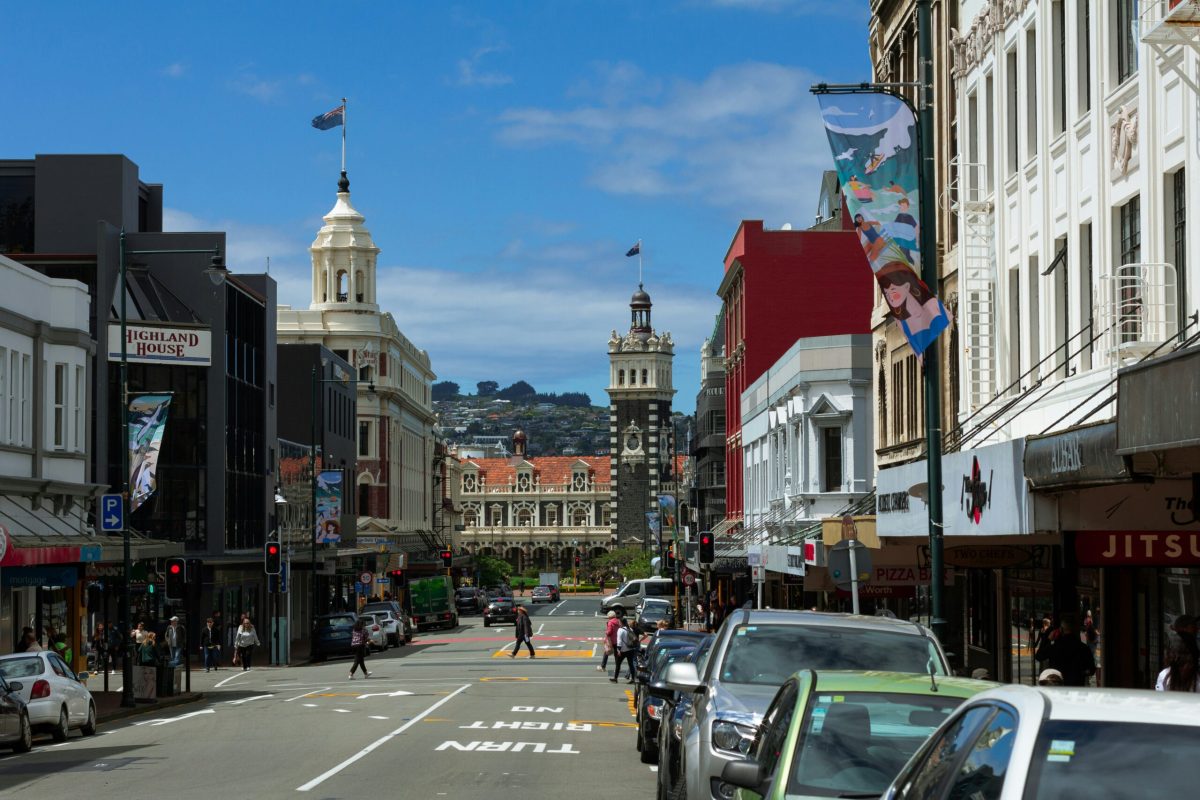
Mark your calendar for July 22, 2028. No, really. Because if you want to watch the Moon swallow the Sun from New Zealand, you probably need to book your hotel room right now. Hotels across Dunedin are already fully reserved for that date, and we're still two years out. The reason? A total solar eclipse that won't happen in New Zealand again for centuries.
At 4:17 pm local time, a shadow roughly 100 kilometers wide will race across the South Island, turning daylight into darkness for 2 minutes and 51 seconds. For the 130,000 residents of Dunedin and the tens of thousands of visitors descending on the city, it will be a moment unlike anything most people have witnessed in their lifetimes.
The numbers tell the story. This will be the first total solar eclipse visible anywhere in New Zealand since 1965. But Dunedin itself? The last one passed over the city in 1163, according to Ian Griffin, the astronomer who runs Tuhura Otago Museum. That was so long ago that no one from that era ever saw it from this place. Griffin has been preparing since 2013 and even picked his house based on the viewing angles. He's not alone in his obsession.
Why Everyone Is Scrambling for Beds
The frenzy is real. Dunedin Leisure Lodge sold out its eclipse package complete with viewing glasses before we even reached 2026. Other hotels across the city report unprecedented advance bookings. City officials are expecting around 35,000 visitors, though the Dunedin Astronomical Society thinks it could reach 50,000. That's a significant surge for a city that size, and accommodation is the bottleneck.
This mirrors what's happening globally. Similar booking frenzies have already begun for the 2026 eclipse crossing Spain and Iceland, as travelers increasingly plan eclipse trips years in advance. It's a new flavor of tourism, and it's growing fast.
The Path Across the Pacific
Dunedin isn't just any viewing spot. The eclipse's path of totality starts in the Indian Ocean, sweeps across central Australia (just north of Alice Springs), clips Sydney's northern reaches, then continues south. It cuts through Milford Sound, Queenstown, and Central Otago before Dunedin catches the final full experience. After that, the Moon's shadow moves out over the Pacific. Dunedin will be one of the last major population centers on Earth to see totality before the show ends over open ocean. That alone makes it one of the premier viewing locations globally.
The location also means timing with cultural significance. The eclipse arrives just eight days after Matariki, the Māori New Year. Dunedin officials are leaning into this, planning a night-sky festival that blends Indigenous traditions with astronomy. It's not just science; it's a moment that weaves together culture and celestial mechanics.
What This Means for Your Travel Plans
If you're thinking about chasing this eclipse, you need to move fast. Every other accommodation option beyond the early sell-outs is likely to follow suit quickly. Book flights, arrange transportation, and secure lodging sooner rather than later. Dunedin itself is manageable, but the surge of eclipse tourism will transform the region for that entire window in July 2028.
For anyone serious about witnessing a total solar eclipse, this is not a moment to delay. Some travelers have even looked at airborne options to maximize their viewing experience. New Zealand offers something different: a rare celestial event combined with some of the world's most stunning landscapes. That combination is worth whatever logistical planning it takes.