The Middle East tourism boom came to an abrupt halt in March 2026 when airspace closures and military strikes forced airlines to cancel over 5,000 flights in just 48 hours. Tourists who arrived expecting desert safaris and luxury shopping instead found themselves sheltering in place as governments worldwide urged citizens in the region to register their whereabouts and hunker down.
The damage extends far beyond flight schedules. Video clips circulating on social media showed travelers huddled inside the Burj Al Arab and other high-end hotels while explosions lit up the sky outside. Within the first day alone, nearly 8,500 accommodation cancellations flooded platforms like Airbnb. For a region that spent years building a reputation for world-class hospitality and safety, the images told a different story entirely.
How much money is at stake
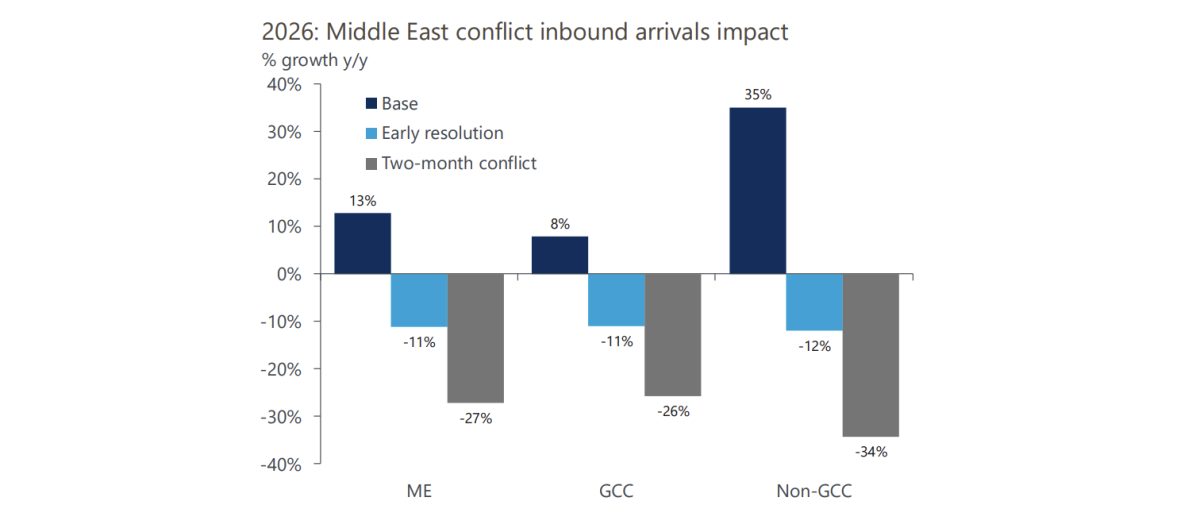
The numbers are staggering. The World Travel and Tourism Council valued Middle East tourism at $367 billion annually before the crisis. Now, analysts predict the region could lose between 23 and 38 million visitors over the year, draining between $34 billion and $56 billion from the tourism economy (which was worth roughly $194 billion in visitor spending last year).
Oxford Economics analyst Jessie Smith breaks down two possible timelines. If the conflict resolves within one to three weeks, expect significant airspace disruption and infrastructure damage extending into March 2026. Flights would resume with stranded tourists and expatriates taking priority, but traveler confidence in the region would suffer through at least the second quarter. For Iran, Israel, and Lebanon, negative sentiment could linger into the third quarter. Gulf states like the UAE and Saudi Arabia might recover sooner, though their reputation as safe havens depends on perceptions that just took a beating.
A longer two-month scenario paints a grimmer picture. Airspace damage would persist into April, recovery timelines would stretch further out, and the psychological impact on travel decisions would run even deeper. Negative sentiment for Iran, Israel, and Lebanon could stretch through the end of 2026.
Which destinations suffer most
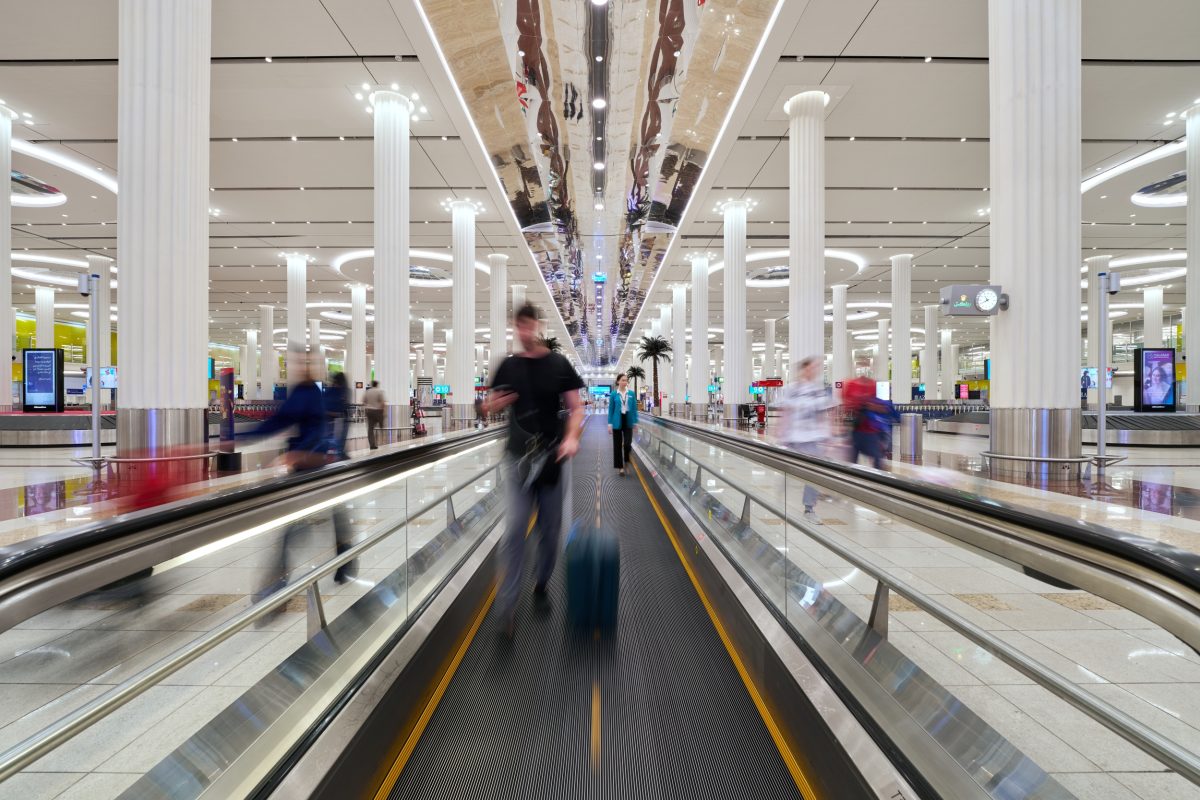
The Gulf Cooperation Council countries (Bahrain, Kuwait, Oman, Qatar, Saudi Arabia, and the United Arab Emirates) stand to lose the most. These nations depend heavily on their image as stable, secure luxury destinations. That carefully crafted brand just cracked. Dubai's position as the world's busiest international airport makes it a critical hub, so delays ripple far beyond Middle Eastern itineraries. Major cruise ports face similar disruptions, affecting travelers with zero connection to the region.
Israel and Iran face different challenges. Both countries were already attempting to rebuild tourism after previous conflicts. This fresh disruption could undo years of recovery work.
Where travelers are booking instead
Within days of the crisis, airline executives confirmed what you'd expect: bookings were fleeing the region. Ryanair boss Michael O'Leary reported a sharp collapse in Middle East bookings while seeing strong demand surge for Italy, Greece, and Portugal ahead of the Easter period. TUI's German chief Benjamin Jacobi noted a noticeable dip in Gulf bookings with travelers pivoting toward Asia, Europe, and the western Mediterranean instead.
O'Leary offered a sliver of optimism, suggesting the effects might not become a long-term trend if the conflict stays brief. But he acknowledged the undeniable reality: confidence in air travel to the Gulf has taken a serious blow.
The challenge ahead involves more than just restoring flight schedules or cleaning up hotel lobbies. It requires the region to rebuild trust at a moment when social media amplifies worst-case images instantly. For travelers dreaming of the Middle East's desert landscapes, ancient history, and modern luxury, recovery won't happen overnight.