Mallorca's eastern flank has long been overshadowed by the island's party-ready south and glitzy northwest. That changed in January when locals and visitors finally got what they'd been missing: a proper reason to spend days exploring the Llevant region on foot. The Gran Recorrido del Llevant (also tagged as the GR-226) stretches 104 kilometers of walking paradise, threading through landscapes most Mallorca guidebooks barely mention.
The trail arrives at exactly the right time. While Palma fills with cruise passengers and resort towns buzz with tourists, the east remains refreshingly itself. This isn't a high-mountain adventure requiring technical gear. The longest daily elevation gain tops out around 248 meters, which means serious hikers move through easily, while casual walkers genuinely enjoy themselves instead of suffering in silence.
Four Days to Understand the Real Mallorca
The route breaks neatly into four stages, each roughly 23 kilometers long, though you don't have to do them all at once. Start at Cales de Mallorca and walk to Manacor (24.99km). From there, push to Son Carrió (22.99km), then continue to Artà (23.19km). The final stretch runs from Artà up to Cala Mesquida on the northeastern tip (22.63km). Each day ends somewhere with actual civilization, proper food, and beds to sleep in. Skip stages, combine them, or pick just one section if you're testing the waters.
The flexibility doesn't stop there. Entry and exit points at Son Macià and Costa dels Pins mean you can parachute in partway through without guilt. This matters if weather turns nasty, your knees revolt, or you simply run out of vacation days. Real trails work around real life.
Walking Through Layers of History
Every few kilometers, the trail bumps into something old and significant. You'll pass Ses Païsses, a prehistoric settlement near Artà that's roughly 3,000 years old and somehow still standing. The 13th-century Bellpuig Monastery rises up with that kind of quiet confidence only centuries of survival can build. Capdepera Castle watches from its hilltop like it always has since the 1300s. There's also the Cala Rajada Lighthouse, the Church of Sant Joan Baptista, and the Son Carrió Railway Museum, which proves the east has always been more interesting than outsiders assumed.
These aren't museum pieces cordoned off from daily life. You walk past them, through the towns that grew around them, meet people who live there now. The trail connects villages and lets you stop for coffee or lunch like a normal human instead of racing toward the next checkpoint. This is how travel should feel.
Scenery That Shifts Every Few Hours
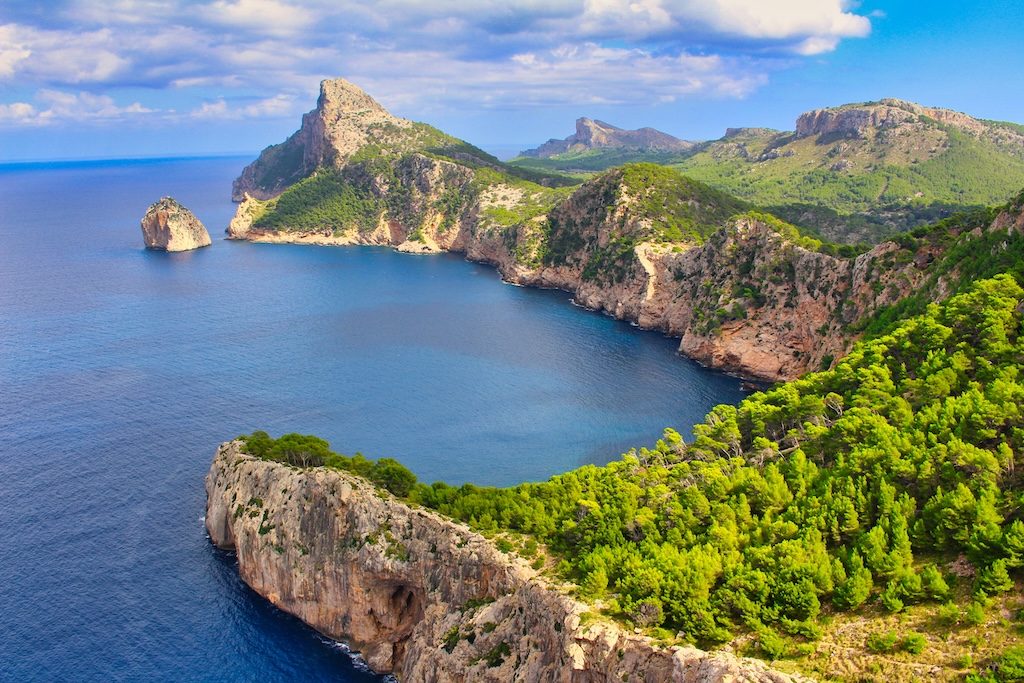
The landscapes refuse to get boring. One section hugs coastal cliffs where the Mediterranean sprawls turquoise below. Another cuts inland through forests and farmland where the air smells like something real. You get sandy coves perfect for a quick dip, then climb back into dry scrubland where nothing but wild herbs seem to grow. The view swings constantly between Mediterranean blues and rural Mallorca greens.
Weather matters less here than on the island's higher peaks. The east gets less rain, temperatures stay mild even in winter, and the sea breeze keeps things from feeling stifling. Late autumn through spring is prime hiking season, though determined walkers move through the summer months too.
Getting Started
Everything you need to know lives on the official Gran Recorrido del Llevant website, including detailed maps, stage breakdowns, and practical details about accommodations and services along the way. Download those maps before you go. Phone signal works most of the time, but not all of it, and getting lost on a peaceful trail stops being peaceful pretty fast.
Pack light but smart. Bring enough water, decent shoes that already fit your feet properly (not ones you're testing), sun protection, and a basic first aid kit. The trail is well-marked, but eyes matter more than signs. Stay present. Notice things. Talk to the people you meet in little villages. Stop and sit when something feels beautiful.
The GR-226 isn't revolutionary. It's just a really well-designed trail through a genuinely interesting part of an island that's been overexplored for decades. Sometimes that's exactly what a traveler needs: permission to walk slowly through somewhere real, with nothing to prove and nowhere to rush.