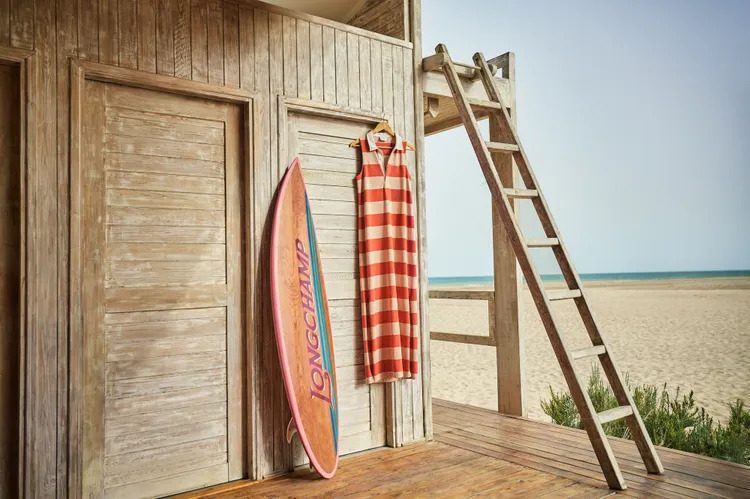
Longchamp did something bold this spring. The Paris-based fashion house, famous for its leather handbags, stopped making assumptions about what luxury travelers want and started making something nobody expected: surfboards.
Only 40 exist. Each one costs €2,500. Two are now in New York at Longchamp's SoHo and Fifth Avenue stores. The rest are scattered around the globe, waiting for collectors who understand that a surfboard can be both a functional object and a fashion statement.
How a Handbag Brand Ended Up in the Surf Game
Sophie Delafontaine, Longchamp's creative director, had a clear vision: a muse moving from spring into summer, seduced by waves and sun. She wanted to translate that feeling into something physical, something you could ride. "The surfboards bring that vision to life, combining fashion, adventure, and freedom," she says.
To pull it off, Longchamp partnered with Shapers Club, a workshop in Marennes on France's Atlantic coast with real credentials in board-building. Thomas Cardinal and his team had the job of taking Parisian elegance and making it functional on water.
The result? Boards crafted from basswood, a traditional material that's tactile, durable, and historically rooted in surf culture. Unlike the foam boards churned out by the thousands today, these have weight, character, and longevity. They're made to be ridden, not just displayed.
Why This Matters for Luxury Travel
This move signals a shift in how luxury brands think about their customers. Fashion houses are no longer content staying in their lanes. They want a piece of the lifestyle experience, the collection, the story travelers tell when they return home.
A Longchamp surfboard says something different from buying a board at your local shop. It says you care about design, craftsmanship, and the details. It suggests you understand that adventure and elegance aren't opposites.
Where to Actually Use These Boards
If you own one, where do you take it? France's Atlantic coast is the obvious answer. The country's surf culture took root in the 1950s in Biarritz, when locals started experimenting with imported boards. It's grown into something bigger: a lifestyle that fuses athletic skill, coastal tradition, and yes, fashion.
Here are the legendary spots:
- Biarritz: Where it all started. The waves here are consistent and the town pulses with surf culture. Visit the Musée de la Mer to understand why this place matters so much to French surfing.
- Hossegor: Powerful Atlantic swells make this a serious surf destination. The town attracts pros and experienced riders hunting for intense waves.
- Lacanau: A long sandy beach with rolling waves that work for all skill levels. Less intense than Hossegor, more mellow than Biarritz.
- La Torche: In Brittany's far west, this spot has scenic cliffs and historic ties to European surf culture. The water's colder but the views compensate.
The Collector's Angle
Here's the thing: owning a Longchamp board might mean never getting it wet. Collectors are already paying attention. Fashion enthusiasts, adventure travelers, and people who simply appreciate rare objects are snapping these up. With only 40 globally, resale value isn't hard to predict.
But the real value isn't financial. It's in the idea that a luxury brand trusted a French craftsman to make something functional, limited it severely, and created an object that bridges high fashion and genuine athleticism. That's the kind of thing that makes you want to book a flight to Biarritz, even if you've never surfed before.