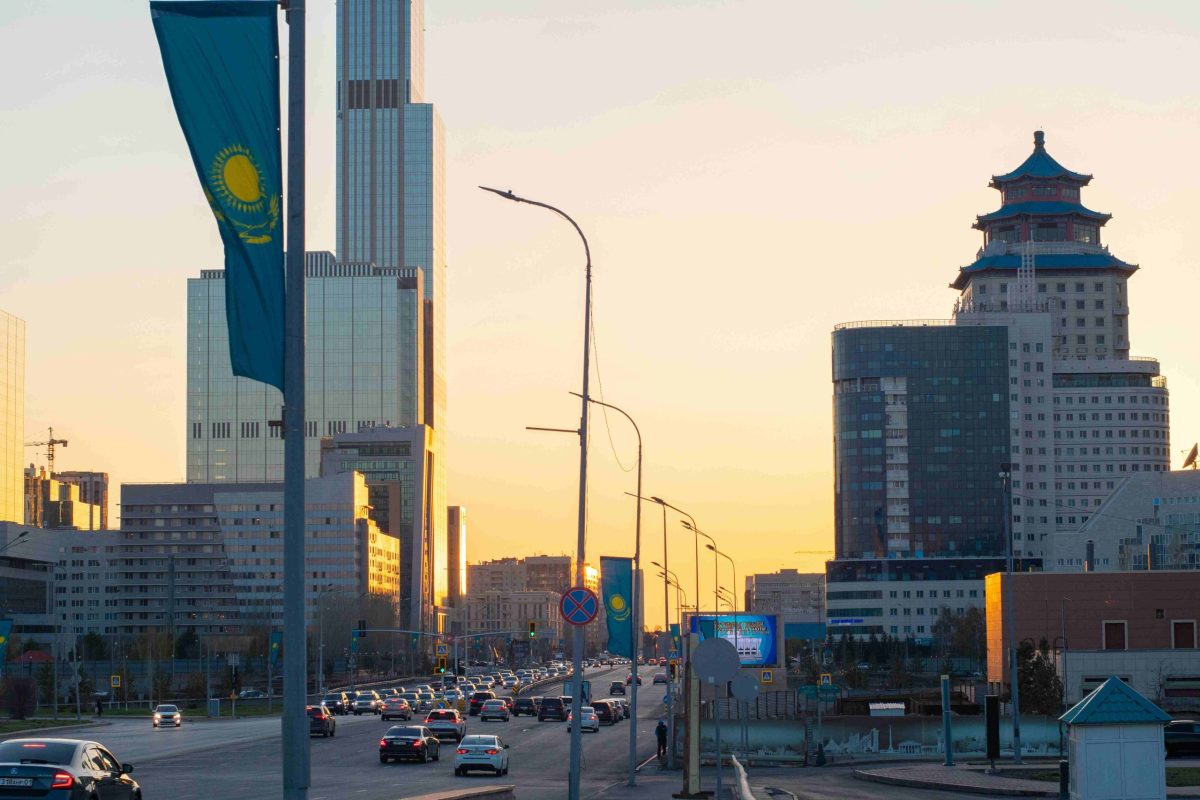
Kazakhstan has long been the quiet giant of Central Asia, a country of steppe, mountains, and futuristic cities that most travelers only glimpse from a plane window. President Kassym-Jomart Tokayev wants to change that. In his State of the Nation Address on October 28, he laid out a sweeping infrastructure program that puts transport at the center of the country's future, with a new airport for the capital, Astana, set to break ground in 2027.
The plan is ambitious, backed by roughly 6.5 trillion tenge from the National Fund through 2029. While the program covers housing, healthcare, and public services, its transport priorities are what caught our attention. For travelers, this could mean easier access to Kazakhstan's vast landscapes, from the Charyn Canyon to the Altai Mountains, and a smoother ride between Europe and Asia.
Astana Gets a New Gateway
Tokayev didn't mince words about Kazakhstan's geographic advantage. "Key air corridors connecting Europe and Asia pass through our territory," he said. "This represents an enormous competitive advantage, yet one that, so far, exists largely on the pages of glossy presentations." The new airport, to be built with an unnamed international partner, is meant to change that. Construction starts in 2027, though details on capacity, cost, and opening date remain under wraps.
But it's not just about the capital. The restoration of Arkalyk Airport is complete, and airports in Zaysan, Katon-Karagay, and Kenderli are set to open soon. These are gateways to some of Kazakhstan's most stunning natural attractions, and their revival could finally make them accessible to more than just the most determined adventurers. As we've noted in our piece on Kazakhstan's tourism makeover, the country is serious about diversifying beyond its main cities.
Roads That Actually Get You Somewhere
Anyone who has driven through Kazakhstan knows the challenge. The country is vast, and distances between sights are measured in hours, not minutes. Tokayev is putting the Ministry of Transport in charge of both national and local roads, a move aimed at cutting through bureaucratic delays. He's also demanding that reconstruction at border crossings be finished by 2027. For self-drive enthusiasts, this is promising news. Better surfaces, reliable rest stops, and faster border procedures could make a road trip across Kazakhstan a genuine pleasure rather than a test of endurance.
The broader "People's Construction" initiative, which Tokayev calls the largest infrastructure project in the country's history, includes utilities, schools, and public spaces. He's even proposed declaring 2027 the Year of Nationwide Large-Scale Construction. While the primary goal is improving life for residents, travelers will benefit too. Dependable water supplies and functioning utilities are the unsung heroes of any destination, and they're exactly what this program promises to deliver.
Rail and Trade, the Backbone of the Plan
Kazakhstan isn't just thinking about tourists. The Bakhty–Ayagoz railway, set to open in 2027, will add 20 million tonnes of freight capacity on routes to China. Tokayev also highlighted the Aral–Caspian transport corridor, which broke ground in August, and called for digitalizing international transport routes. The goal is to make Kazakhstan a true logistics hub, not just a transit point. For travelers, this means better connections across the region, and potentially new rail routes that could rival the classic Silk Road journeys.
These infrastructure moves come as Kazakhstan's tourism numbers are already climbing. The country recorded 15.7 million foreign visits in 2025, with tourism investment topping 1.3 trillion tenge, around €2.4 billion. Accommodation capacity has grown to 4,482 establishments with more than 232,000 beds. That's a lot of visitors, and they all need to get around. As our analysis of Kazakhstan's twin cities shows, the country is positioning itself as a must-visit destination in Central Asia.
So what does this mean for you? If you've been dreaming of exploring Kazakhstan's wild landscapes, the next few years could be the perfect time. The new airport in Astana, once built, will likely bring more international flights and better connections. The regional airport upgrades could open up areas like Katon-Karagay National Park, a haven for hikers and wildlife lovers, without the long overland slog. And with roads improving, you might finally be able to plan that self-drive adventure without a backup plan for every pothole.
Of course, infrastructure is only part of the story. The real test will be in the details, like whether airlines actually add routes, whether hotels spring up near those new airports, and whether the border crossings live up to the promise. But for now, Kazakhstan is sending a clear signal: it's ready to welcome the world, and it's building the runways, roads, and rails to prove it.