Picture this: you're sipping tea in a gold-trimmed carriage as the landscape shifts from Osaka's urban sprawl to forested hillsides. In just 90 minutes, you've crossed into another world entirely. This is the promise of GRAN Tenku, a new luxury sightseeing train that Nankai Electric Railway unveiled recently, set to depart for Mount Kōya starting April 24, 2026.
The route begins at Namba Station, the beating heart of Osaka, and terminates at Gokurakubashi Station in Wakayama Prefecture. But the real magic happens in those final 20 kilometers, where the train climbs 900 meters through 24 tunnels while unspooling panoramic views of cedar-thick valleys and mist-draped mountains. It's the kind of ascent that makes you understand why monks chose this place.
Nankai designed GRAN Tenku with understated elegance in mind. Four carriages accommodate roughly 70 passengers in deep reds and warm gold tones. The first car features reclining seats perfect for unhurried sightseeing, while the second maximizes window views. Cars three and four blend lounge spaces with sofa-style seating, designed for the kind of lingering meals and conversations that make train travel feel like an event. Depending on your departure time, seasonal breakfasts, lunches, or afternoon tea sets are included, giving you a taste of Japanese culinary culture before you've even arrived.
Why Mount Kōya matters
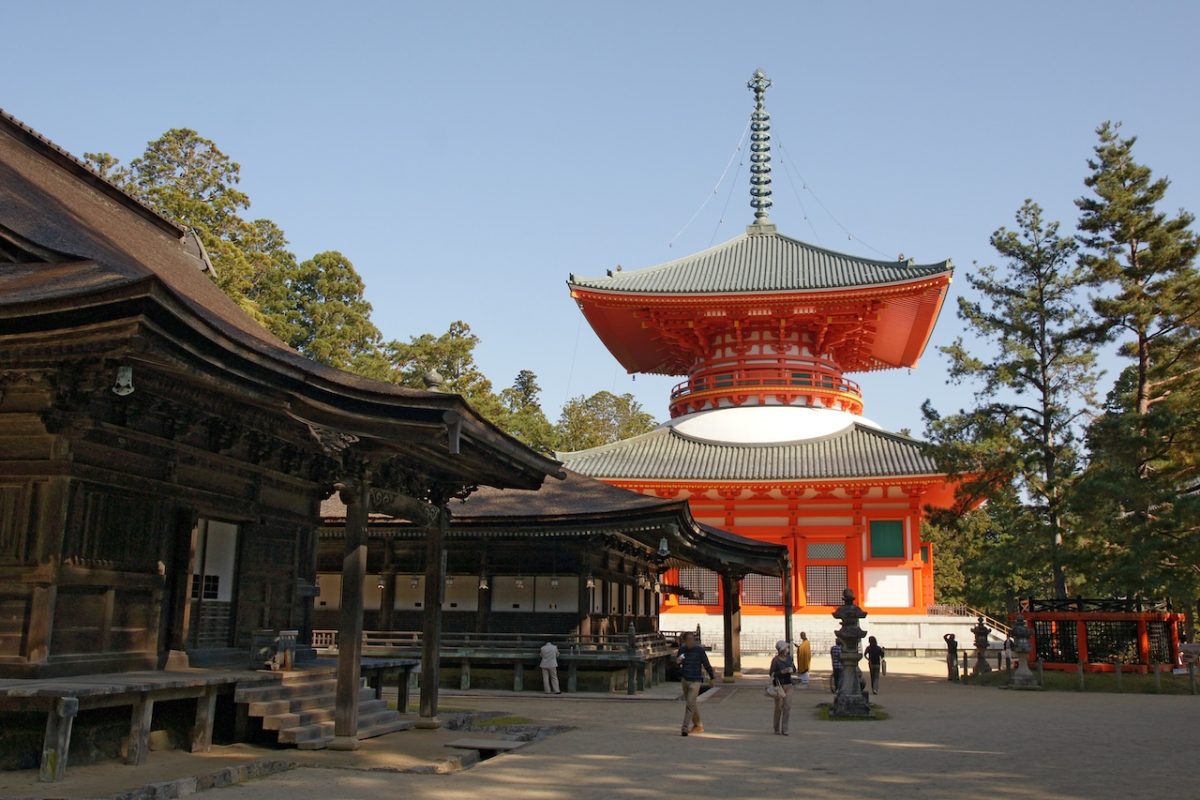
Mount Kōya sits at the spiritual core of Shingon Buddhism in Japan. Founded in the early 9th century by Kūkai (later known as Kobo Daishi), this forested plateau now hosts more than 100 temples and shrines. UNESCO recognizes it as part of the "Sacred Sites and Pilgrimage Routes in the Kii Mountain Range," marking it as one of those rare places where spirituality, history, and nature have woven themselves together for more than a thousand years.
Two sites dominate the landscape. Kongōbu-Ji serves as the head temple complex, a place of quiet authority. More compelling still is Okunoin, the mausoleum where Kobo Daishi is believed not to have died but to remain in eternal meditation. Surrounding it stretches Japan's largest cemetery, over 200,000 gravestones lining moss-soft paths beneath towering cedars. For centuries, the faithful have sought burial here, believing that resting near the revered monk would grant them spiritual merit and inch them closer to enlightenment. Feudal lords, samurai, merchants, and countless ordinary people all hoped for a place in this ground.
Beyond temples, into pilgrimage
Once you arrive via cable car at the summit, the mountain opens up. The Fudōzaka Trail is one of the most rewarding walks, beginning at your arrival station and climbing toward the Fudōzaka-guchi Nyonindō Hall. From there, pilgrims can follow the historic Women's Pilgrimage Route toward Okunoin's entrance, a path that's been walked for centuries.
Many temples offer shukubō, or temple lodging, where the experience becomes immersive. You sleep on futons in quiet rooms, dine on shōjin ryōri (traditional Buddhist vegetarian cuisine), and can join monks for dawn prayers if the mood strikes. It's the kind of overnight that stays with you long after you descend the mountain.
Practical details for travelers
Bookings open one month before launch. Two trains depart daily: 9 a.m. and 12:45 p.m., with returns at 10:46 a.m. and 2:58 p.m. respectively. The train stops at seven stations between Osaka and the mountain, including Kawachinagano and Hashimoto, so you have flexibility in where you board. One-way fares begin around 9.30 euros, not including the sightseeing supplement or cable car fare to the summit.
GRAN Tenku isn't just a train ride. It's a bridge between two worlds, connecting the energy of modern Osaka with the contemplative silence of a sacred mountain. For anyone craving a deeper, slower way to experience Japan, April 2026 can't arrive soon enough.