Something remarkable happened during the 2026 World Cup. While the world watched Erling Haaland lead Norway to the quarter-finals, something else was brewing online. Millions of people were frantically searching for flights to Oslo, typing "Norway" into Google at rates that hadn't been seen before, and scrolling through Airbnb listings with newfound urgency. The connection between sports and travel has always existed, but Norway just proved how explosive it can be.
The data speaks volumes. Between June 11 and July 12, Airbnb accommodation searches for Norway jumped 15% year-over-year. Polish travelers were particularly captivated, with "Norwegia" searches exploding 200% on Google Trends, while global searches for "Norway" climbed 300%. Flight comparison sites showed Polish travelers searching 32% more frequently for tickets to Norway during the early July period compared to the same stretch in 2025. These aren't marginal shifts. This is the kind of surge that forces tourism boards to scramble and hotels to raise rates.
Much of the magnetism centered on one person: Manchester City's Erling Haaland. The striker became a social media phenomenon not through polished brand deals, but through something far more valuable. Behind-the-scenes videos from the Norwegian camp and his irreverent humor on Instagram made him feel approachable, real, almost like a friend you could trust to show you around Bergen. His following exploded by 31.9 million during the tournament, the largest jump of any World Cup player. He ended up as the fourth most-followed active footballer globally and third for overall engagement during the competition.
According to Tomasz Lubieniecki, head of the Media Reports Department at the Institute of Media Monitoring, this wasn't accidental. "Internet users reward organic virality, behind-the-scenes access, and people who keep a healthy distance from themselves," he explained. Haaland's strategy of authenticity over perfection turned him into a gateway drug for Norway itself.
The Viking Row That Conquered the Internet
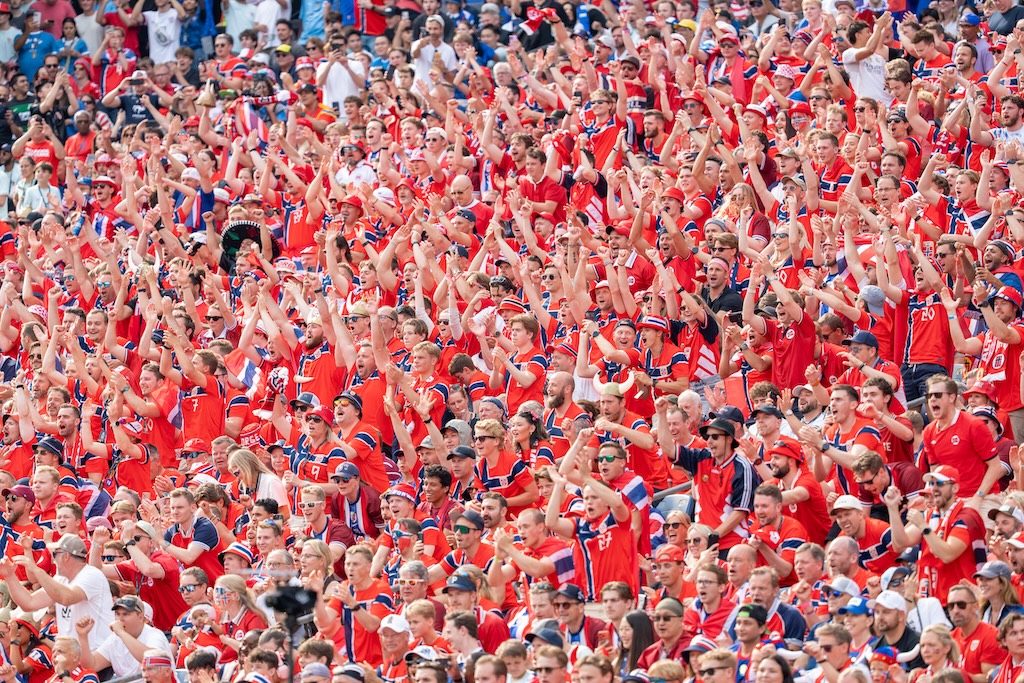
Then came the celebration that became impossible to ignore. Norwegian supporters created what became known as the "Viking row," a coordinated movement where thousands of fans sat in rows and mimicked rowing motions in perfect unison. It was visceral, unexpected, and magnificently shareable. The gesture spread like wildfire across TikTok, Instagram, and Twitter. Players adopted it. Stadiums echoed with it. City streets saw crowds spontaneously recreating it. Combined with Norway's visual identity, complete with shirt numbers designed as Nordic runes and relentless Viking imagery, the entire campaign tapped into something deeper than football.
The timing mattered. When Norway faced England in the quarter-finals on July 11, Wikipedia traffic for Norway peaked. Travel searches climbed. Accommodation hunting intensified. This wasn't just momentary online noise. The viral moments were converting to actual travel decisions.
When Viral Becomes Real Economy
History suggests island nations and smaller countries can harness sporting moments to reshape their tourism trajectory. Spain's World Cup victory once triggered a 33-fold increase in flight searches from China alone. Cape Verde's historic World Cup debut drove a staggering 5,000% surge in US travel searches. These numbers show a clear pattern: major sports moments don't just create fleeting attention. They reshape how the world perceives a destination.
Norway's case is particularly striking because the momentum translated from online chatter into measurable economic activity. Searches on Google and Wikipedia correlated directly with real bookings on Airbnb and flight platforms. "The key point is that spikes in search engines were reflected in Airbnb's business data and Polish tourism market analyses," Lubieniecki noted. This demonstrates that online virality has tangible value for a country's image and economy. It's not just vanity metrics. It's actual people deciding to buy plane tickets and reserve rooms.
For travelers planning trips, this moment represents something too. Norway just became cooler in the global consciousness. The country that was once associated primarily with the Northern Lights and hiking trails is now in the conversation alongside football, humor, and cultural identity. The Viking row isn't going away anytime soon. Haaland's authenticity has created a genuine interest in the culture that produced him. These aren't manufactured moments. They're real reasons to visit.
The lesson here extends beyond Norway. Major sporting events have proven themselves as unexpected tourism catalysts. Success in one cultural arena can ripple across travel decisions across entire countries. When millions of people suddenly care about your nation because of what happens on a football pitch, that's an opportunity to show them why they should care about so much more. Norway certainly did.


