Forget tweaking jet engines or blending in a bit of sustainable fuel. A professor from Eindhoven University of Technology wants Europe to rip up the aviation playbook and go straight for electric. Maarten Steinbuch, who knows a thing or two about mechanical engineering, told Euronews that the current push to make flying less dirty is just an evolution. He wants a revolution.
Steinbuch points to the car industry as proof that tough rules work. When regulators forced automakers to hit electric vehicle targets, the market responded. He argues the same should happen for planes. European authorities should legislate for electric aircraft fleets, with clear dates for when airlines must have battery-powered models in service. Without that pressure, he says, manufacturers will keep dragging their feet.
The timing is no accident. Jet fuel prices have been climbing, and a wave of startups is racing to build the first viable electric passenger planes. Heart Aerospace, based in Los Angeles, is working on a 30-seat hybrid-electric regional airliner called the ES-30, with a target of 2031. Scandinavian carrier SAS is already taking bookings for electric and hydrogen flights it says will happen by 2028, using planes from Heart and Airbus.
Across the Atlantic, BETA Technologies has been testing its electric aircraft on mail routes in Scotland, including hops between Glasgow and Dundee, and over Aberdeen, Inverness, Orkney and Wick. Those trials happened earlier in 2026, and they hint at what regional air travel could look like. Scotland's Loganair will fly electric planes across Europe starting 2029, according to the airline, which would make it the first commercial carrier on the continent to operate an all-electric fleet.
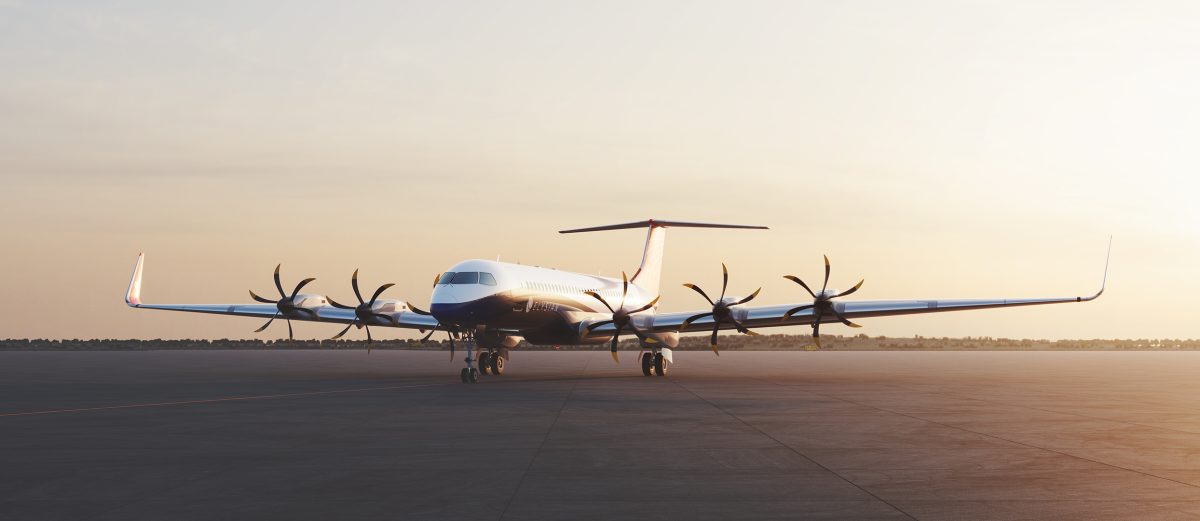
Europe is positioning itself as the leader in this space. Dutch startup Elysian Aircraft is building what it claims is the world's first battery-powered passenger plane, the E9X. This is not a tiny two-seater. The E9X has six engines, folding wingtips, and 40 battery packs per wing, each weighing a hefty 1000 kilograms. Co-founder Daniel Jacobsen says the plane is designed to carry 90 passengers for an initial range of 800 kilometers, eventually stretching to 1000. That would cover a huge share of short-haul routes across Europe.
The environmental stakes are significant. Aviation contributes somewhere between three and six percent of global heating pollution, depending on how you count it. The UN's International Civil Aviation Organization has been pushing for carbon-neutral growth since 2020, yet emissions from international flights have actually gone up since then. That is a sobering reality check for anyone who thinks the industry is on track.
Steinbuch believes the real breakthrough will come with solid-state batteries that pack more energy into less weight. He is talking about cells with up to 500 watt-hours per kilogram, a threshold he expects to be crossed by 2032, possibly sooner if European regulators get serious. That kind of energy density would make electric regional flights genuinely practical, not just a novelty.
For travelers, the implications are exciting. Imagine hopping from London to Paris or Amsterdam to Berlin on a quiet, zero-emission plane. The technology is still in its infancy, but the pieces are coming together. If Europe pushes hard with legislation, the first electric passenger routes could appear within a decade. That would change short-haul flying in a way that feels truly revolutionary.
Of course, there are hurdles. Batteries are heavy, charging infrastructure at airports is nonexistent, and airlines are cautious about betting on unproven tech. But the momentum is building. The first electric passenger flights could arrive by 2028, and solid-state batteries are the key to making them viable. Whether that happens depends on regulators, engineers, and a bit of Dutch stubbornness.