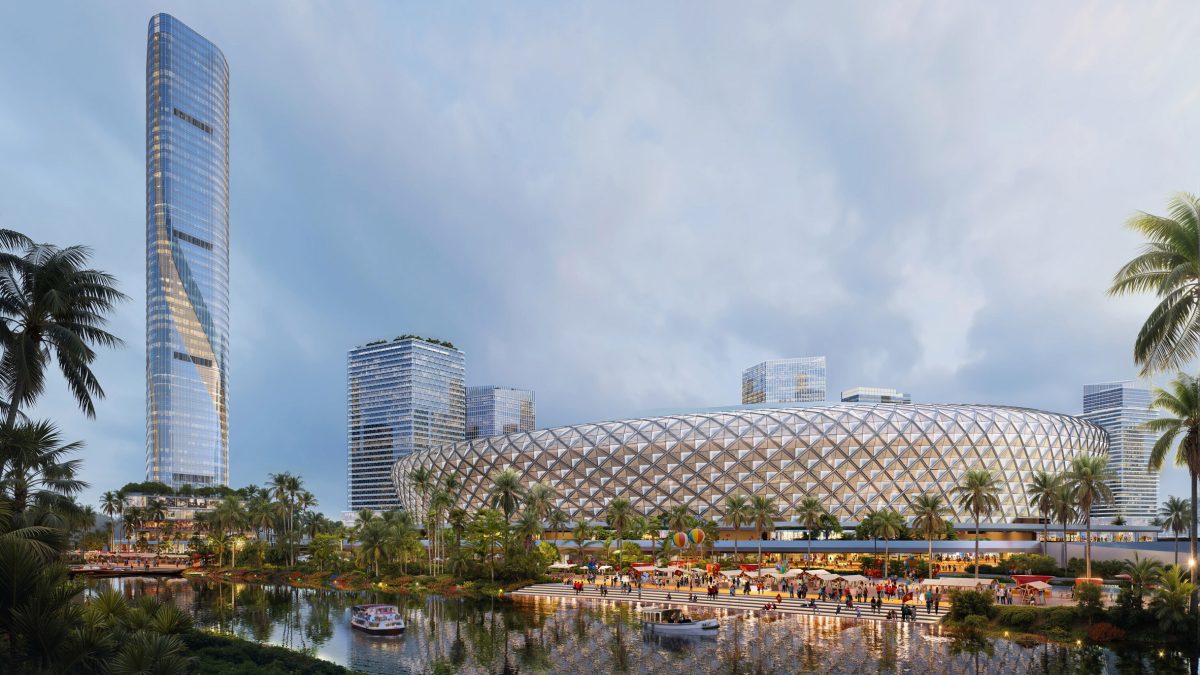
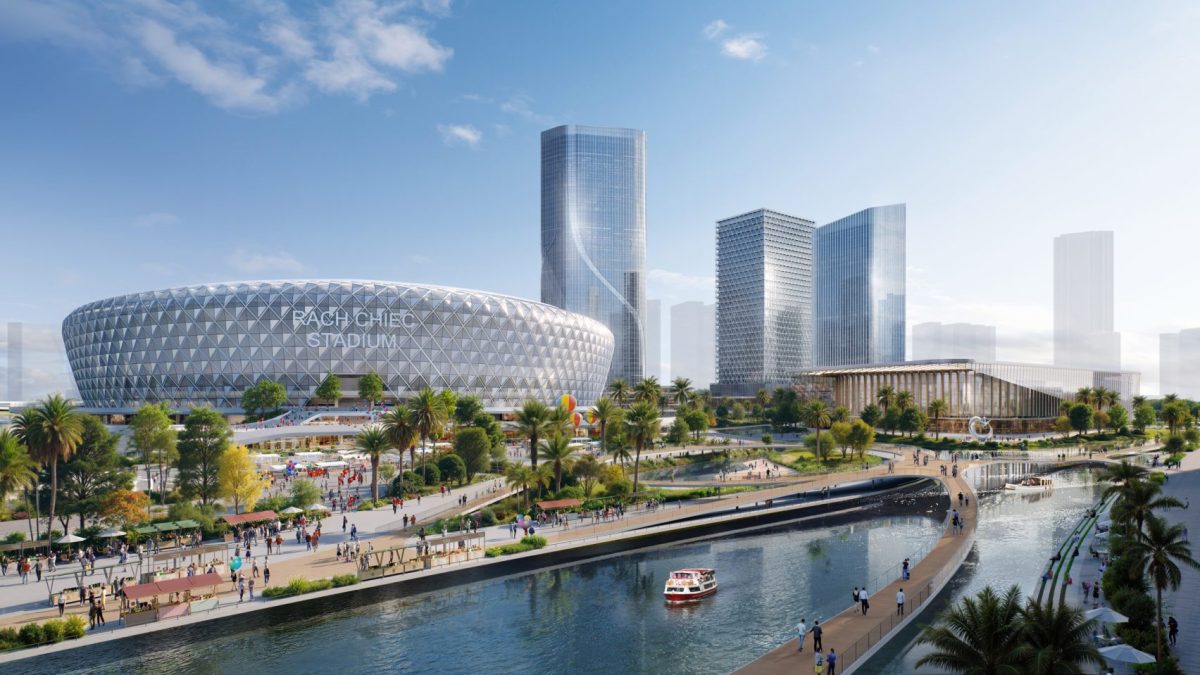
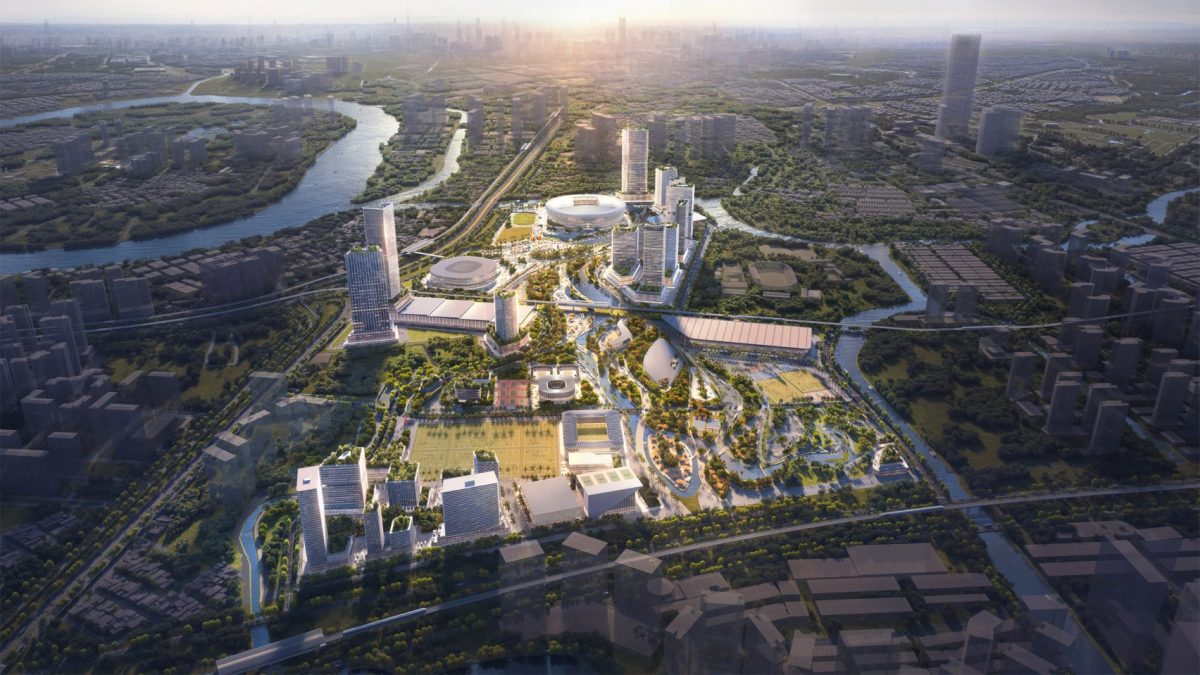
Ho Chi Minh City is about to get a sports venue that feels less like concrete and steel and more like a living grove. Architecture studio Populous has revealed its design for the Rach Chiec Stadium, a 70,000-seat centerpiece on the city's outskirts. The project, developed by Vietnamese firm Sun Group, also includes an 18,000-seat arena, all part of a sprawling 186.78-hectare national sports complex.
The stadium's diamond-patterned facade takes its cue from nipa palms that line the region's waterways. These plants do more than look pretty. They protect riverbanks while creating shaded spaces underneath for markets and gatherings. Populous studied that dual role and applied it to the stadium's design. Covered circulation areas will let spectators move around the venue while staying sheltered from sun and rain, all without losing sight of the city beyond.
A fully retractable roof sits at the heart of the design. Organizers can open or close it to control conditions inside, whether for a football match or a concert. Sound insulation will keep noise from spilling into nearby neighborhoods during big events. And an air-conditioning system can adjust temperatures in different seating zones. These features make the stadium a flexible stage for both sport and entertainment, including full-scale concert conversions.
Football is just one piece of the puzzle. The masterplan can accommodate around 90% of Olympic sports across the entire complex, not just the stadium. That includes an aquatic center, training halls, and sports medicine services. The facilities are designed with competitions like the Southeast Asian Games and the AFC Asian Cup in mind. There are also longer-term ambitions for an Olympic and Paralympic Games bid, though those remain aspirations, not confirmed events.
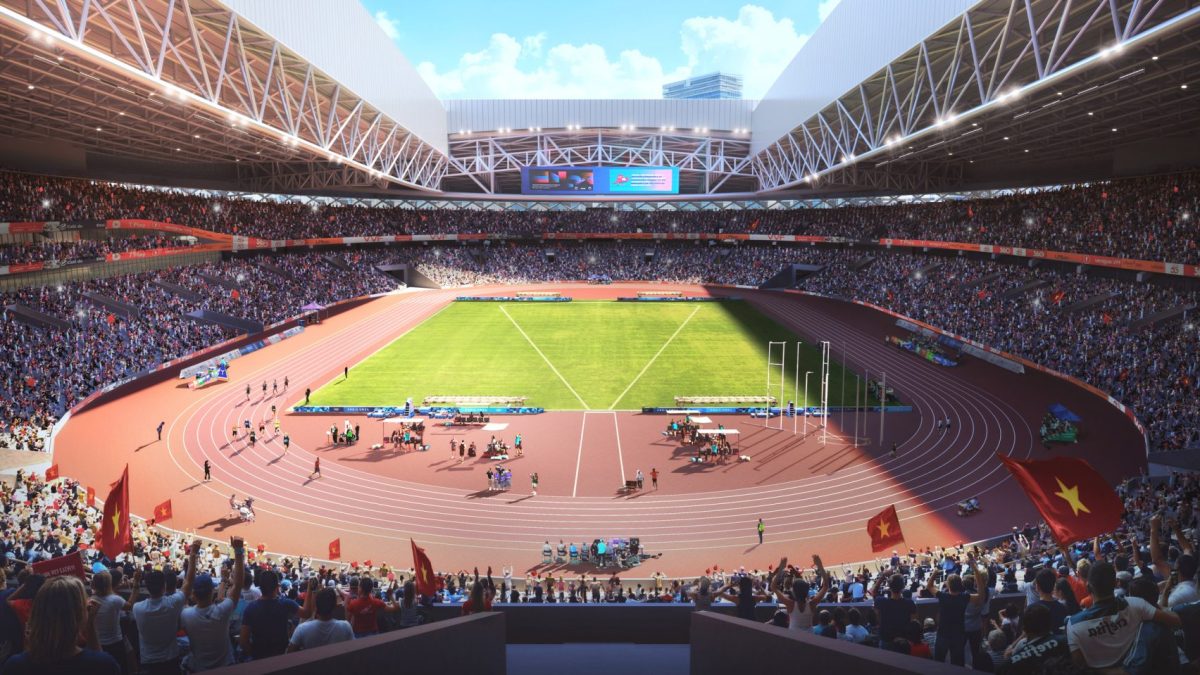
Between major events, the complex aims to serve everyday life. A central park and waterfront spaces will connect the venues, offering room for recreation, dining, and shopping. Public plazas are planned to keep the area active even when no one is competing. "We are focusing on making the venues accessible, well connected and flexible to provide a variety of experiences for all demographics," said Andrew Tulen, senior principal at Populous.
For travelers, this could mean more than just a place to watch a match. Visiting teams, event staff, and conference delegates will need hotels, restaurants, and services. The waterfront plans include dining, outdoor events, and festivals, giving visitors reasons to linger. A proposed conference center would host exhibitions and international gatherings, broadening the complex's appeal beyond sports fans.
The project broke ground on 15 January 2026, months before the latest design reveal. Sun Group's approved timeline allows eight years from contract signing, but the city and investor are pushing for completion in about five years. That target applies to the whole complex, so don't book your tickets just yet. Populous lists the stadium's completion year as to be confirmed.
If you're planning a trip around major sporting events, this is one to watch. The racecation trend is already reshaping how travelers combine races with vacations, and a venue like this could become a new anchor for that kind of trip. For now, the stadium remains a bold vision, but one rooted in the region's natural landscape. The design is inspired by nipa palms, the groundbreaking took place in January 2026, and completion is targeted in about five years. That's the timeline to keep in mind if you're dreaming of catching a game or a concert here.