Picture this: it's June 2026, Uruguay and Spain take the field in Guadalajara, and the heat is so oppressive that it fundamentally changes how the match unfolds. According to new research from Climate Central, this isn't just a worst-case scenario. It's likely to happen at the World Cup.
The science is straightforward and sobering. When temperatures climb above 28 degrees Celsius (about 82 degrees Fahrenheit), soccer players begin to struggle. Their running speed drops. The distance they cover shrinks. The number of high-intensity sprints plummets. These aren't minor adjustments. They're performance-altering shifts that force coaches to rethink tactics entirely. Teams that have built their entire identity around relentless pressing and rapid transitions could find themselves at a significant disadvantage.
How Climate Change Tilts the Odds
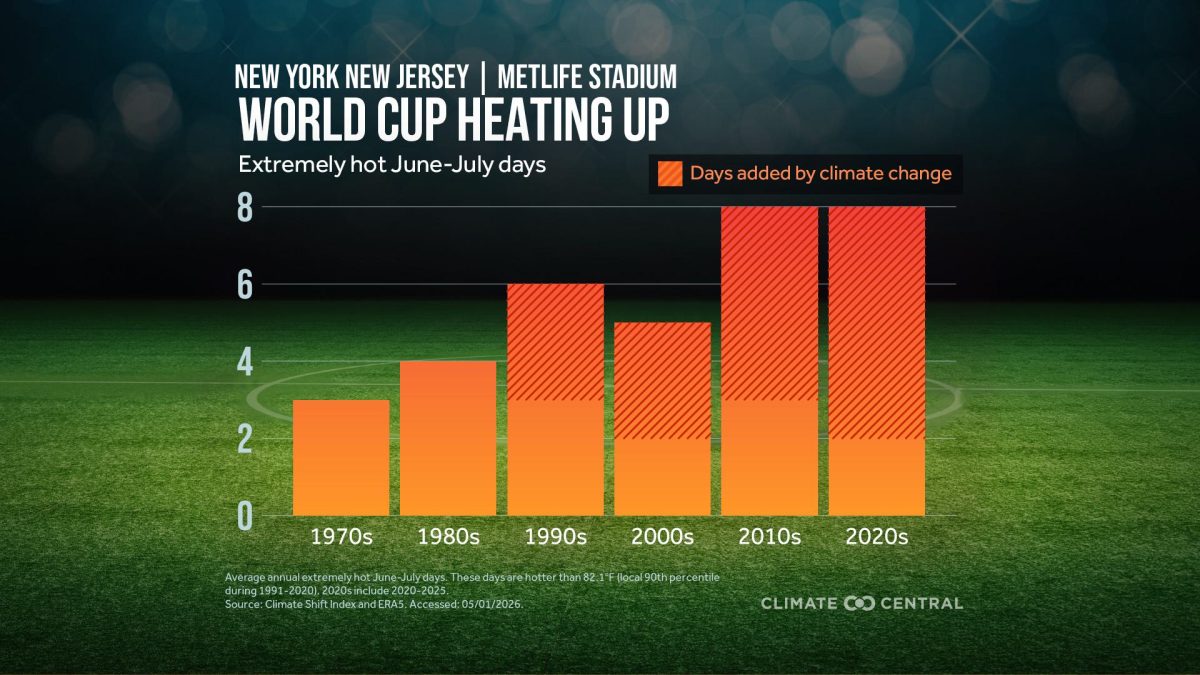
The numbers are striking. Climate Central's analysis reveals that 97 out of 104 matches face a meaningful risk of temperatures hot enough to impair player performance. Nearly half of all matches (49 total) have at least a 50 percent chance of occurring during heat that degrades athletic ability. And here's the critical part: in 26 of those matches, climate change has cranked up the odds by at least 10 percentage points.
Some venues face steeper challenges than others. The Uruguay-Spain clash on June 26 in Guadalajara sits at the top of the concern list. Climate Central found a 70 percent chance that match will experience performance-impairing heat, with climate change responsible for a 37-point increase in that risk. The championship final, scheduled for July 19 at MetLife Stadium in New Jersey, carries a 47 percent likelihood of problematic heat conditions, roughly 17 points higher than it would be without warming trends.
The Stakes Go Beyond Strategy
Altered tactics are one thing. Serious health risks are another. When extreme heat combines with high humidity, the danger escalates rapidly. Heat stress isn't a minor concern for athletes pushing themselves to their limits under intense pressure. For the millions of fans scattered across open-air stadiums in mid-summer heat, dehydration and heat stroke become real threats.
FIFA organizers aren't ignoring the problem. They've built heat management into the tournament framework. More matches in hotter cities will kick off in the evening to avoid peak sun exposure. Every single match will include mandatory hydration breaks. If the wet-bulb globe temperature (a measurement that factors in both heat and humidity) hits 32 degrees Celsius (about 90 degrees Fahrenheit), matches can be postponed entirely.
Only three stadiums across the entire tournament have full climate control: Atlanta, Dallas, and Houston. Everywhere else, both players and spectators will be exposed to the summer sun. That reality shapes what visitors need to prepare for.
What Fans Should Know Before They Go
If you're planning to attend matches, treat heat the same way you'd prepare for any environmental hazard. Drink water constantly, not just when you feel thirsty. Bring high-SPF sunscreen and reapply it regularly. Wear a hat or cap. Avoid sitting in direct sun during the hottest parts of the day if you can find shade. Stay alert for signs of heat exhaustion in yourself and those around you: dizziness, nausea, excessive fatigue, or confusion are all warning signs to take seriously.
The 2026 World Cup will still be magnificent. The football will still be world-class. But it will happen against a backdrop that climate change has made more challenging. Players will adapt their approach. Coaches will adjust their plans. Fans will need to be smarter about managing their own comfort and safety. That's the reality of watching football in an increasingly warm world.