
Something remarkable happened in France's business travel market last year. While the rest of the developed world was coasting along with single-digit growth, France somehow managed a 53% jump in corporate visitors. That's not incremental progress. That's a seismic shift.
The numbers tell the story. France added 11.6 million business travelers compared to 2024, according to Booking.com for Business data. For context, the United States (still the global heavyweight in business travel spending) added just 3.7 million. The United Kingdom, often considered a major corporate hub, gained a mere 365,000. Japan, another economic powerhouse, limped along with 12.3% growth. France left them all in the dust.
Why is this happening? Start with geography. France sits at Europe's crossroads, blessed with rail and air infrastructure that makes getting there almost frictionless. Add the post-Olympic glow from Paris 2024, when major infrastructure upgrades breathed new life into the city's meeting facilities. Throw in Brexit's aftershocks, which sent financial services companies scouting new European bases. Then watch Europe's booming tech sector attract startup investors and corporate delegations. The pandemic killed remote-meeting momentum faster than anyone expected, and now executives who spent five years on Zoom suddenly remembered why face-to-face networking actually matters.
The French government clearly understands what's at stake. Corporate travelers spend differently than tourists. They book premium hotels, eat at high-end restaurants, and fill convention centers like the Paris Convention Centre and Palais des Congres. This isn't just about head counts; it's about dollars flowing into local economies and jobs being created in hospitality, transport, and events.
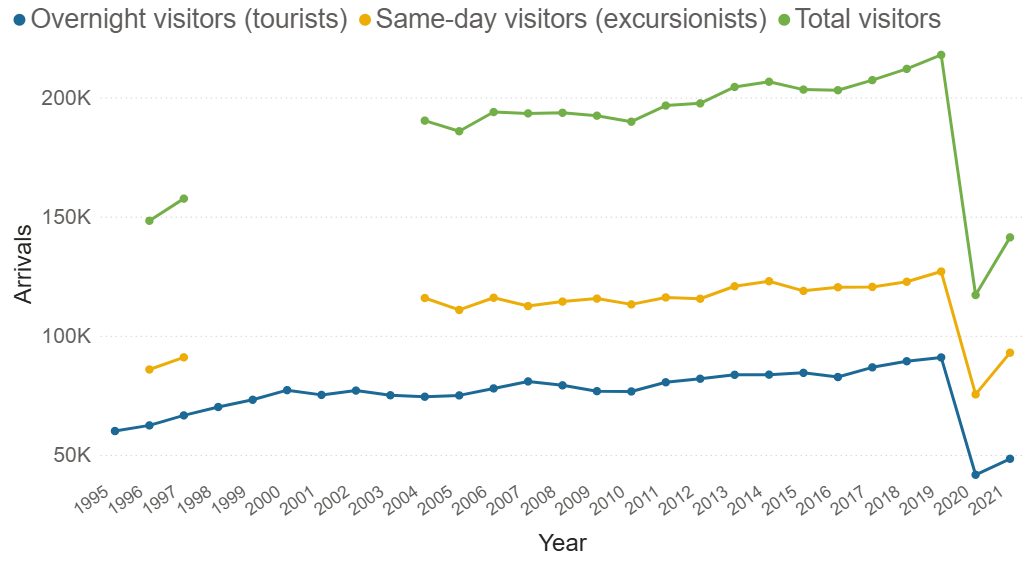
France's momentum extends far beyond business tourism. The country welcomed 102 million international visitors overall in 2025, maintaining its position as the world's most-visited destination for yet another year. Spain (93.8 million) and the United States (72.4 million) came nowhere close. Paris alone drew 18 million visitors, a figure buoyed by both corporate travelers and leisure tourists who finally got to see Notre-Dame Cathedral reopen after its 2019 fire.
Not everything is smooth sailing, though. Global business travel faces headwinds in 2026. Geopolitical tensions, rising costs, and flight disruptions are making executives nervous about committing to international meetings. A World Travel and Tourism Council survey found that 76% of business leaders say geopolitical concerns are moderately or significantly affecting their travel decisions. Nearly one in three expect corporate travel volumes to actually decline this year.
There's a particular wildcard: the United States. While America remains the biggest spender on corporate travel in absolute terms, uncertainty around recent policy decisions has spooked international organizers. Corporate travel to the US could slow dramatically as meetings get redirected to Europe and Asia. For France, this uncertainty abroad only strengthens its appeal at home.
The French government is thinking even bigger. Current tourism revenue stands at 77.5 billion euros annually. The target for 2030? One hundred billion euros. That's not a modest aspiration. That's a bet that France can keep attracting corporate travelers even as geopolitical clouds gather overhead.
One detail matters here: virtual meetings haven't killed corporate travel. Despite a decade of improving video conferencing technology, companies still prefer to do serious business in person. Surveys show corporate travel will likely exceed pre-pandemic 2019 levels by 2026. France, by capturing the lion's share of that rebound, has positioned itself to thrive in this new era of hybrid work and selective in-person meetings.