For centuries, exploration belonged to men. Or so the story went. But scattered across history are women who looked at the maps, the planes, the social barriers, and said no. They didn't ask permission. They bought planes with clerk wages, flew to places no Westerner had been, raced around the globe on a whim, and came home changed. And they changed everyone else too.
Amelia Earhart Broke the Sound Barrier on Gender
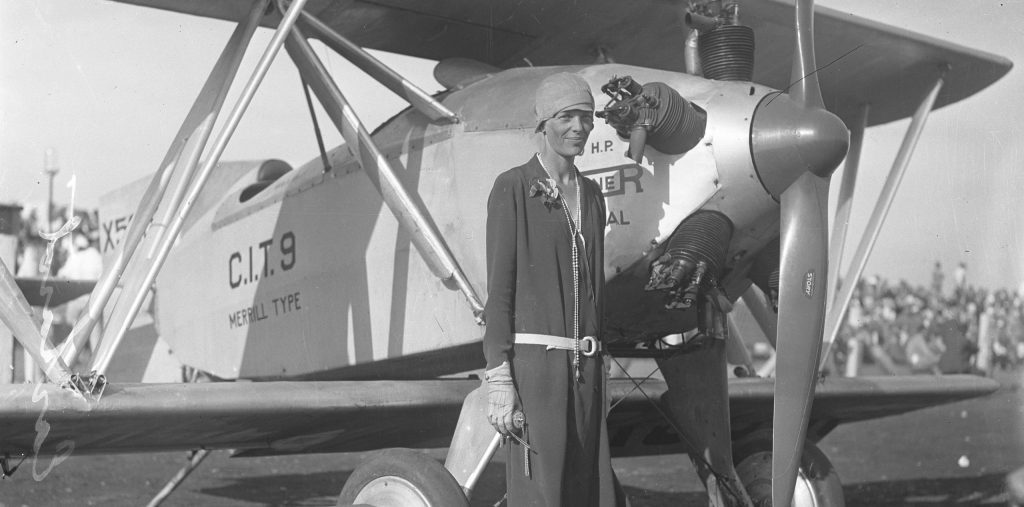
Born in 1897, Amelia Earhart rejected the script from the start. While other girls played house, she played sports, learned engine repair, and got herself to college. A First World War stint with the Red Cross left her watching pilots train nearby, and something clicked. After the war, a seasoned pilot took her flying. She never touched solid ground the same way again.
By 1921, she was learning to fly from Neta Snook, a female instructor who understood what it meant to want wings. Earhart scraped together money as a clerk to buy a used Kinner Airster she named "the Canary." Within months, she was licensing herself and chasing records like a collector obsessed. First woman to fly solo above 14,000 feet. First woman to cross the Atlantic alone by air. First person ever to fly nonstop from Hawaii to the mainland. She didn't just break records; she shattered the idea that the sky belonged to anyone but her.
Earhart did more than rack up achievements. She pulled other women up with her, forming aviation organizations and proving that a woman's ambition was just as valid as her curiosity. When she vanished in 1937 during a second circumnavigation attempt, the world lost a living legend. What it gained was immortality.
Neta Snook Built the Foundation Nobody Saw
Neta Snook grew up tinkering with toy cars and boats in Illinois, but her real passion was machinery. She pursued combustion engineering and aircraft research, only to get rejected from aviation school simply for being female. She applied again. And again. The war prevented her from finishing, so instead, she tested engines and aircraft parts for the military effort.
Once peace came, Snook bought a Canuck plane and spent two years rebuilding it piece by piece. When aviation organizations finally let her in, she flew tourists on sightseeing trips, performed stunts, and eventually became an instructor. She taught Amelia Earhart how to fly. Without Snook's perseverance and hands-on mastery, Earhart's legend might never have gotten off the ground.
Nellie Bly Raced Around the World and Won
Nellie Bly, born Elizabeth Cochran Seaman, started as a journalist in 1885 with a radical idea: women had more to offer than babies and housekeeping. She wrote about working women, conducted undercover investigations that shocked the nation, and decided that the best story would be personal. In 1889, she set out to circle the globe in 80 days (a fictional challenge Jules Verne had posed). She finished in 72.
This wasn't a leisurely tour. Bly raced another woman reporter, Elizabeth Bisland, around the planet on steamships and trains, filing dispatches from ports and stations. In an era when women couldn't vote and had no legal rights to property in much of America, Bly's journey was a manifesto. She proved that a woman traveling alone was not a scandal; it was a story worth telling, and readers wanted it.
Gertrude Bell Mapped the Unmapped
Gertrude Bell's parents did something radical for the 1870s: they educated their daughter like a son. While universities didn't award degrees to women, Oxford and London gave her access anyway. She became an archaeologist, diplomat, explorer, linguist, mountaineer, and photographer. Then she went somewhere Western women simply did not go: deep into Iran and the deserts of the Middle East.
Bell didn't seek fame, though journalists tried to brand her "The Uncrowned Queen of Mesopotamia." She mapped territories, studied ancient ruins, learned languages, and documented cultures through photography and writing. Her political influence in Iraq remains contested, but her archaeological work and library contributions are still consulted by scholars today. She showed that privilege, when paired with genuine curiosity and intellectual rigor, could open worlds.
Aloha Wanderwell Baker Spoke Ten Languages and Drove Everywhere
At sixteen, Aloha Wanderwell Baker saw an advertisement that seemed absurd: "Brains, Beauty and Breeches. World Tour Offer for Lucky Young Woman." The Canadian-born adventurer answered it. She had grown up in Europe, spoke French fluently, and wanted nothing more than to see the world. Cap Wanderwell, the explorer running the project, hired her on the spot.
What followed was a decade of constant motion across 80 countries. She translated, drove, repaired Model Ts, and filmed local cultures before "going native" was even a concept. By the time she finished, she spoke ten languages and earned the nickname "World's Most Travelled Girl." Aloha didn't climb mountains or fly planes. She simply refused to sit still.
Why This Matters Now
These women traveled in eras when hotels sometimes wouldn't rent to them, when borders questioned them, when society expected them home. What they proved is that restriction only sharpens determination. Each of them found a different path forward (a cockpit, a newsroom, a caravan, an archaeological dig), but all of them chose movement over comfort.
Travel isn't just about seeing places. It's about claiming space, gathering knowledge, and proving that the world is open to anyone bold enough to step into it. That's what Earhart, Snook, Bly, Bell, and Baker left behind: not just records or books, but permission.