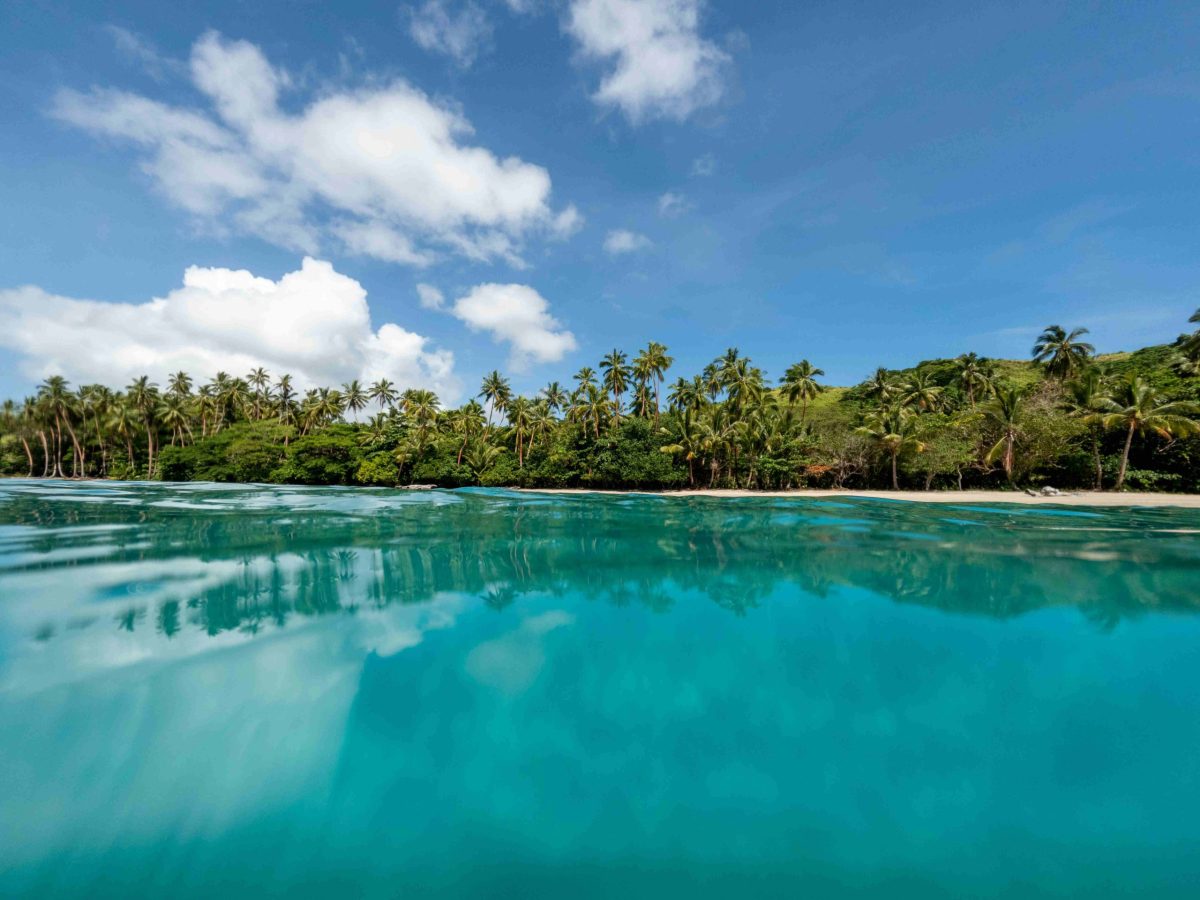
From a distance, Serua Island looks like the postcard version of Fiji. Two green hills rise from the turquoise sea, and the shore is fringed with palms. But up close, the picture changes. A concrete seawall now stands between the village and the ocean, and even that is not always enough.
Serua sits off the southern coast of Viti Levu, Fiji's main island, about an hour west of Suva. Its name means "two parts," a nod to those twin hills. Long ago, it was a tribal battleground. Today, the fight is against something far bigger than any rival clan.
A History of Storms
Cyclones have always been part of life here. Older residents remember Cyclone Winston, which slammed into Fiji in February 2016. It was the most intense tropical cyclone ever recorded in the Southern Hemisphere, with sustained winds of 280 km/h. The storm killed at least 44 people and damaged or destroyed 40,000 homes across the archipelago. Seruans helped each other reach high ground, but the memory of that week still haunts them.
Now, climate change is stacking the odds. Research from the University of New South Wales shows sea levels in the region are rising at three to four times the global average. A 2024 UN report called "Surging Seas in a Warming World" found that average sea levels have climbed 9.4 cm in the last thirty years, a rate not seen in 3,000 years.
For Serua, that translates into waves washing through the village during high tides. A 2025 report by Habitat for Humanity noted that the island has no natural wave breakers, leaving it "constantly threatened by sea level rise and cyclones." The same report found that more than half the homes have unstable foundations or weak roofs, and only three houses on the entire island could withstand a cyclone.
Choosing to Stay
Relocation might seem like the obvious answer. Some Pacific nations, like Tuvalu, are building digital replicas of their islands in the metaverse to preserve their culture. But Seruans have rejected that path. Instead, they are raising homes, reinforcing walls, and replacing corrugated roofing to weather the storms ahead.
Work is also underway to improve the 750-metre causeway that connects the island to Viti Levu at low tide, and to secure docking facilities. The goal is not just survival, but a future on this land. As one islander put it, "The stronger the air pressure, the higher the waves. So the waves wash through inside the village." They know the risks, and they are choosing to stay.
Fiji has been vocal at the UN about the impacts on small island developing states, calling on major emitters to cut greenhouse gases. But for Serua, the clock is ticking. The islanders are not waiting for global action. They are rebuilding in the real world, for as long as it lasts.
For travelers, Serua offers a rare glimpse of a community facing the climate crisis head-on. It is a reminder that paradise is not just a place, but a people. And while the ocean may be rising, so is their resolve.
If you are planning a trip to Fiji, consider how climate change is reshaping the region. For more on how rising seas are challenging our assumptions, read what scientists just discovered about rising seas. And for another story of resilience, check out Frank Sinatra's legendary resort rising from the ashes.