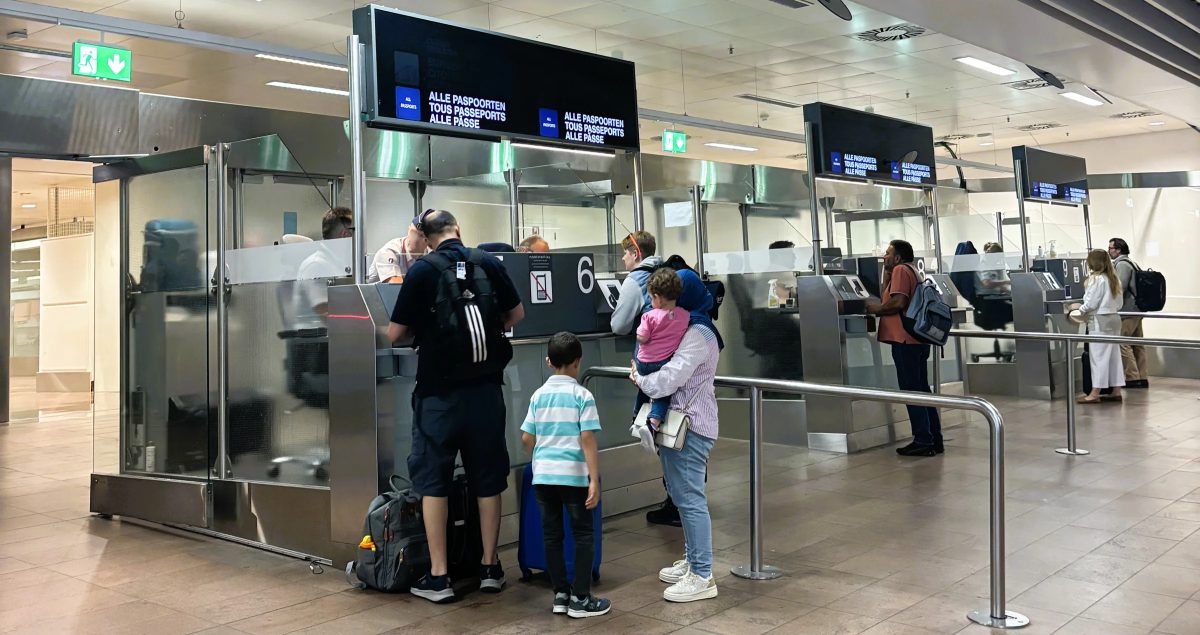
There's a new way to enter Europe, and it's already causing headaches. The EU's Entry/Exit System, or EES, rolled out in October 2025 as a supposedly streamlined replacement for the old passport stamping routine. But early results tell a different story: travelers at Brussels Airport have been stuck in queues for up to three hours at arrival and two hours at departure. Nearly 600 passengers have missed flights entirely due to the bottleneck.
What is this system, and why is it stumbling so badly? The EES is a fully automated digital process that records when non-EU visitors enter and leave the Schengen Area. Instead of an agent flipping through your passport and stamping it, the system collects your passport information along with biometric data: facial images and fingerprints. On paper, it sounds efficient. In reality, the rollout has revealed serious operational gaps.
The scale of the problem became obvious quickly. During the initial phase when only 60 percent of travelers were required to register, total delay time hit 21 hours in just days. Brussels Airport is now pleading with EU authorities to build more flexibility into the system's rollout before peak summer travel season arrives. If queues are already this long with only partial enrollment, what happens in July and August?
Why the System Is Running Into Trouble
Three major bottlenecks are choking the airports. First, staffing is dangerously thin. Border posts don't have enough trained personnel to manage the new procedures, and without adequate federal police presence, delays pile up fast. Second, the automated e-gates that many travelers expect to walk through have been restricted. Visitors from the United States, United Kingdom, Canada, and Singapore now must go through manual checks, adding pressure on already stretched staff. Third, the technology itself has proven fragile. A software failure forced all passengers into the same queues recently, creating 90-minute waits and exposing how vulnerable the system is to technical glitches.
These aren't minor hiccups. In February 2026, three major aviation organizations (Airlines for Europe, Airports Council International Europe, and the International Air Transport Association) wrote directly to EU Commissioner Magnus Brunner with an urgent warning. They calculated that if the system reaches full capacity during summer months, waiting times could stretch to four hours or beyond. Thomas Reynaert, SVP External Affairs at IATA, was blunt about the disconnect: "Non-EU travellers are facing massive delays and inconvenience. There is a complete gap between the perception that EES is working well and the reality on the ground."
The System's Purpose and Broader Picture
To be fair, the EES itself is doing what it was designed to do. Since the October 2025 launch, the system has processed more than 45 million border crossings, identified over 24,000 people refused entry, and caught more than 600 travelers posing security risks. Biometric data has already helped detect identity fraud, including a case in Romania where someone tried to cross using two different identities after previous rejections by multiple Schengen countries. These are real security gains.
The problem isn't the concept. It's the execution. The EES will eventually work alongside a separate system called ETIAS, which requires visa-free travelers to obtain pre-travel authorization before boarding their flight to Europe. But that's a conversation for another day. Right now, European authorities are dealing with the immediate fallout of a system that works digitally but fails logistically.
What This Means for Your Travel Plans
If you're planning a trip to Brussels, or anywhere in the Schengen Area, expect the unexpected at border control. Other European airports have also grappled with border processing chaos, but Brussels is in the thick of it right now. Add extra time to your airport arrival if you're non-EU. Bring patience. Download the Frontex pre-registration app if your country supports it, though uptake has been limited so far.
The EU and member states are under pressure to extend flexibility for the system through at least the end of October 2026, allowing airports to fully or partially suspend EES if traffic surges beyond what they can handle. Without those safeguards, airports could face the kind of cascading delays that cancel flights and strand travelers. The aviation industry isn't asking for the system to disappear. It's asking for breathing room while the technology and staffing catch up to the demand.
The EES represents a genuine modernization of European border control. But good intentions don't move travelers through queues any faster. Until Brussels Airport gets the staffing, technical reliability, and operational flexibility it needs, curious travelers should simply plan for delays and keep their boarding passes handy.