
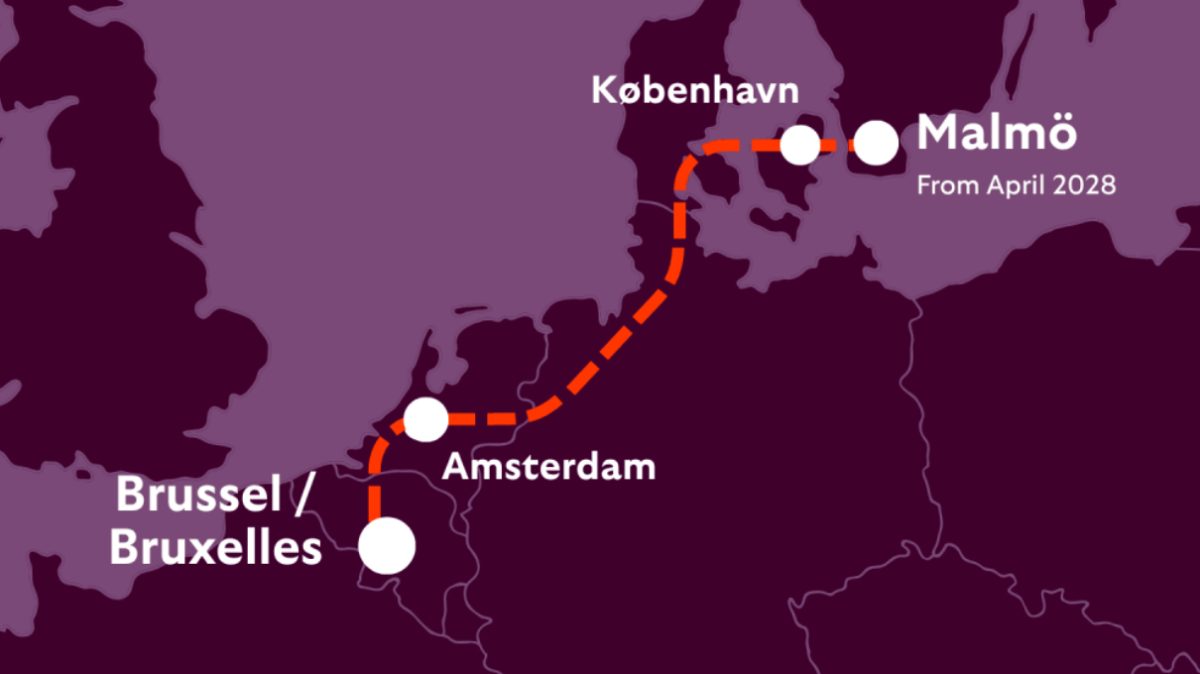
After years of fragmented rail networks and ticketing headaches, something remarkable is happening across Europe. Night trains are back, and they're getting better. The latest proof comes from European Sleeper, which just announced plans for a new overnight service linking Brussels and Amsterdam directly to Copenhagen and Malmö starting spring 2028.
The route will depart from Brussels and Malmö three times weekly at 7 pm, arriving around 10 am the next morning. That means you're not just moving between cities while you sleep. You're gaining an entire extra day in your destination, fully rested and ready to explore. The service will stop in Antwerp, Rotterdam, The Hague, and Amsterdam along the way, turning what used to require a flight and hotel into a single night of comfortable travel.
Sleeping in style across borders
European Sleeper's existing routes offer standard seats and couchettes, but the company is pushing upmarket. The Scandinavia service will explore "luxurious" cabin configurations, including double beds and private en-suite bathrooms. Whether you want to save money or splurge on proper comfort, there will likely be an option for your budget and travel style.
This expansion marks European Sleeper's first venture into Scandinavia, made possible through a partnership with Germany's RDC, a company with extensive experience running night trains between Germany and the Nordic region. "RDC has many years of experience operating night trains between Germany and Scandinavia," explains Markus Hunkel, RDC's chief executive officer. "Together with European Sleeper, we can build on that experience and create a strong new connection between the Benelux, Denmark, and Sweden."
A network that's expanding fast
European Sleeper isn't new to ambitious goals. The company already operates night trains to German cities like Hamburg, Berlin, and Dresden, plus Prague in the Czech Republic. A new Milan route is launching September 2026 through Switzerland, offering what the company calls an important north-south axis for European travel. Brussels to Barcelona is also coming soon. Each new route adds weight to the argument that pan-European rail travel is becoming genuinely viable again.
For decades, separate infrastructure, different rail gauges, and fragmented ticketing systems made it nearly impossible to book seamless train journeys across multiple countries. Those barriers haven't disappeared, but new European legislation and subsidies are finally making previously impossible itineraries real. The result is a renaissance in long-distance train travel that benefits travelers who prefer trains to flights.
Why this matters right now
Travel patterns are shifting. More people want to avoid airports entirely. Climate-conscious travelers prefer trains over short-haul flights. And there's something genuinely appealing about boarding a train in one capital city and waking up in another, breakfast served while you cross into a new country. For travelers heading to Copenhagen or exploring Sweden's west coast, the new European Sleeper route could eliminate the flight leg entirely.
As Chris Engelsman of European Sleeper puts it, "Our network is growing quickly, and Scandinavia is a natural next step." The momentum is real. We're even seeing Scotland explore direct night train connections to Europe, while proposals for transcontinental sleeper routes keep multiplying across the continent. The European night train isn't a nostalgic throwback anymore. It's the future of how travelers will move between cities.
Spring 2028 still feels distant, but it gives European Sleeper and RDC time to secure infrastructure access and fine-tune operations. For travelers already planning Benelux and Scandinavian trips, mark your calendars. This could be the train journey that redefines how you see Europe.