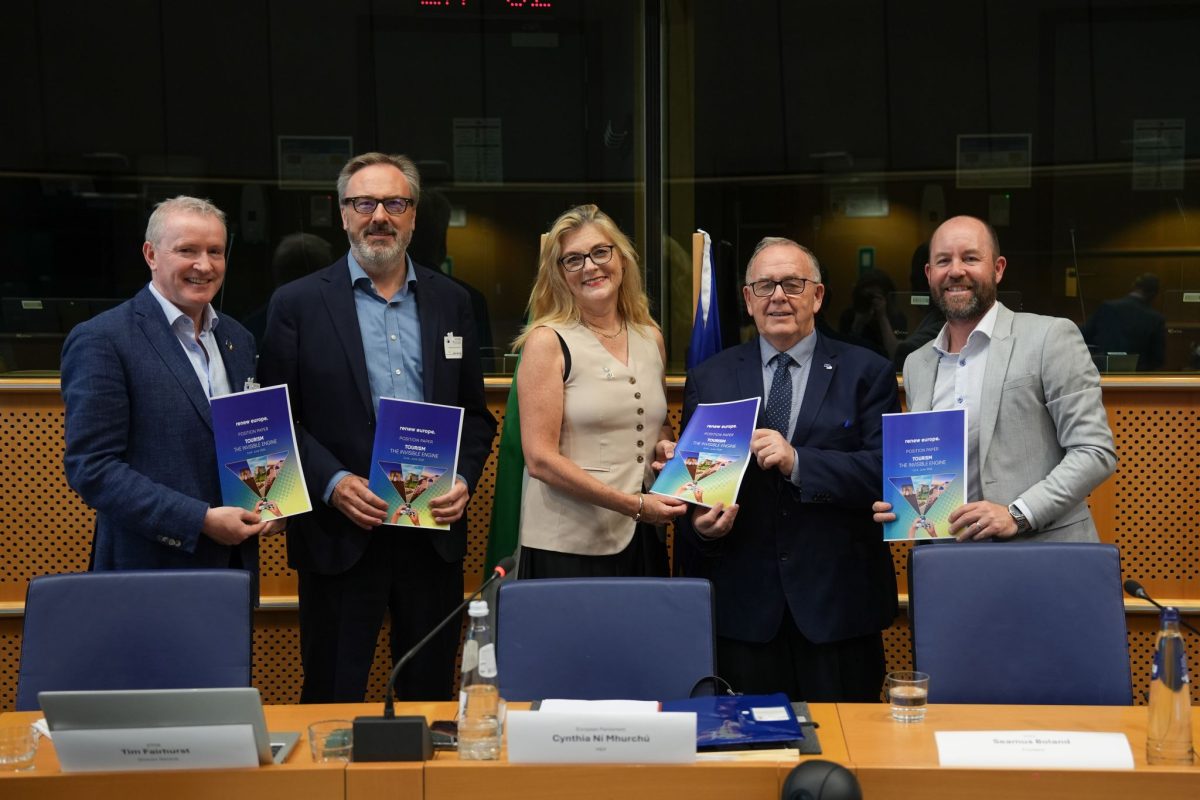
Tourism may be one of Europe's largest economic engines, but you wouldn't know it from how Brussels treats it. A new position paper from Renew Europe, titled "Tourism: The Invisible Engine," argues that one of the continent's most lucrative industries has been shoved to the margins of EU strategy for far too long.
Irish MEP Cynthia Ní Mhurchú, who presented the proposal, didn't mince words. "Tourism is one of Europe's largest export ecosystems and a cornerstone of our competitiveness," she said. "Europe cannot afford to treat tourism as an afterthought. It must become an integral part of our competitiveness agenda and our long-term economic strategy." The numbers back her up. According to the World Travel and Tourism Council, the sector employed 40.7 million people across the EU in 2025 and contributed 2.6% of the bloc's GDP. By 2035, travel and tourism is expected to create an additional 2.5 million jobs, accounting for roughly one in every seven new jobs the EU generates. Yet despite this firepower, tourism remains starved of political attention and adequate funding.
What Europe needs to do right now
The proposal calls for sweeping changes in how the EU approaches tourism. First, Brussels needs to get its house in order. That means stronger coordination across all European Commission departments with tourism responsibilities, a beefed-up Tourism Unit within the Directorate-General for Mobility and Transport, and real money behind the mission. Renew Europe is pushing for a dedicated tourism budget line in the next Multiannual Financial Framework to help small and medium-sized enterprises stay competitive. The group also wants expanded research and innovation funding, because tourism's future depends on smart investment today.
One of the proposal's smartest moves involves spreading visitors beyond the usual suspects. Popular destinations like Barcelona and Venice are drowning in overtourism. Renew Europe wants the EU to actively promote lesser-known regions and boost investment in rural and inland tourism. This isn't just about preserving local character (though that matters). Cities already experimenting with stricter tourist management have shown that distributing visitors more evenly protects communities while building thriving economies in unexpected places. The proposal also prioritizes accessibility for travelers with disabilities, ensuring Europe's tourism future works for everyone.
Building the workforce Europe needs
Here's the uncomfortable truth: Europe's tourism industry is suffocating from staff shortages. The proposal takes this head-on, calling for an EU-wide strategy to attract and retain workers. This means better apprenticeships, closer ties between businesses and schools, improved working conditions, and making tourism careers actually appealing to young people. Gender equality and lifelong learning get explicit attention too, because sustainable growth requires opportunity across the board. Travelers increasingly seek authentic cultural experiences and skills development, which means the sector needs professionals who understand both hospitality and heritage.
Tech that serves humans, not replaces them
Artificial intelligence and predictive analytics get a serious look in the proposal. Digital tools can smooth visitor flows, reduce wait times, and help destinations manage overcrowding more intelligently. Better yet, they can lighten the administrative load that makes travel tedious. Renew Europe backs digitalizing the Schengen Area, including faster border processing systems and a new Digital Travel Application. Europe's border infrastructure has been strained to breaking point, so modernization here could have immediate benefits. The catch: technology should enhance travel experiences, not kill the authentic encounters that make trips memorable. The proposal insists that new digital tools complement rather than replace the real cultural moments travelers crave.
Niche tourism as economic glue
The proposal zeroes in on specialised travel as a path to regional prosperity. Cultural tourism, wine trails, brewery tours, cycling routes, cruise destinations, rural stays, wellness retreats, business conferences, and heritage tourism each get individual attention. Why? Because these sectors do something mainstream tourism struggles with: they reduce seasonality and spread economic benefit across smaller regions. Wine tourism in remote areas, cycling routes through the countryside, and wellness stays in smaller towns all help economies that rarely see mass tourism benefit from travel spending.
Health and wellness tourism gets particular emphasis, especially as Europe's population ages. The proposal encourages the Commission to promote European spa destinations, fund sustainable wellness infrastructure, and research how preventive healthcare travel can address aging societies. It also highlights support for islands, coastal regions, inland waterways, and cycling tourism, which the paper calls "one of Europe's strategic tourism sectors."
A global identity worth fighting for
Beyond the EU's borders, Europe needs a stronger tourism brand. The proposal calls for energized campaigns like Destination Europe and expanded Visit Europe initiatives. New thematic routes highlighting Europe's cultural, historical, and industrial heritage could draw travelers interested in something deeper than beach resorts and shopping. Niche tourism experiences, from music heritage to cultural landmarks, are proving wildly successful when properly promoted and managed. Europe has this ammunition. It just needs to fire it.
This isn't just about money, though the numbers are staggering. It's about recognizing that tourism, done well, is how Europe connects with the world. It's how small villages survive, how heritage gets preserved, how young people find careers, and how cultures exchange ideas. The Renew Europe proposal treats tourism not as a luxury add-on but as the economic and social engine it actually is. Whether Brussels listens depends on whether policymakers finally understand what millions of travelers already know: Europe's greatest strength is worth far more than an afterthought.